TRAVELING
A P E R S O N A L P A G E
00:HOME 01:ABOUT ME 02:HI-FI 03:MUSIC 04:TRAVELING 05:PHOTOGRAPHY 06:CONTACT 07:LOGIN
HOME / TRAVELING / OMAN
[🇭🇷 HR | 🇬🇧 EN]
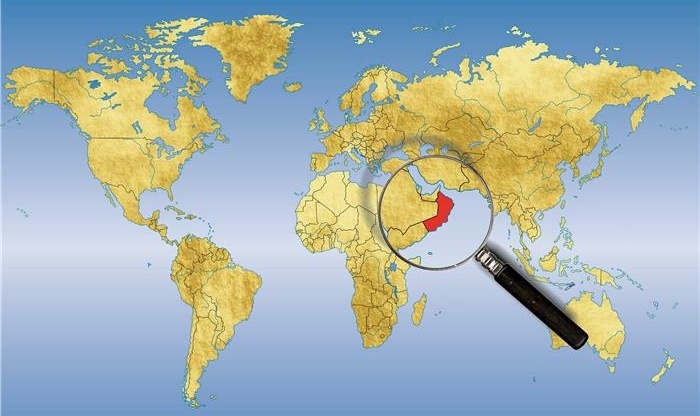
Oman does not impose itself. It does not advertise itself or promise paradise. And that is exactly why it was the perfect destination for us. We were curious about a country that manages to remain itself in a world that is constantly trying to become something else. Would it live up to our expectations?
Welcome to the Sultanate of Oman.
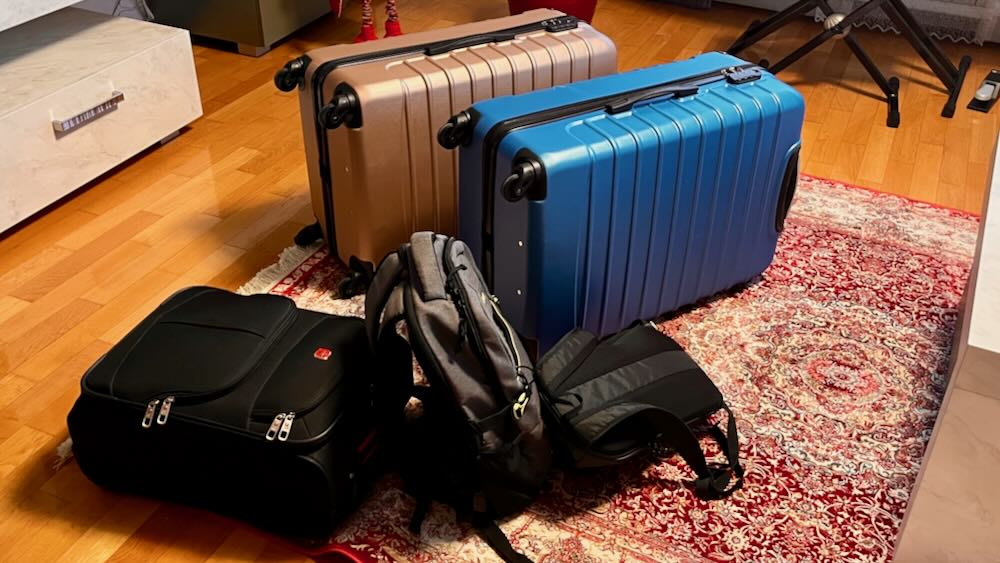
As with our other trips, we planned and organised this one ourselves, skipping the hassle, security and predictability of travel agencies. We packed carefully and brought everything we would need for a trip with our soon-to-be ten-year-old. His impatience, meanwhile, was almost beyond belief.
Day One
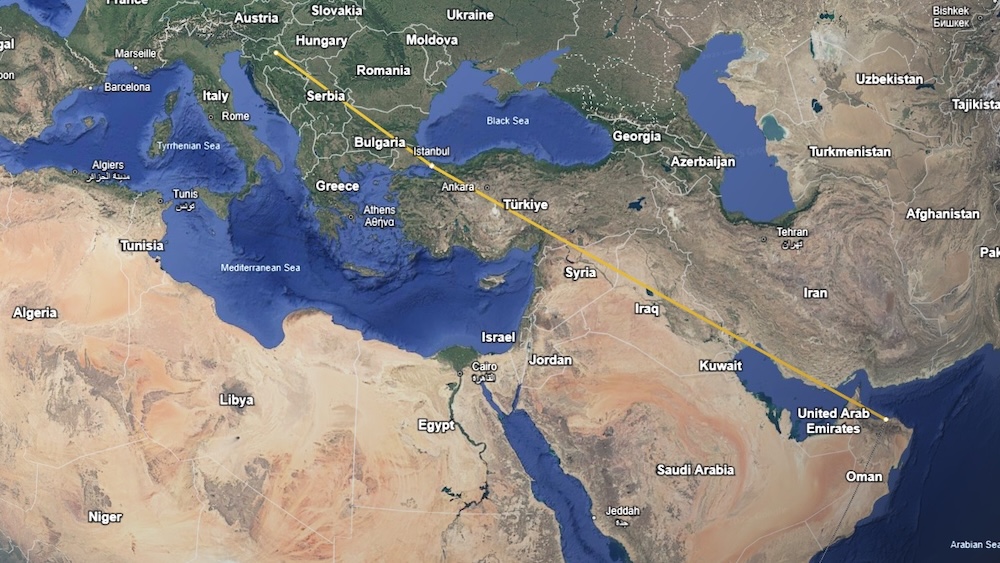
The most affordable flight from Zagreb to Oman's capital, Muscat, takes us via Istanbul. “Affordable” usually means “inconvenient” when it comes to timing and connections, so we had mentally prepared ourselves for a six-hour wait at Istanbul Sabiha Airport. It is almost as dull as Zagreb Airport.
The flight to Istanbul takes two hours, followed by another four and a half hours on a night flight to Muscat.
After the long wait at Sabiha Airport, we land in Muscat at around 3:30 a.m. local time. The straight-line distance from Zagreb to Muscat is about 4,500 km.
Oman lies on the Arabian Peninsula and shares land borders with Yemen, Saudi Arabia and the UAE. It is a desert country rich in natural beauty, and one of the Middle East's oldest continuously existing states. Its history as a sovereign state stretches back more than 5,000 years, while the modern Sultanate has a centuries-old monarchical tradition. Oman is not geographically continuous: it also has exclaves within the United Arab Emirates, including one that controls the Strait of Hormuz, one of the world's most important shipping routes.
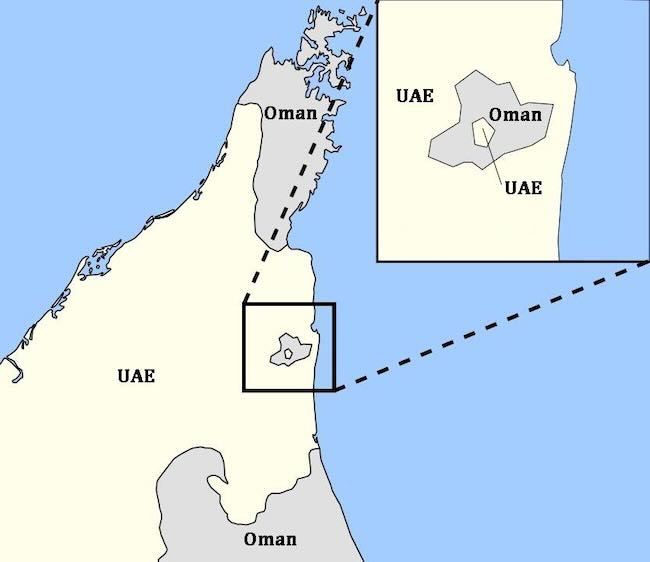
In the first half of the 20th century, before the borders were clearly defined, local tribes chose for themselves which side to join. That is how we ended up with an “exclave within an exclave”. The borders were later confirmed, without objection from the UAE.
Day Two
Oman is three hours ahead of Zagreb. After getting off the plane, it takes about half an hour to clear the border formalities, including fingerprinting and a photograph. Tourists can visit visa-free for up to 14 days. Our first impression of Muscat International Airport: wow! Thick carpets and beautiful details everywhere. Once we had cleared the formalities, we contacted the car-rental company and picked up our car.

We rented a 4x4 because some roads do not allow vehicles without four-wheel drive, including the route into the desert. We were lucky to find one at all: it was peak tourist season, and around ten rental companies had turned us down. The whole booking and negotiation process took place on WhatsApp and went smoothly. Everything happened exactly as agreed; the rental staff had no problem bringing the car directly to the airport at 3 a.m. A car without four-wheel drive costs half as much to rent.
Muscat and Qurum Beach
We arrived at dawn, and before the hotel would let us check in early, we headed for Qurum Beach. First impressions of an unfamiliar place stay with you. For the first few minutes of driving through the city, all we could say was, “Wow, look at that!”
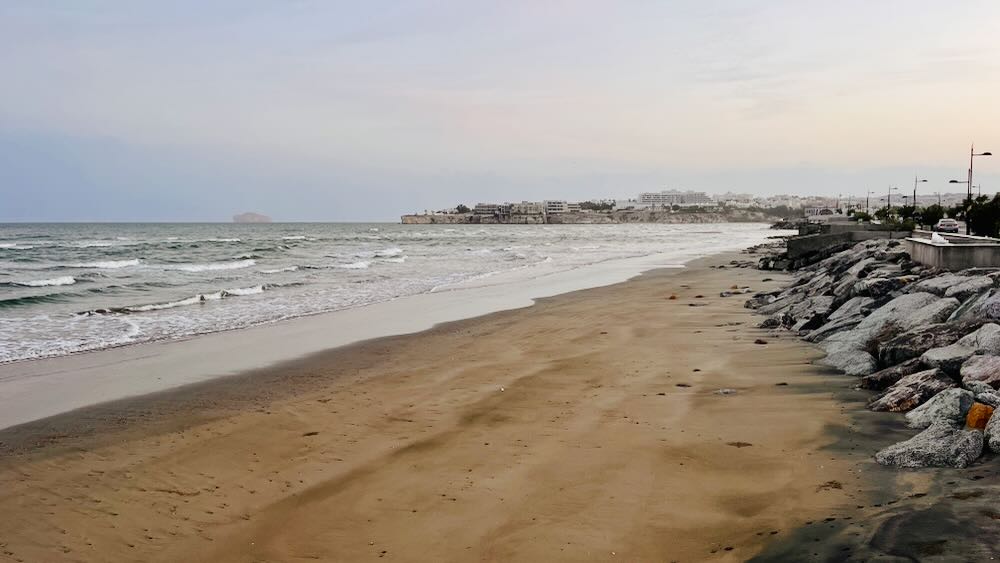
It is Muscat's best-known beach: a long stretch of golden sand beside the turquoise waters of the Gulf of Oman, popular for walking, swimming and playing in the sun. Local families come here at weekends for picnics, barbecues and time together, giving the place a particularly authentic sense of community. After a sleepless night, we did not stay long or wait for the sunrise and a chance to take photos, hoping to return another day.
We drove back to the hotel, about 20 km from Qurum Beach. Muscat does not really have a city centre. It stretches between the mountains and the sea for almost 40 km. There are no skyscrapers and no urban chaos.
There are no tall buildings in Muscat. Construction is limited to 10 or 12 storeys, and the tallest building has 16. Laws protect the city's visual identity, keeping the mountains and sea dominant. Oman is one of the few Middle Eastern countries without skyscrapers. Muscat does not try to impress. About 1.7 million people live here. Fast roads criss-cross the city, so we did not encounter much traffic. It also lacks the familiar urban noise of other capitals. Even honking is considered impolite. I noticed that using turn signals seems to be “impolite” too—rather like in Zagreb.
The city's cleanliness and order are impossible to miss. According to some rankings, Muscat is among the ten cleanest cities on the planet. It is also one of the safest. There is hardly any crime in Oman. Theft? The word barely seems to exist.
Without a car, you are at a disadvantage here: wherever you want to go in Muscat, you have to drive. Nothing is within walking distance. There is supposedly public transport, but Omanis do not seem keen on using it. And here is why.
I pulled into a petrol station and told the attendant, “Fill it up.” I watched the meter in disbelief. A full tank for €24? No way! A litre of petrol costs €0.51. It has an incredibly strong smell—richer, warmer and rawer than the fuel back home, a reminder of exactly where you are.
Accommodation
Our original plan was to stay in six different places over the next few days. A little further down, you will find out why we ended up with “only five”. Compared with Europe, accommodation in luxury hotels is fairly inexpensive here. For €100, you can get a good hotel with a pool—the kind that would cost at least three times as much back home.
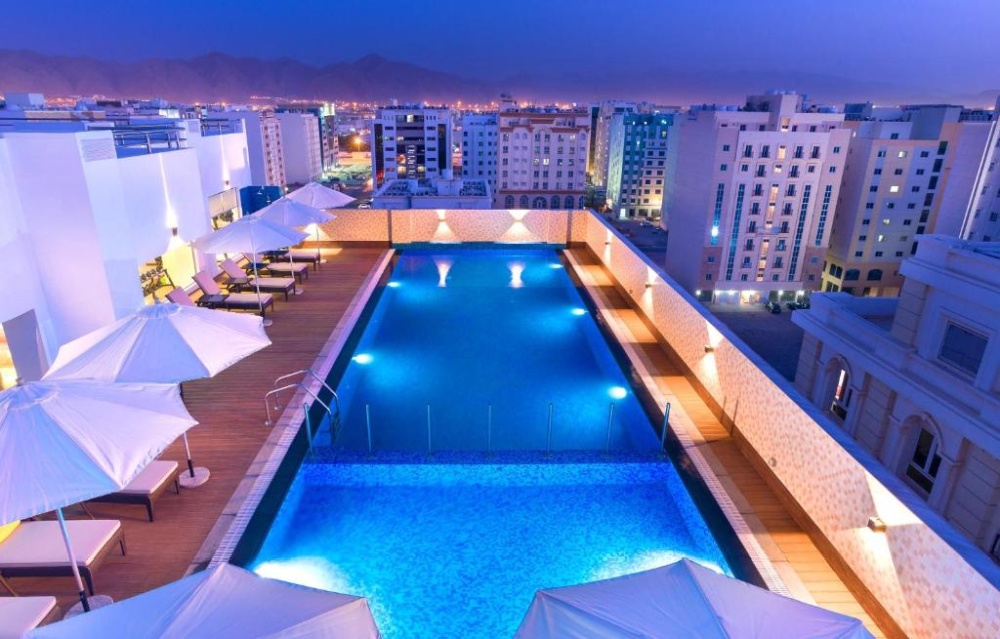
Our first choice was the Centara Hotel. Its rooftop pool is heated, making for a comfortable, leisurely swim even on these winter nights—winter being a relative term here. Summer temperatures approach 50°C, but it is currently around 25°C, a little cooler in the mornings. Omanis find that cold and wear winter jackets in the morning. They are not used to it.
Amouage
We quickly changed our sightseeing plans because we needed to rest at the hotel, even if only for a short nap. We decided to visit Amouage right away, although we had planned to leave it until our last day. The entrance is understated and gives no hint that some of the world's most luxurious perfumes are made here—just a sort of golden pool.
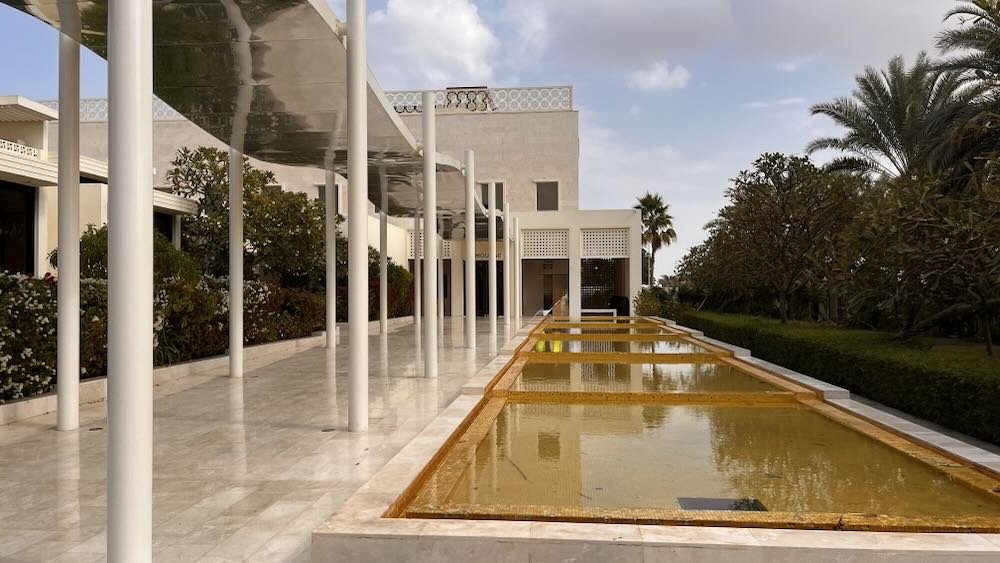
Amouage is an Omani luxury perfume house that reflects the character of the country it comes from: rich, refined and deeply rooted in tradition. A bottle costs around €350 or more. These are among the most expensive perfumes in the world.
Production does not rely on heavy industrial machinery; everything is done by hand. At the entrance, displays illustrate the process and the basic ingredients used to create the essences.
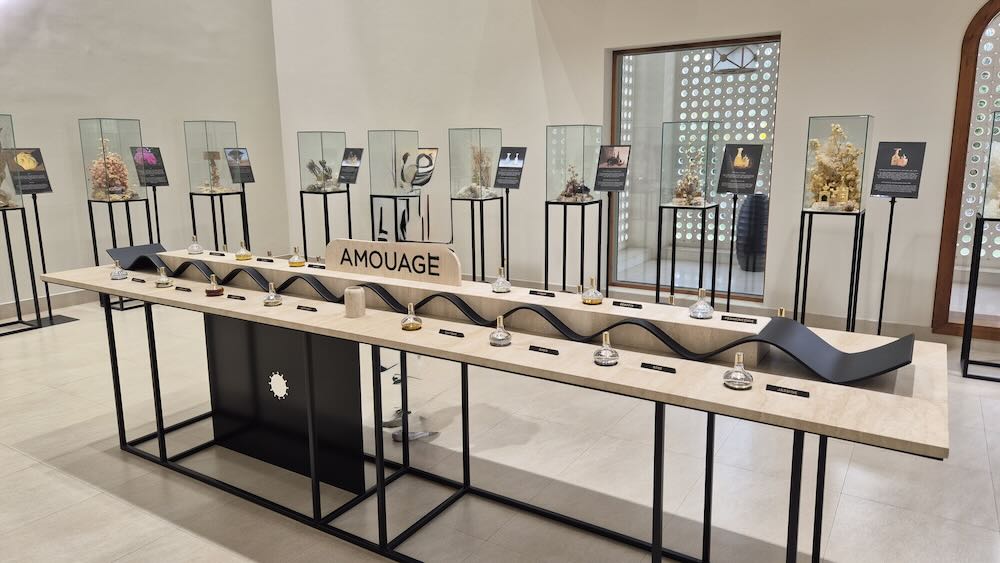
It was founded in Muscat in 1983 at the initiative of Sultan Qaboos, with the aim of introducing Omani frankincense to the world through haute parfumerie. Few perfumes have originated as a national cultural project.
The fragrances are known for their intense, complex compositions and staying power. They last for hours, sometimes even days. Everyone wears perfume here. This is not just about making perfume; it is about the tradition of an entire people.
The traditional men's garment, the dishdasha, has no buttons. Instead, it has a small tassel that is often perfumed, leaving a trail of scent wherever its wearer goes.

While we are on the subject of traditional dress, apparently a sultan's decree says that only Omanis may wear the dishdasha. What really catches the eye is how perfectly pressed and clean they are.
The head covering is called a kuma. It is mostly worn by boys and younger men, while older men wear scarves wrapped around their heads, much like elsewhere in the Arab world.
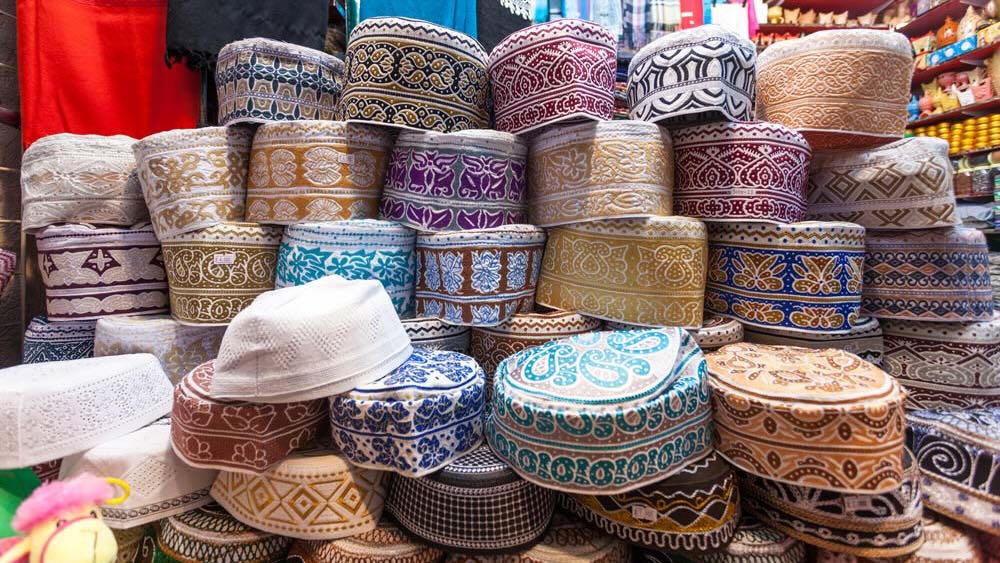
The kuma originally comes from Zanzibar. Oman once ruled Zanzibar, which was its colony. Those who wear it are immensely proud of it and of the patriotism it represents. It is a sign of belonging. Touching or removing someone's kuma is considered rude; it is personal.
Royal Opera House
Sultan Qaboos had two impressive buildings constructed in Muscat: the Grand Mosque and the Royal Opera House. The first one we visited was the opera house.
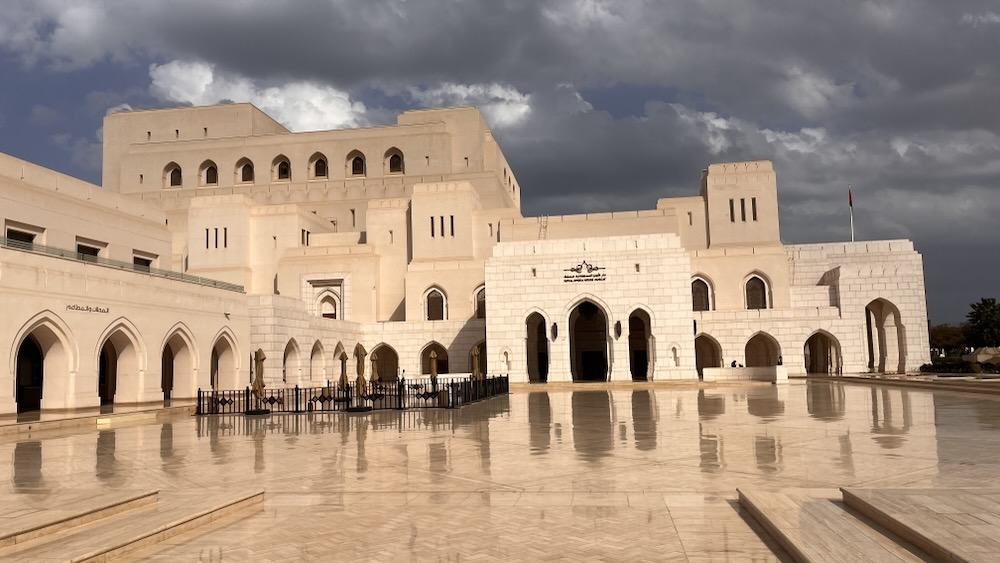
Omanis like to point out that the sultan paid for it out of his own pocket. The architecture is classically Omani, with careful attention to every detail. When it opened in 2011, it was the first opera house on the Arabian Peninsula.
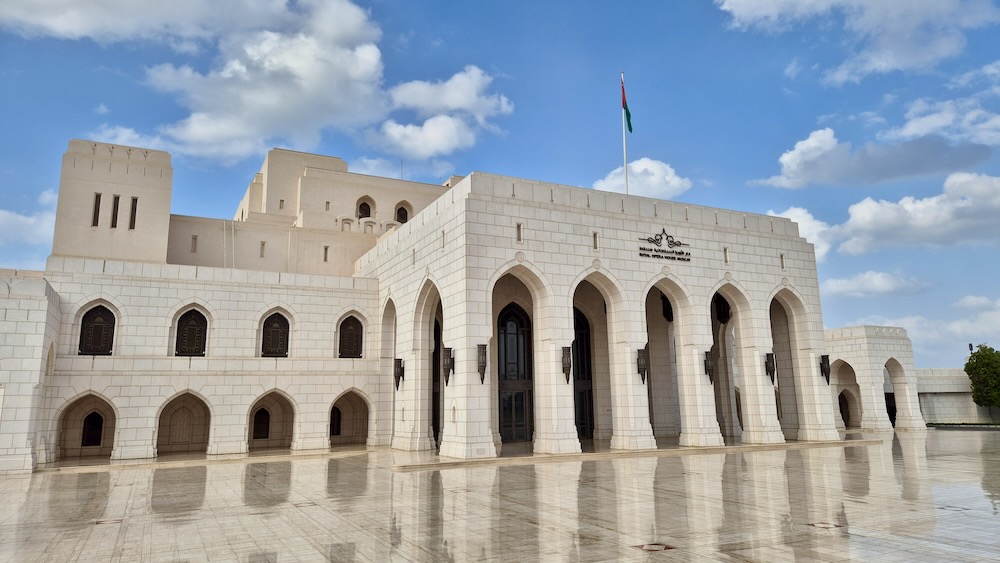
The interior is astonishingly detailed. Everything is handmade, from the carved wooden elements to the gold decorations. The carpets were hand-woven in Iran and India. A total of 65 kg of gold was used to decorate the opera house. The acoustics are flawless.
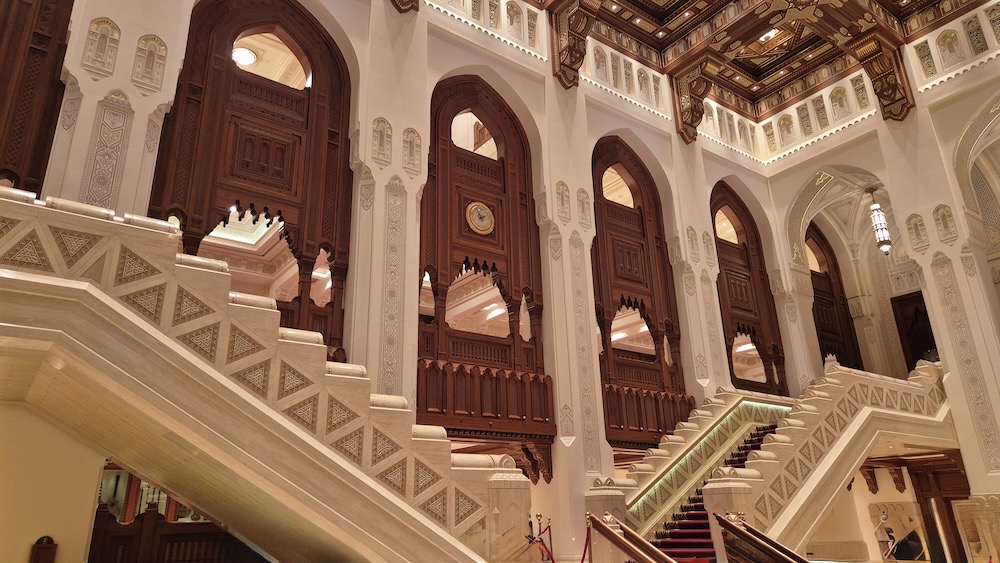
The auditorium can change shape: a complex hydraulic system adjusts the stage to suit the performers. Panels and even the ceiling also move to tune the room acoustically—a rare feature even among the world's best-known opera houses. The organ is imposing. It may not be the largest, but I think it is the only one in this part of the world.

The opera house symbolises Oman's ambition to bring Western musical traditions together with its own cultural identity. The auditorium can accommodate more than 1,000 guests.
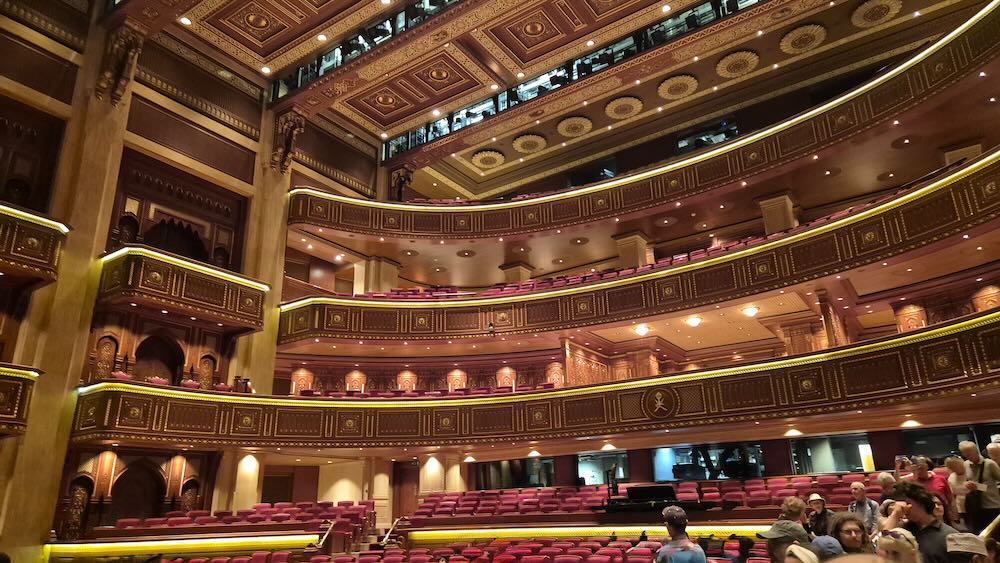
The wood carvings are exquisite. Every seat has a small LCD screen, presumably for displaying programme information.
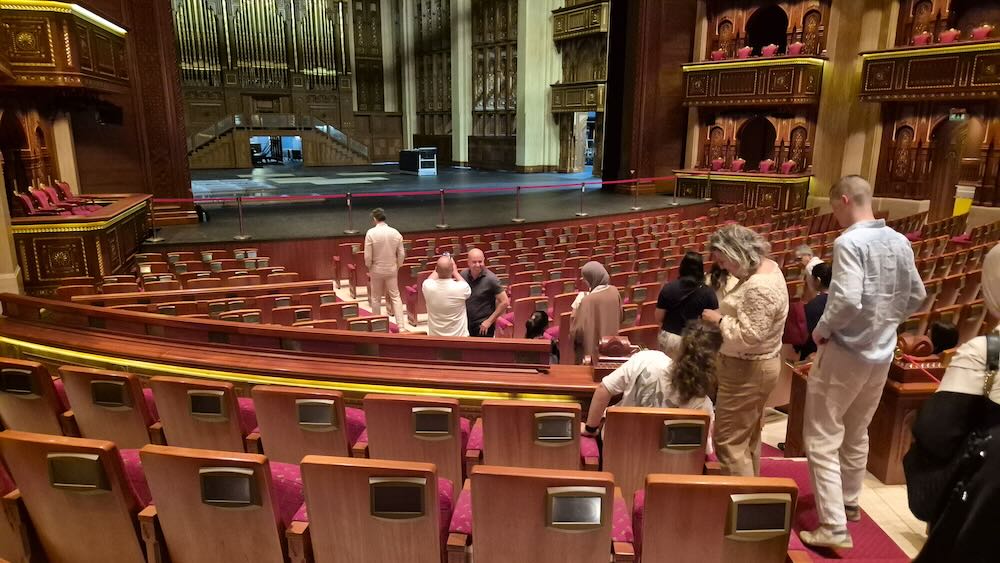
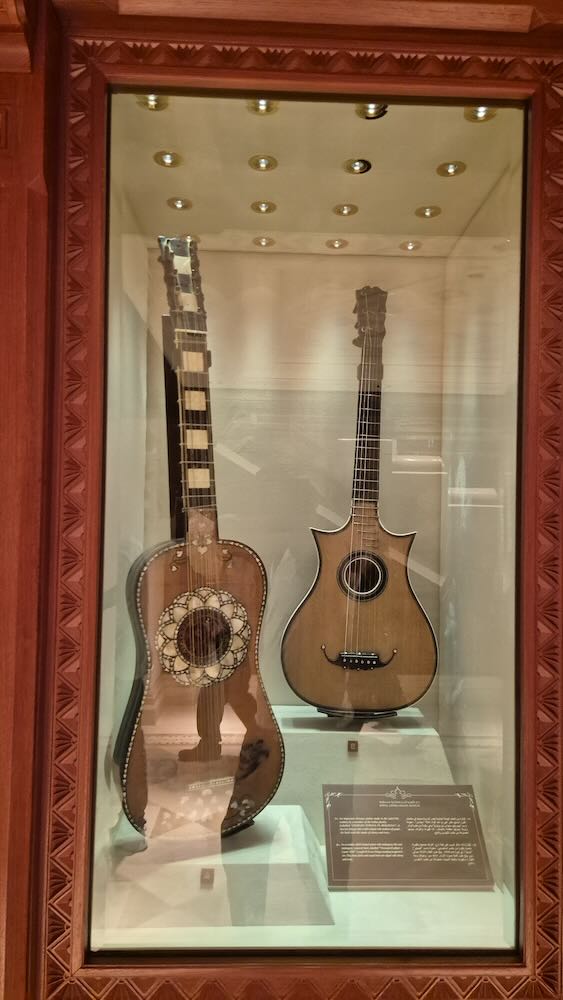
The programme is varied, but there are no performances or events for New Year's Eve because Omanis do not celebrate it. For them, it is just an ordinary date. The opera house also has an exhibition of rare instruments:
We continued to Muttrah Souq, in the old part of Muscat.
Muttrah Souq
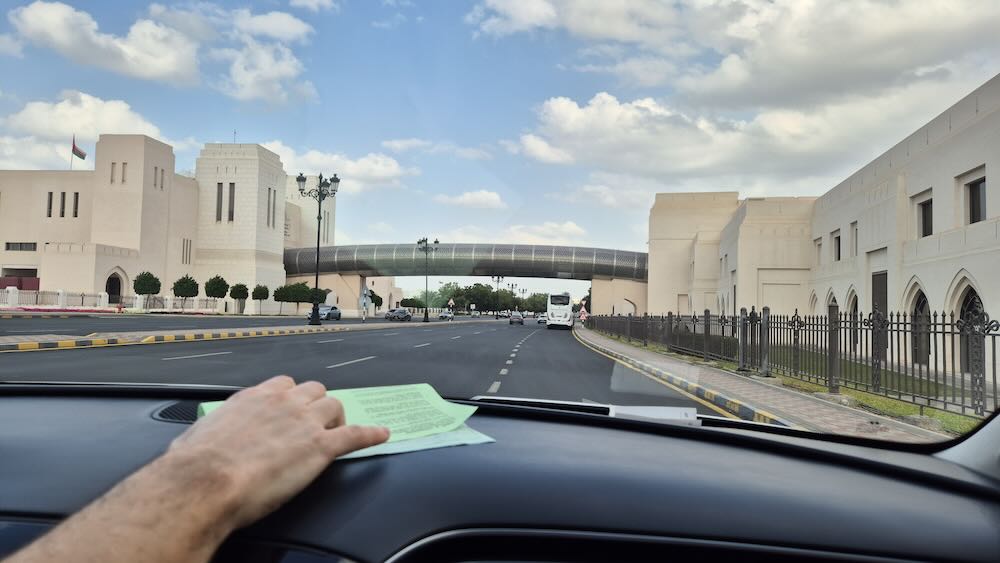
The road to Muttrah—effectively a district of Muscat—passes some interesting buildings.
Muttrah is the oldest part of Muscat. Archaeological finds show that a settlement stood here as long as 6,000 years ago. We walked to the souq along Muttrah's waterfront promenade, the Corniche, which is paved with red marble and looks especially striking in the evening, when locals come out for a stroll.
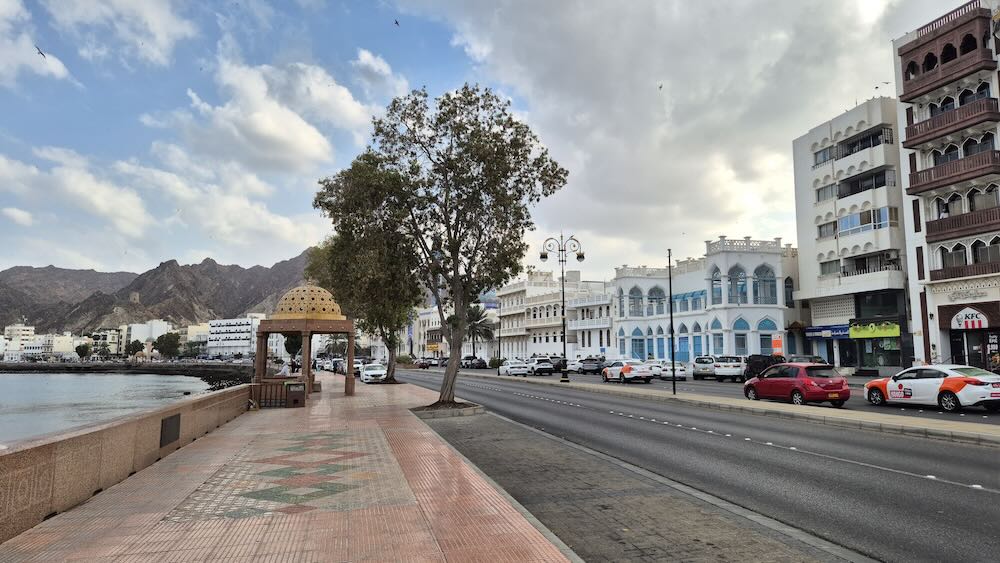
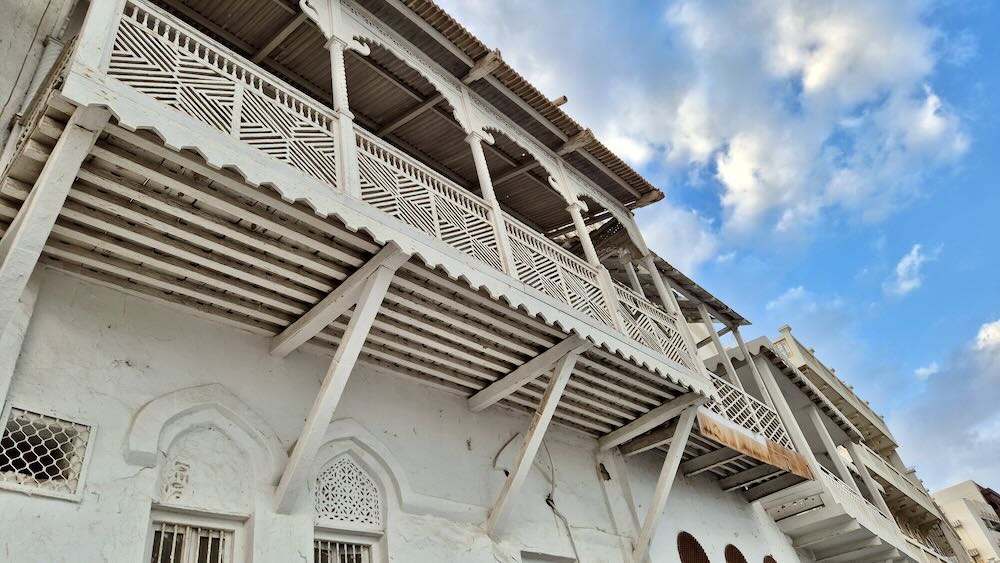
Trading ships once docked here. You can still see old buildings, not just newly polished ones.
For centuries, Muttrah Souq was a trading hub linking Africa, India and Arabia. Frankincense, spices, perfumes and rose water fill its narrow passages. Bargaining is part of the culture, but it is not aggressive—at least until my wife joined in. At one point, the shopkeeper held his head in his hands as the price fell to a third of its original amount. Unable to believe how far she had brought it down, he simply looked at her and asked, “Where are you from?” We carried on walking while he stayed behind, wondering where it had all gone wrong.
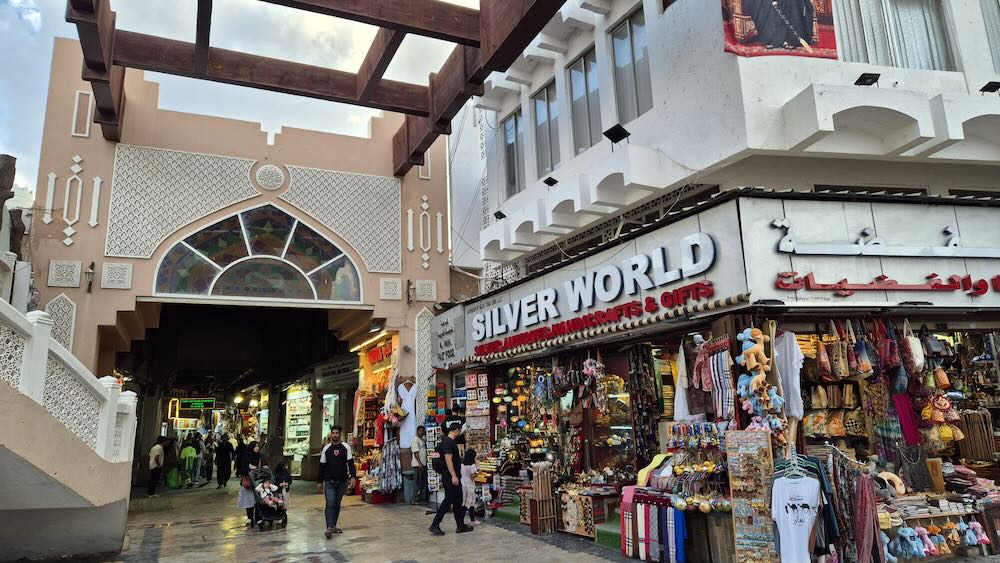
Most of the souq's shopkeepers are not Omani. In fact, it seems to me that foreigners are the ones doing most of the work in Oman: Indians, Bangladeshis and Pakistanis are out on the streets and working in restaurants and shops. Oman has a population of 5.2 million, of whom 2.5 million—or nearly 33%—are foreigners. Recently, the country has been pursuing “Omanisation”, an effort to increase employment among Omanis themselves.
Although oil and gas revenues account for 50% of GDP, Oman has very little oil compared with neighbouring Saudi Arabia and the UAE. What does the country live on? Mainly oil and gas, but its neutrality has also helped build a strong financial sector: people want to keep their wealth somewhere stable. The currency is the Omani rial (OMR), the world's third most valuable currency. As I write this, 1 OMR is worth €2.30. The rial is divided into 1,000 baisa, which is why shop prices are shown to three decimal places, for example 2.500 OMR.
Oman's GDP is about €100 billion (2025 figures), roughly comparable to Croatia's. But there is one uncomfortable “but”: the average salary in Oman is about €4,200, compared with €1,450 in Croatia.
Oman's GDP per capita is 20% lower than Croatia's, since it has 5.2 million people compared with Croatia's 4 million. And yet the average salary is three times higher. Salaries are not taxed, while some goods and services are subject to a 5% tax. Is anyone in the Croatian government reading this?
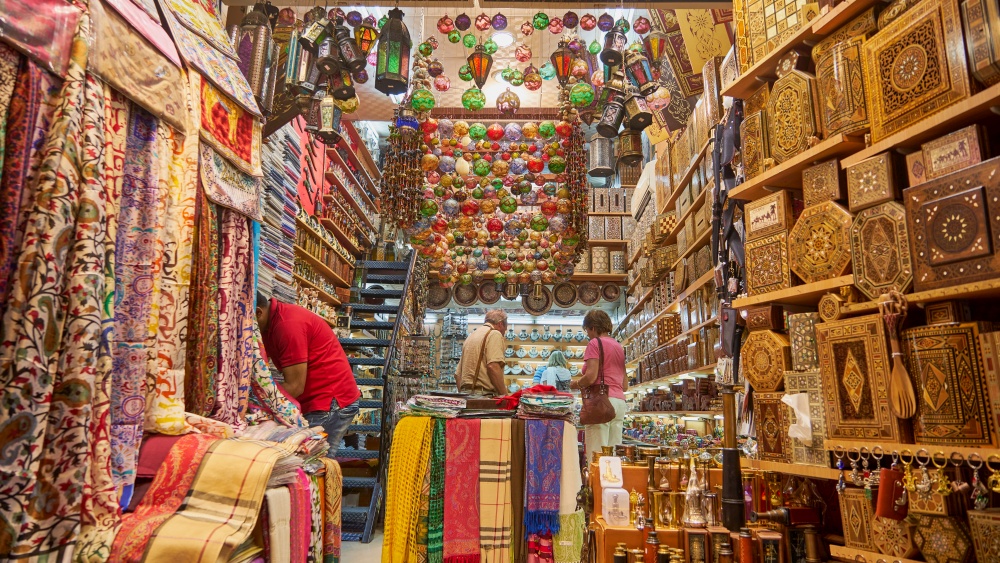
We did not have the energy to stay and see Muttrah and the city at night, having slept for barely three hours. We hurried back to the hotel to rest before continuing our explorations.
The hotel was just over 20 km away. On the way, we passed Muscat's greatest landmark, the Grand Mosque, which we planned to visit first thing in the morning.

Oman is not an overbearing country. It is a neutral Arab state with good relations with everyone. It often acts as a mediator between warring Middle Eastern countries—everyone in the region seems to be fighting everyone else. In many ways, Oman is the least “Arab” of the Arab states. Omanis speak an archaic form of Arabic, said to be the closest to the language in which the Quran was written.
Day Three
Sultan Qaboos Grand Mosque
After only a few hours in Oman, it was already clear that the country calls for a slower pace. After breakfast and coffee, we decided to visit a masterpiece of Omani architecture: the Sultan Qaboos Grand Mosque.
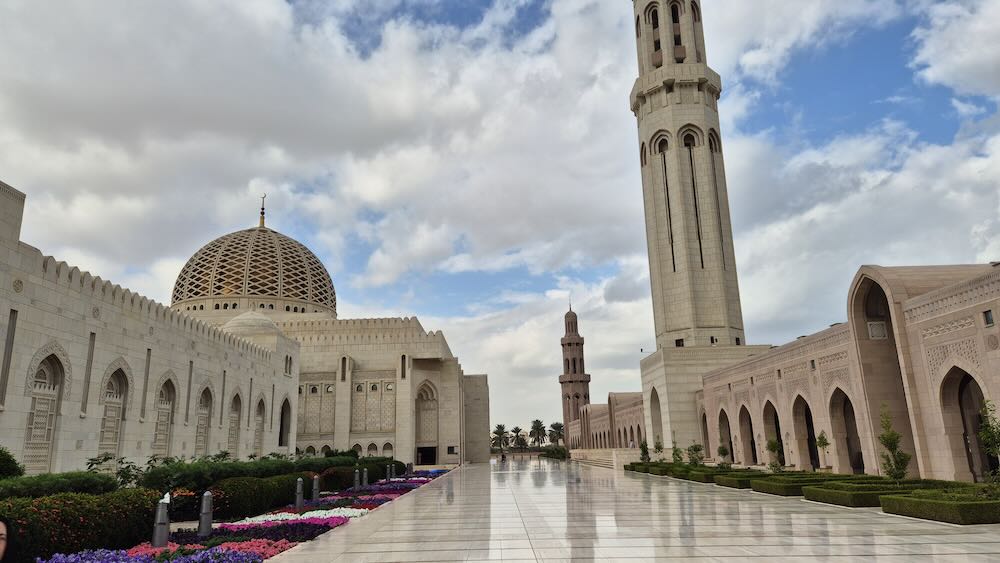
The Sultan Qaboos Grand Mosque in Muscat is an impressive building that represents the spiritual and cultural heart of Oman. It was built between 1995 and 2001 and opened to the public in 2001. The mosque is dedicated to Sultan Qaboos bin Said Al Said, who ruled Oman from 1970 until his death in 2020.

The mosque complex covers an area comparable to a small city district—more than 400,000 square metres. From the outside, the mosque seems modest, but once inside, its full splendour is revealed: white surfaces, geometric designs and Arabic inscriptions. It is the largest mosque in the country and can accommodate 20,000 worshippers.
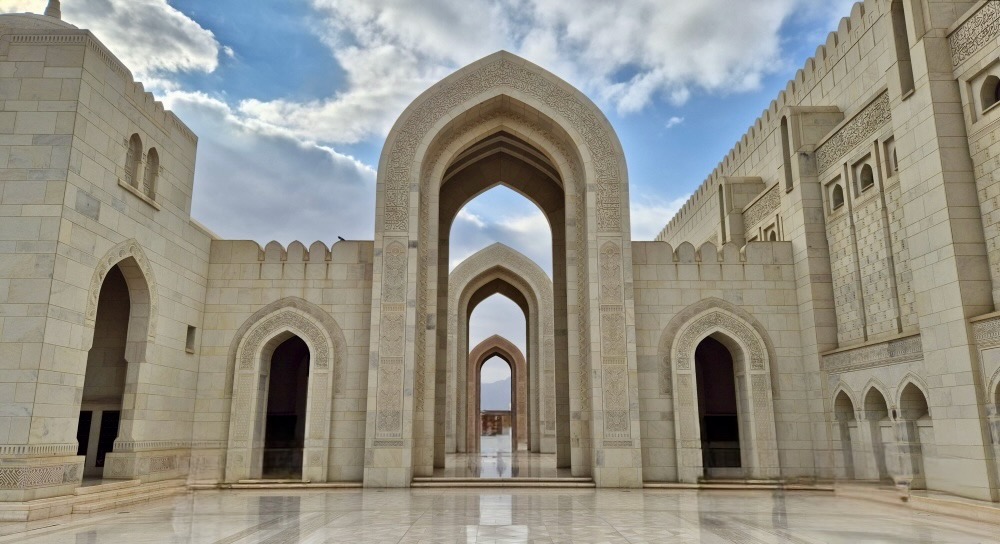
The mosque welcomes all visitors, not only Muslims. It was deliberately designed as a place for everyone and is, in fact, the only mosque in Oman that allows non-Muslims to enter.
Visitors to the Sultan Qaboos Grand Mosque must dress modestly. Men need to wear long trousers; women must also have long sleeves and a headscarf. At the entrance, uniformed staff check that visitors are dressed appropriately for a mosque, with particular attention to women.
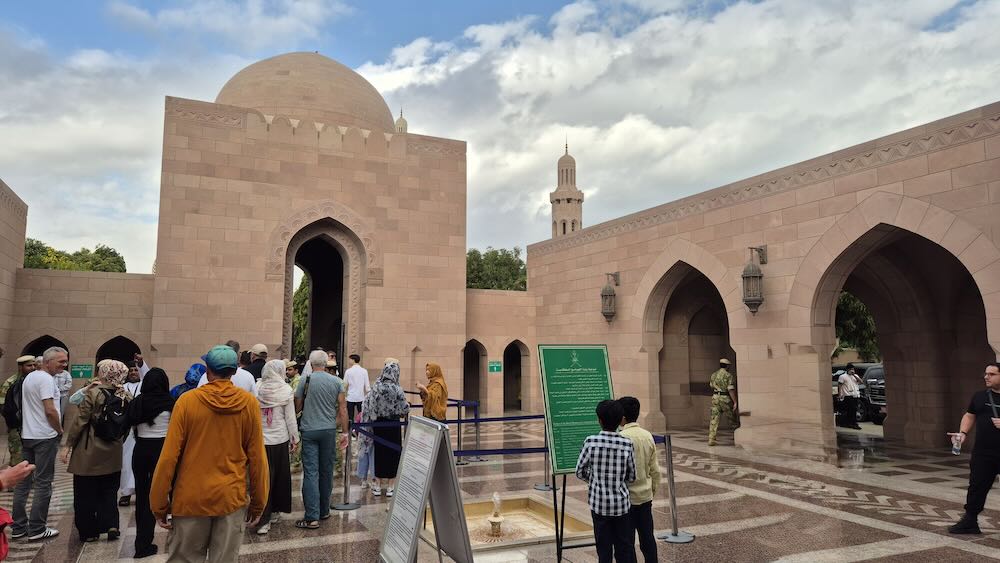
Sultan Qaboos gave the Grand Mosque to the people of Oman in 2001, having reportedly paid for its construction himself. The sultan rules as an absolute monarch, though in a restrained, compromise-oriented way and without much fanfare. He governs by decree.
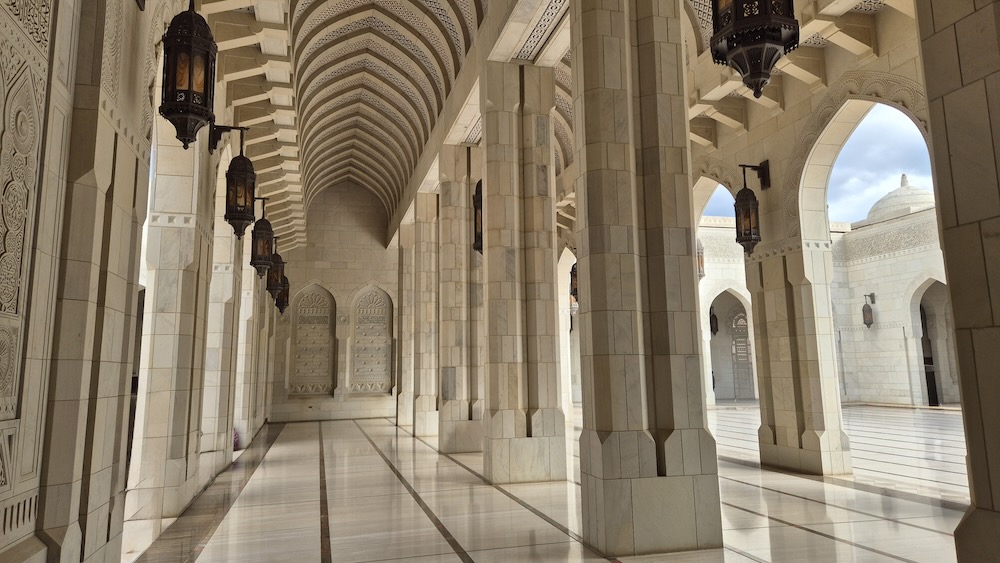
Construction proceeded “slowly” so that attention could be given to detail and quality. Marble and stone from India, Iran, Italy and Oman were carefully selected to represent the universality of Islam. About 270,000 tonnes of Indian sandstone were imported for the project. The architecture does not copy any one Islamic school; it combines Persian, Andalusian and Omani elements to create a distinctive style.
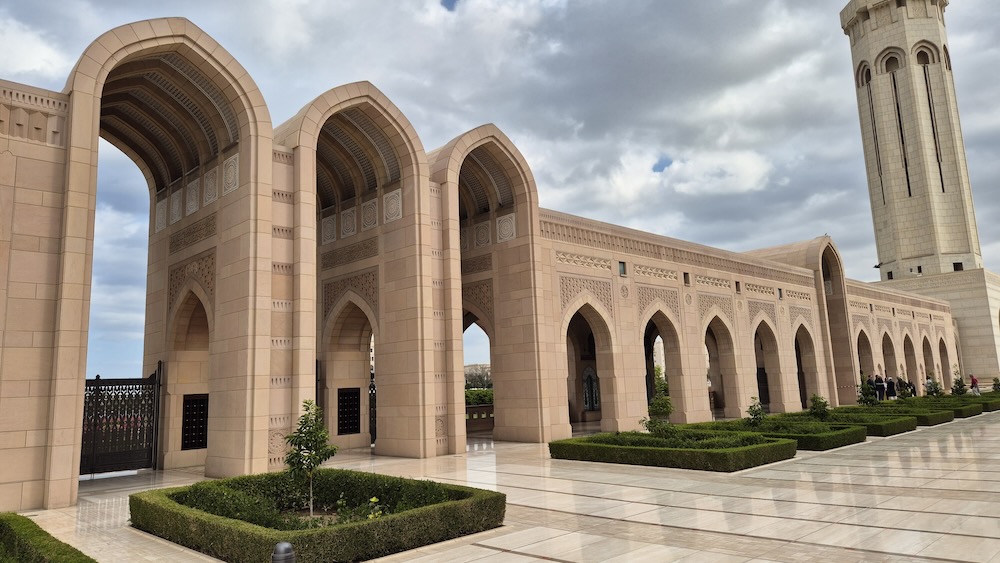
The men's prayer hall beneath the main dome can hold 6,600 worshippers. Its Persian carpet, made in Iran, measures 70 by 60 metres, or 4,200 square metres. Six hundred women spent four years weaving it. It weighs 21 tonnes and was the world's largest hand-woven carpet until an even larger one, measuring 5,600 square metres, was installed in Abu Dhabi's Grand Mosque in 2007.
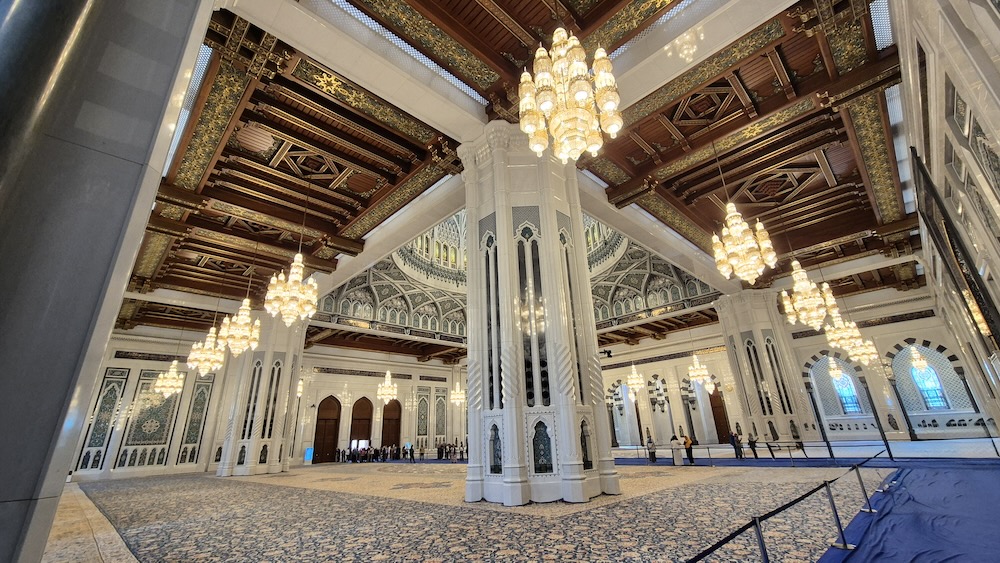
The main prayer hall has a dome that rises 50 metres above the floor, lavishly decorated inside with breathtaking geometric and lighting details.
A chandelier hangs beneath the main dome. It is eight metres in diameter, 14 metres high and weighs 8.5 tonnes; it is decorated with gold and 600,000 Swarovski crystals. For a long time, it was the world's largest crystal chandelier—but not for long, as Doha now has an even larger one.
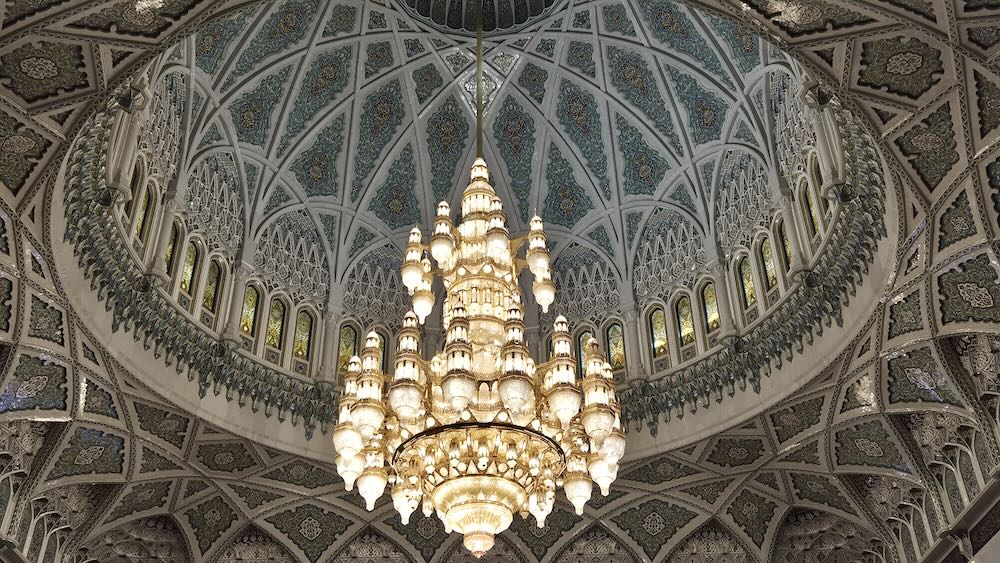
The women's prayer hall is much more modest and can hold 750 worshippers.
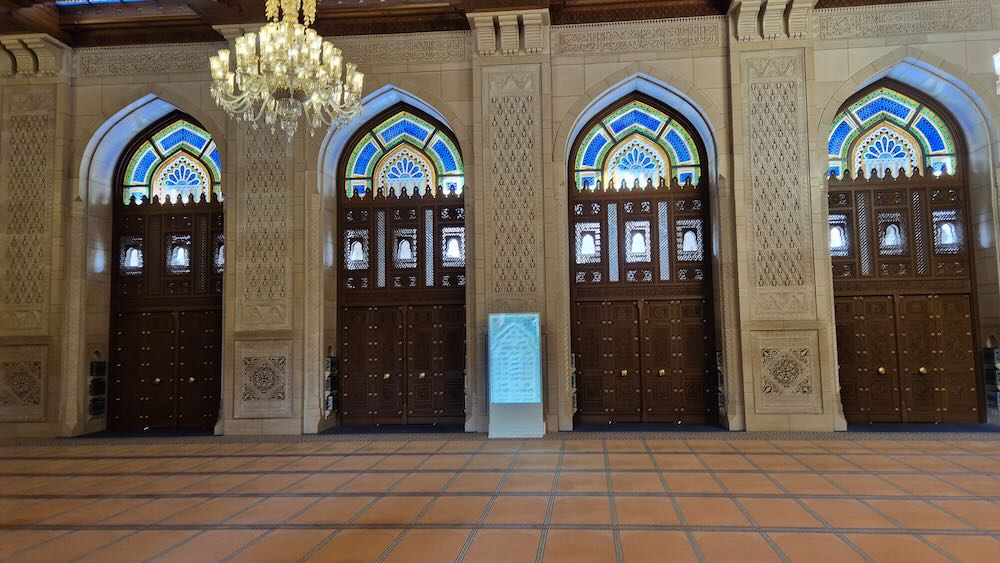
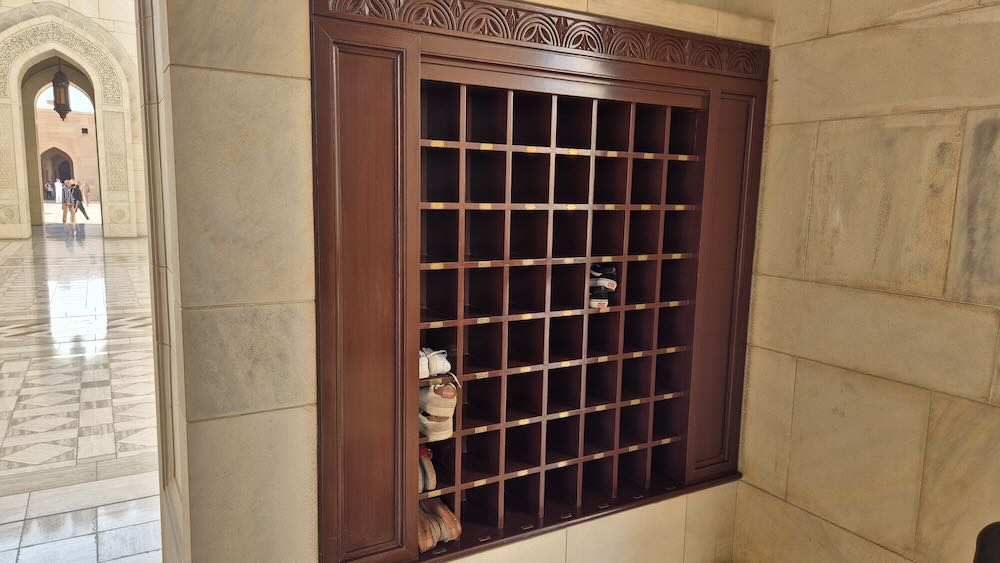
You enter the prayer halls barefoot: shoes must be removed and left on the shelves provided.
If you did not know, the general rule is to enter a mosque with your right foot and leave with your left.
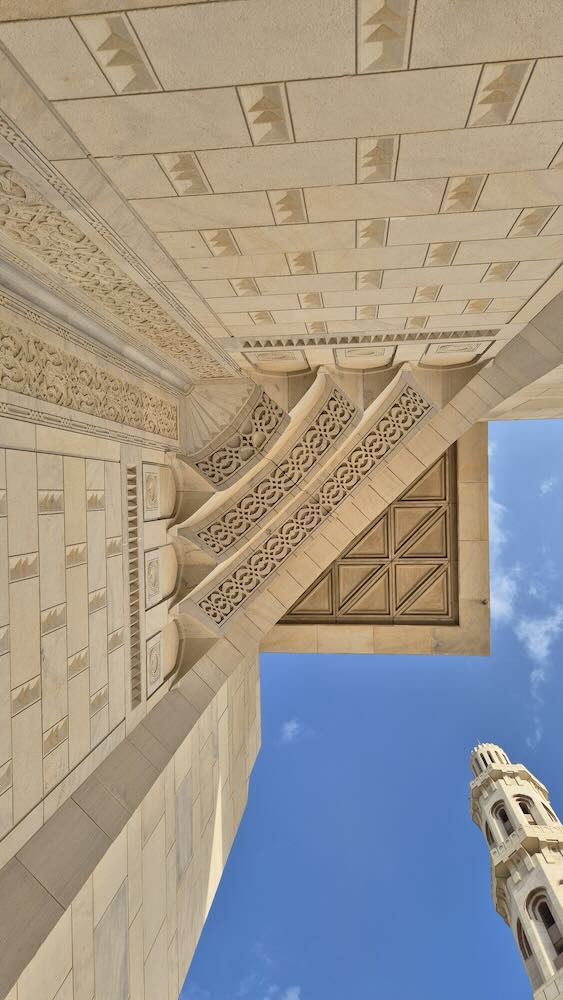
The mosque has five minarets, representing the five pillars of Islam. The fifth, main minaret is twice as tall as the others, reaching 90 metres. It is actually the tallest structure in Oman.
Even the area with the toilets is monumental.

Omanis are Ibadi Muslims. Most people have heard of Sunnis and Shias, who together make up 99% of the Muslim population. Ibadism accounts for only about 0.1–1% worldwide, but it is the dominant branch in Oman. It is also one of the oldest branches of Islam. When Muslims split into religious factions, the Ibadis did not align themselves with either of the other groups, which may help explain why Oman is now a rare neutral Arab state. They are tolerant of other religions, and Ibadism is considered one of the most tolerant branches of Islam.
Islam is the official religion, and Sharia law is applied in the legal system. Religious discrimination is prohibited by law. All religions are permitted, and everyone is free to practise their faith.
Fish Market
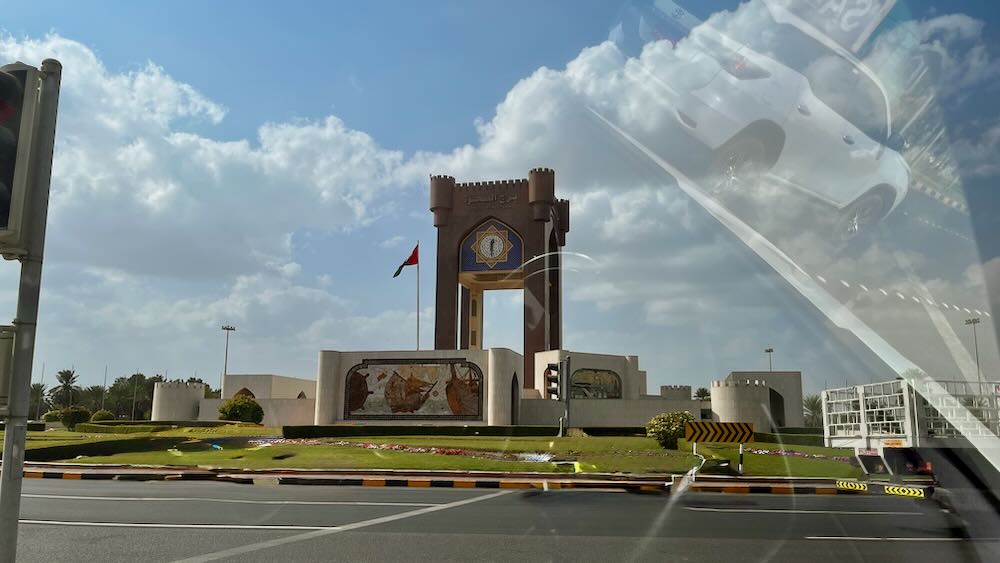
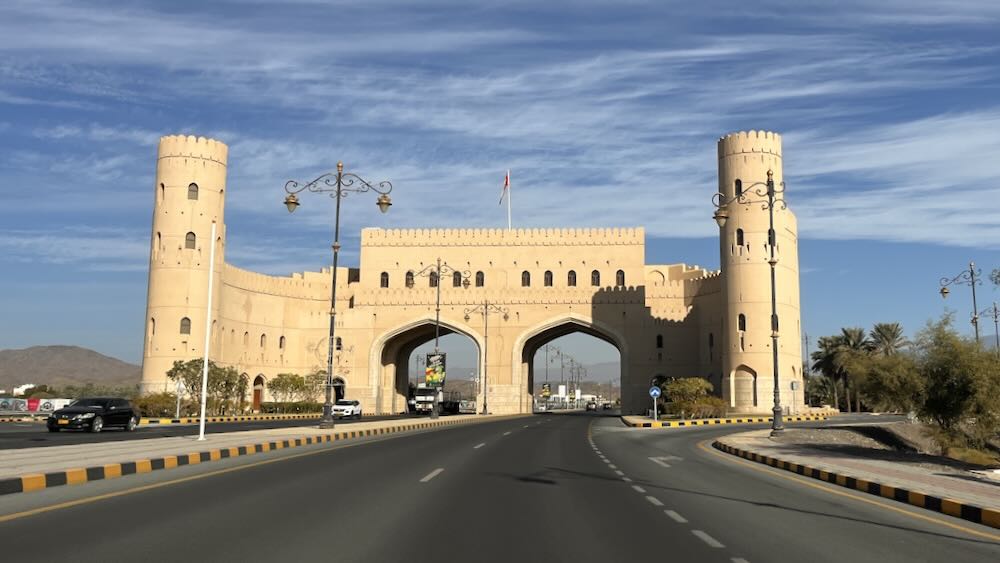
After the mosque, we headed back towards Muttrah, the souq and Muttrah Fort, stopping at the fish market first. Muscat does not feel like one compact city, but rather a series of connected districts. The entrance to Muttrah is marked by a sort of triumphal arch—they seem to love putting structures like these along city roads.
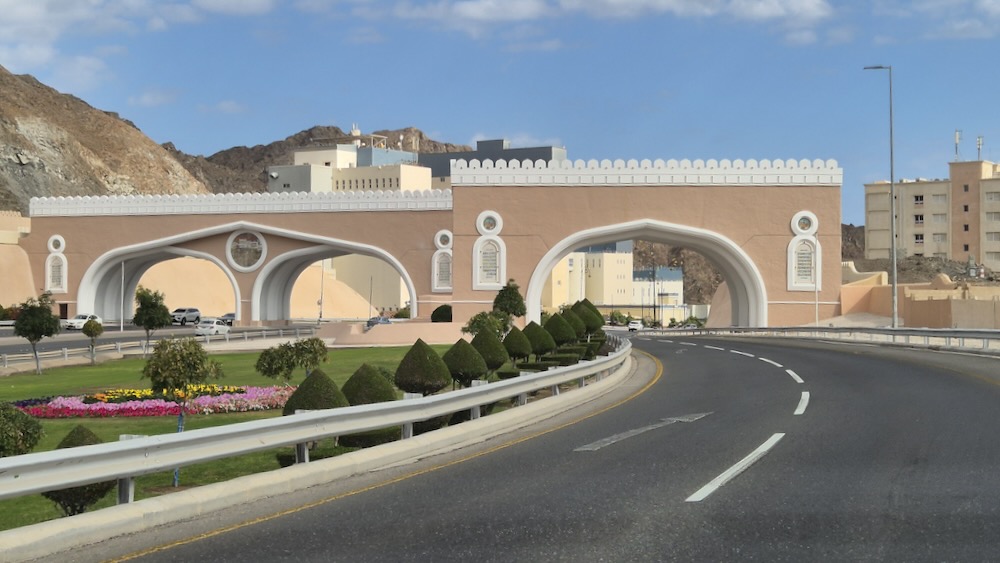
There is a large car park next to it, where you can always find a space. The market is lively, and the fish look as if they were on steroids—two or three clothing sizes bigger than the ones we get in the Adriatic. This one is over a metre long.
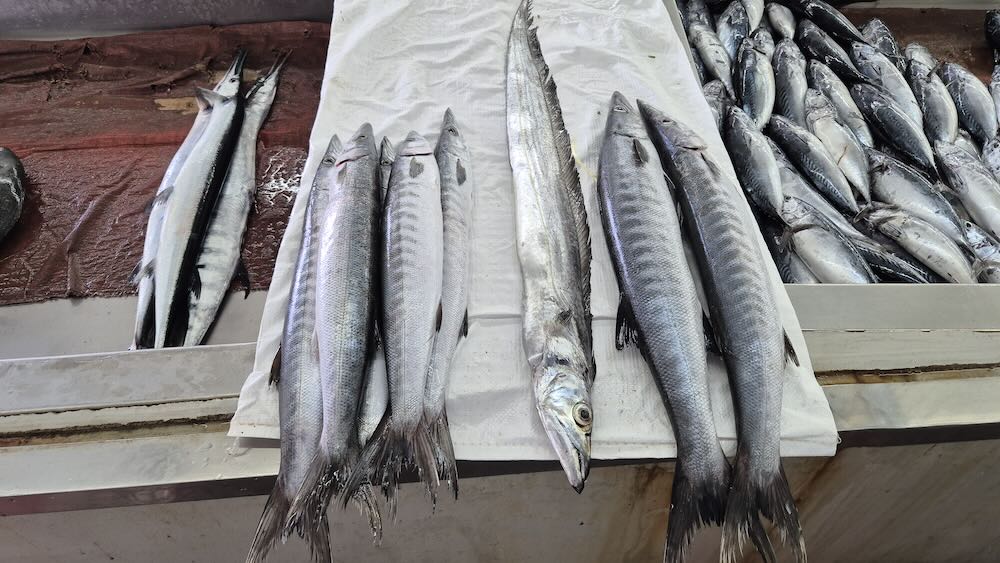
The fish is fresh and the prices are ridiculously low. There are no price tags; you negotiate with words or just a look. A kilo of fish costs between 1 and 3 OMR (€2.30–7). Tuna and kingfish are the most common catches on offer.
Muttrah Fort
We set off for our first fort, Muttrah Fort, which stands just above the souq. It looks as if it grew out of the rock, blending perfectly into its surroundings. Stairs lead to the top.
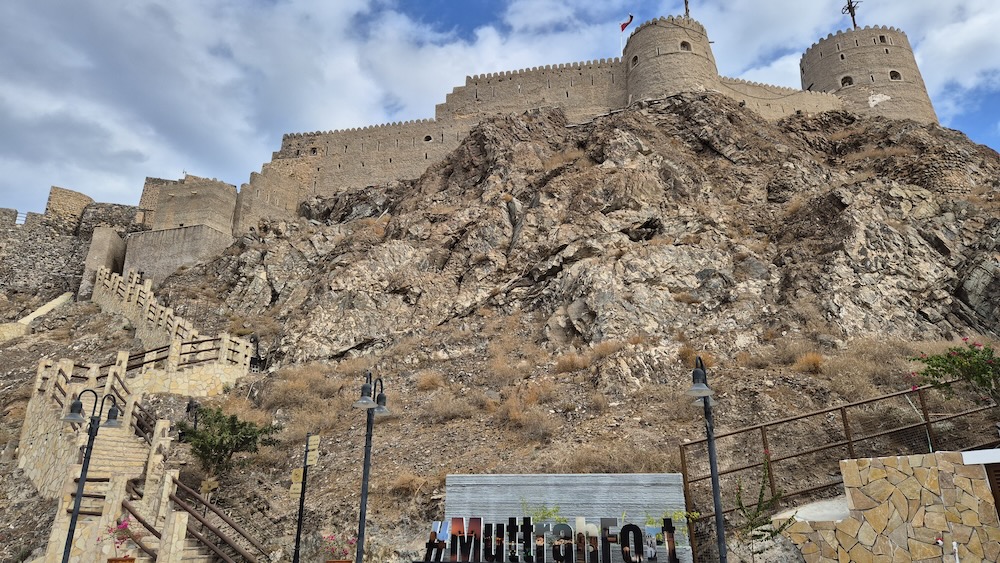
Muttrah Fort dates back to the 16th century. It was built to protect the harbour and trading town from attacks by sea. Oman has more than 500 forts and castles—more than any other country in the world relative to its size. The fort was originally built by the Portuguese during their period of naval dominance. The Omanis later took it over and adapted it for their own defence.
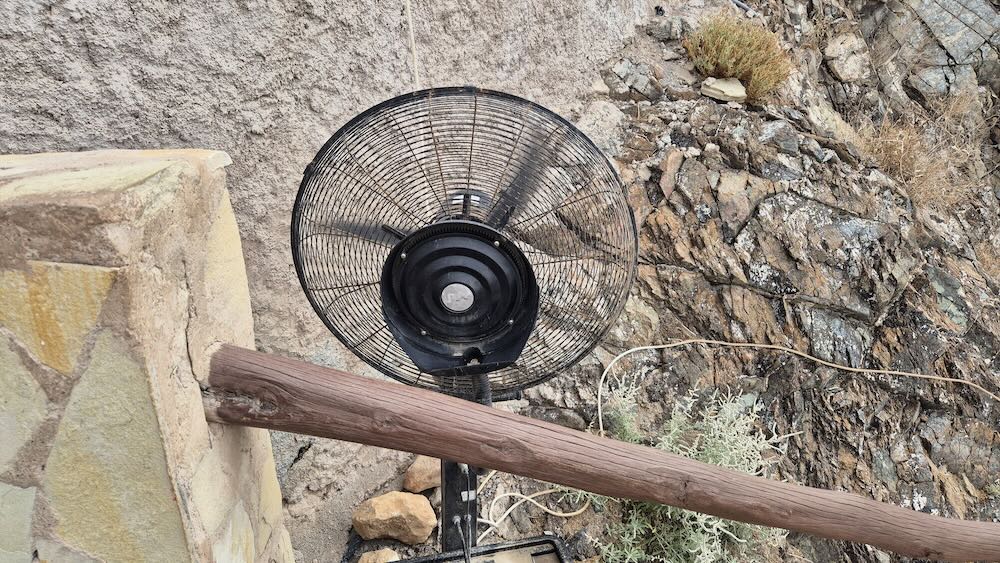
Omanis try to make everyone comfortable. Since summers are extremely hot, fans have been installed at three or four points along the stairway to cool people as they climb.
Old cannons still stand on the fort's walls.

Oman was never colonised. Unlike much of the region, it managed to preserve its independence, something that is strongly reflected in the country's culture, confidence and identity. From the top, you get a beautiful view of the Corniche waterfront.
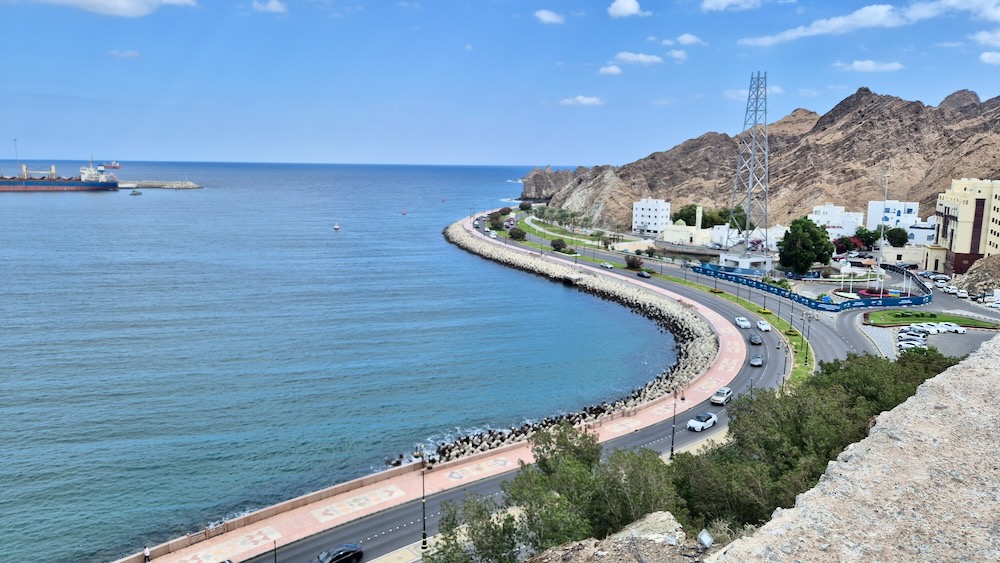
This is what the whole district looks like, with buildings tucked between the rocks.
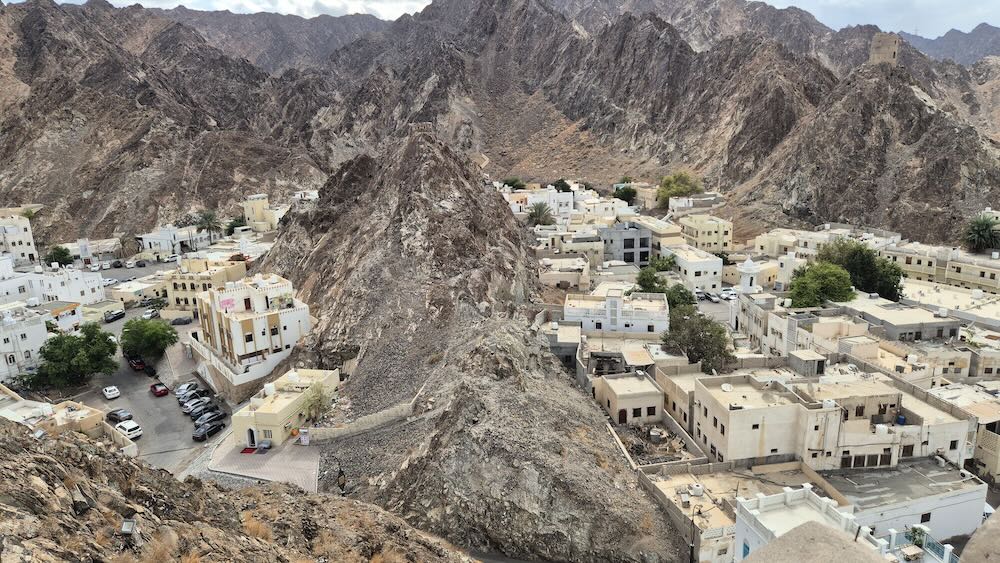
Muttrah Souq #2
A quick refresher—this time we explored a little further into the alleys. Card payments are widely accepted in Oman, even in the souq. The only place where we could not use cards was the desert. It is easy to get lost in the souq: the whole area is covered, and the lanes are laid out to let air circulate. The only way to find the exit towards the coast is to follow the souq downhill; it will lead you out. Bargaining still works.
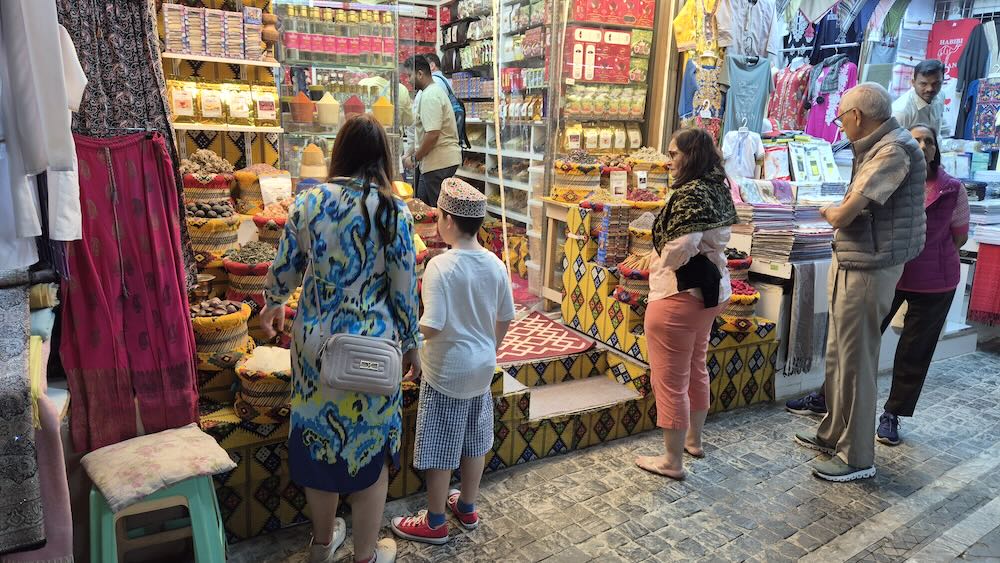
Go on, buy the blue rock and put it on your face!
We actually bought internet access here, and I noticed it is the only thing more expensive than in Croatia—internet. For comparison, shop prices are roughly like ours: not exactly a bargain. Living in Muscat is 20% cheaper than in Zagreb. Salaries, as I mentioned, are three times higher.
We continued exploring.
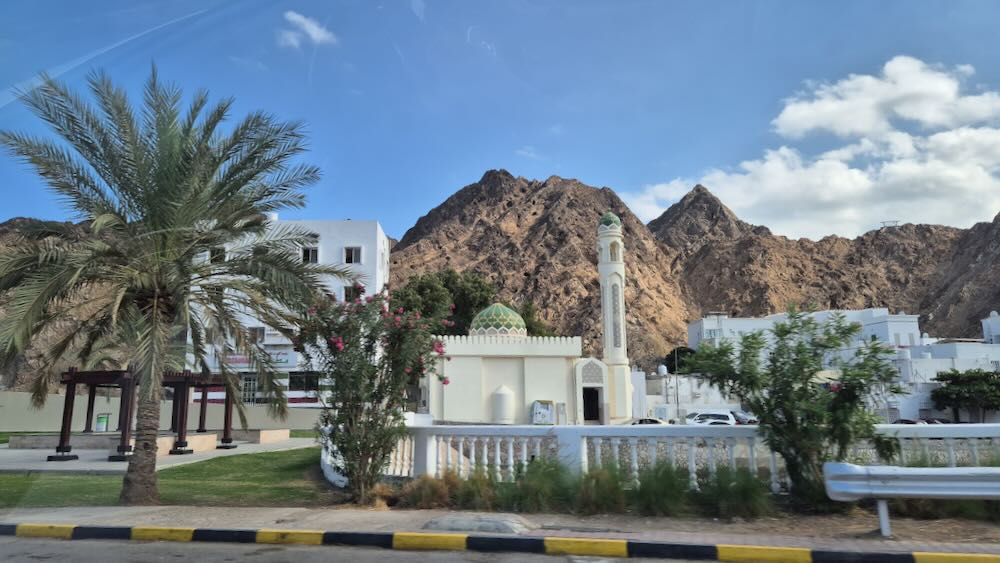
Riyam Censer
The Riyam Censer stands on a small hill just above the sea.
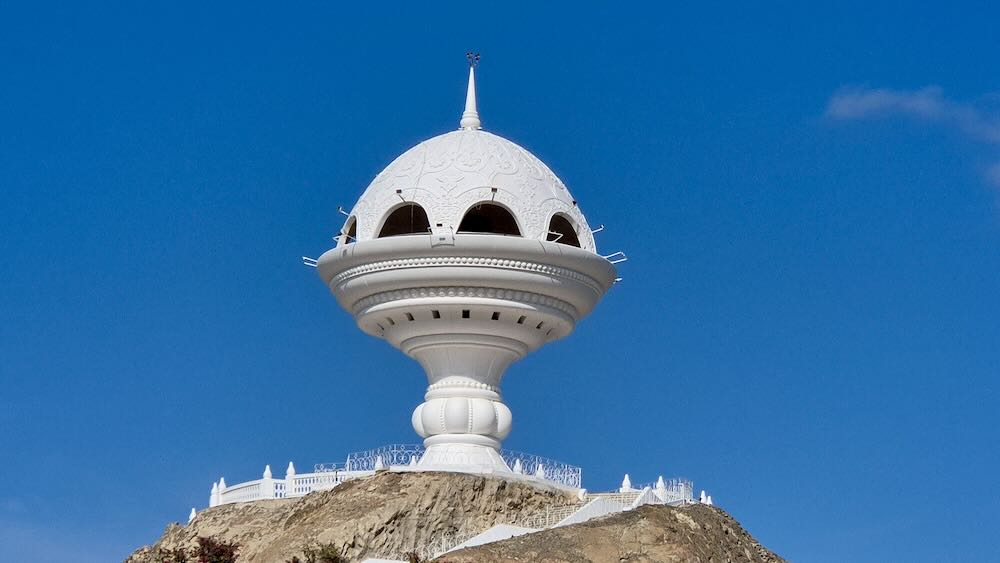
It is a monumental, gigantic incense burner, a traditional symbol of Oman. To us foreigners, it looks more like a cake dish—with a lid. Unfortunately, it was closed for renovation, but it still looks impressive. They say the view from the top is spectacular. Below it is a park where local families enjoy picnics.
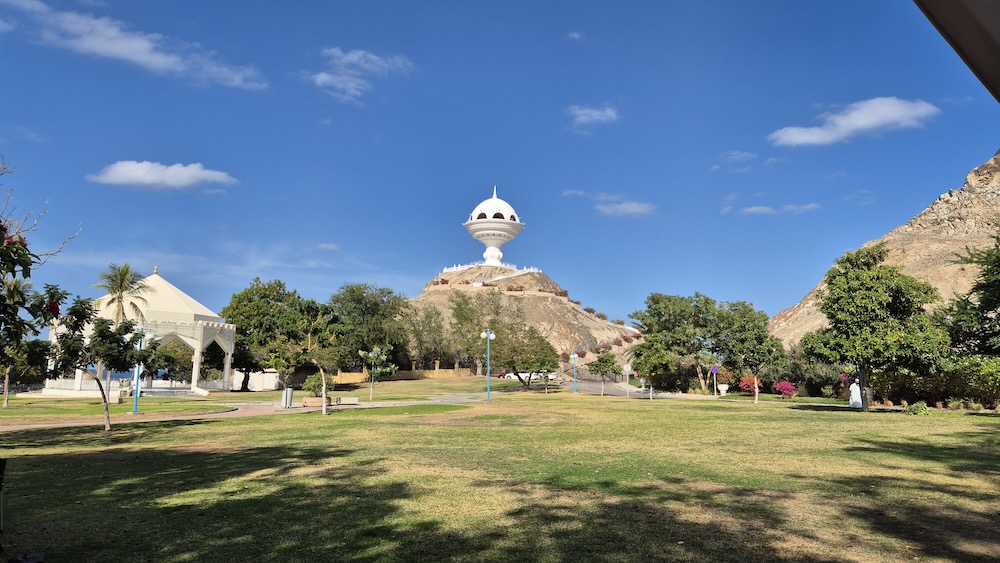
Some of the world's finest frankincense is produced in Oman. For thousands of years, the Dhofar region has exported frankincense, which was used in ancient Egypt and Rome and in religious ceremonies around the world. It is not only burned for its fragrance: the better-quality resin can also be chewed and is said to ease stomach problems. Unlike other monumental structures, this censer is dedicated not to a person but solely to frankincense.
Al Alam Palace
A few kilometres further on, we reached Al Alam Palace, the sultan's palace.
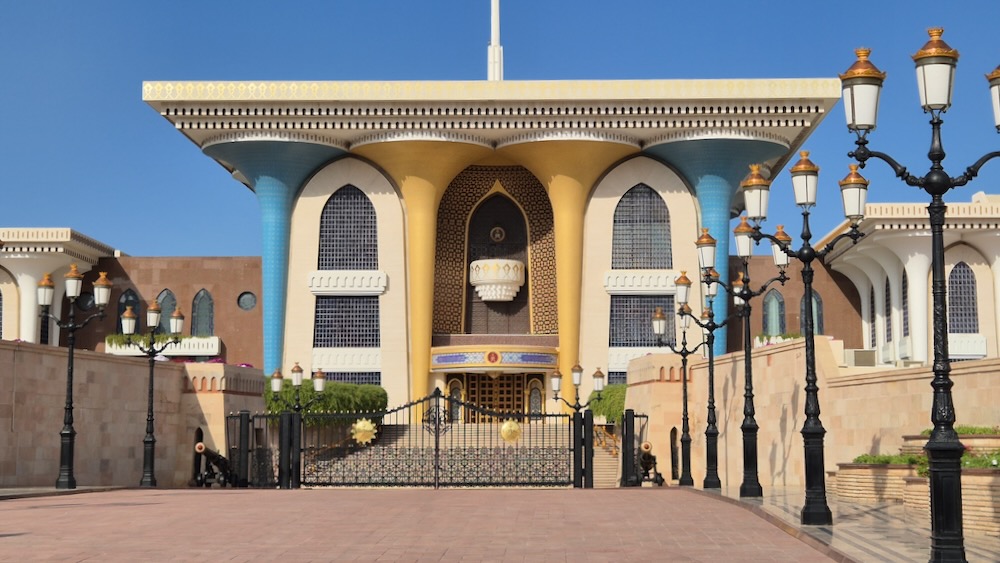
Al Alam Palace is one of those rare palaces that does not try to impress with its size, but with its presence. Set between the two old forts, Al Jalali and Al Mirani, it looks almost modest by Arab standards—although the entire complex is not exactly small.
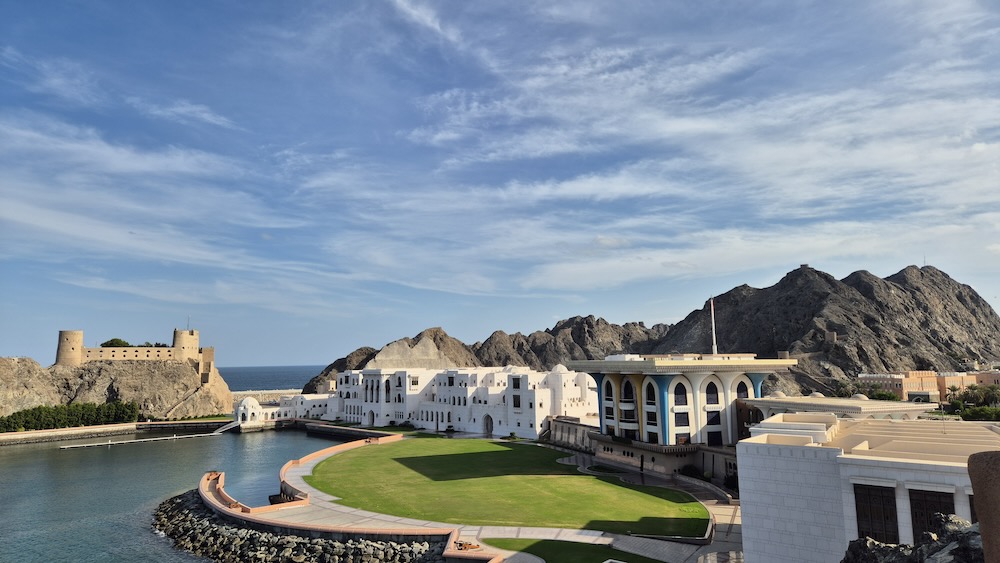
The palace is not the sultan's home; it is used for official receptions and ceremonies, which explains why it looks so orderly, closed-off and untouchable. Its architecture is an unusual blend of Islamic motifs and futuristic lines. Built in 1972, it became one of the first monumental buildings of modern Oman.
There is a quiet stillness around the palace: no crowds, no noise. Government institutions are scattered nearby. There is a broad square, guards and a sense of order. We experienced the warmth of our hosts when a local police officer made us coffee and offered us dates at the police station. Omanis are known as the friendliest people on the Arabian Peninsula, and an invitation to coffee and dates is not a tourist gimmick but a genuine expression of hospitality.
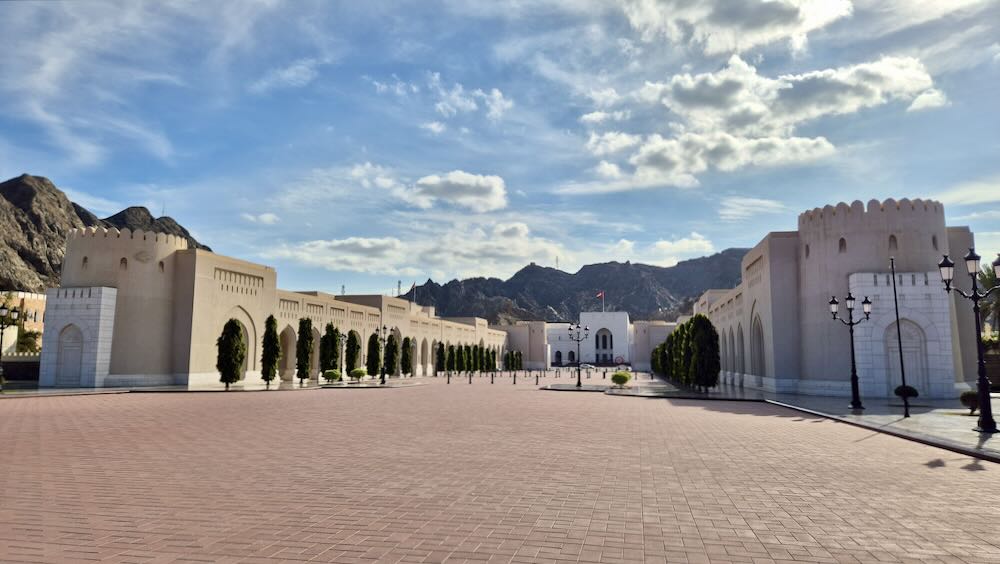
Until recently, Oman moved at a slower pace than the rest of the world. Before modernisation, it had few paved roads, almost no infrastructure and very limited contact with the outside world. Until the 1970s, the country was closed and conservative, relying on the sea, frankincense and trade. Electricity, schools and hospitals were scarce. Oman modernised quietly, without fanfare and without losing its identity.
Al Mirani Fort
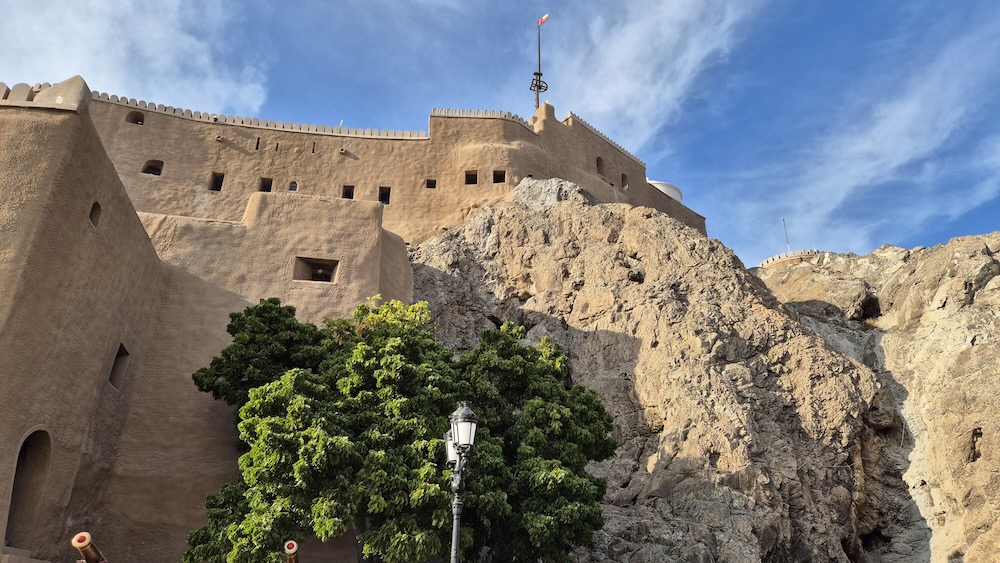
This fort, too, was built by the Portuguese in the 16th century, during their period of naval dominance. The Omanis later took it over.
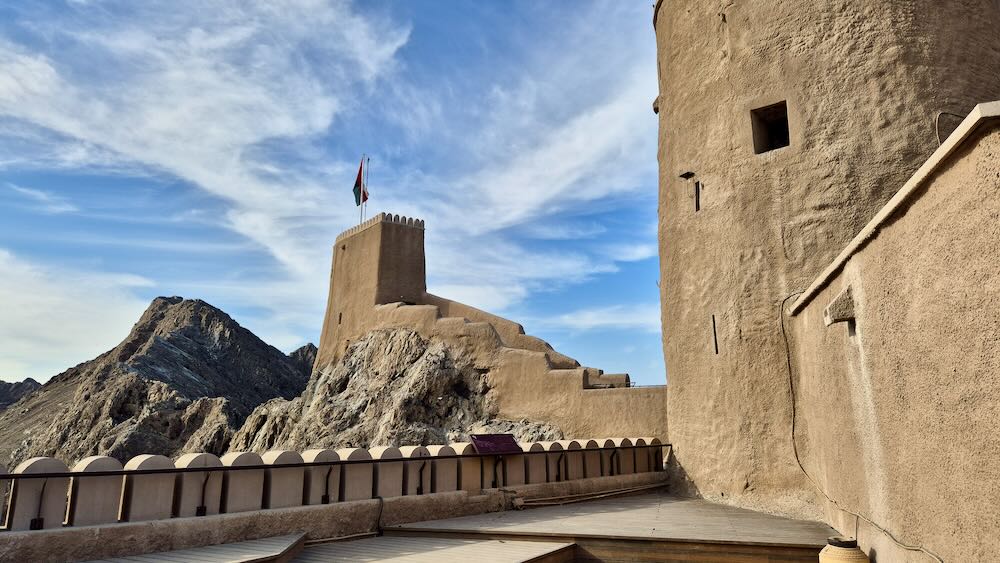
The fort sits on a strategic rock above the old harbour. Together with Al Jalali Fort, it once controlled every ship entering Muscat. The visitor area has been modernised, and the views are breathtaking—including a view of one of the sultan's five or six residences in the city.

The interior has recently been renovated for visitors, and various exhibits tell the fort's turbulent history. It looks world-class.
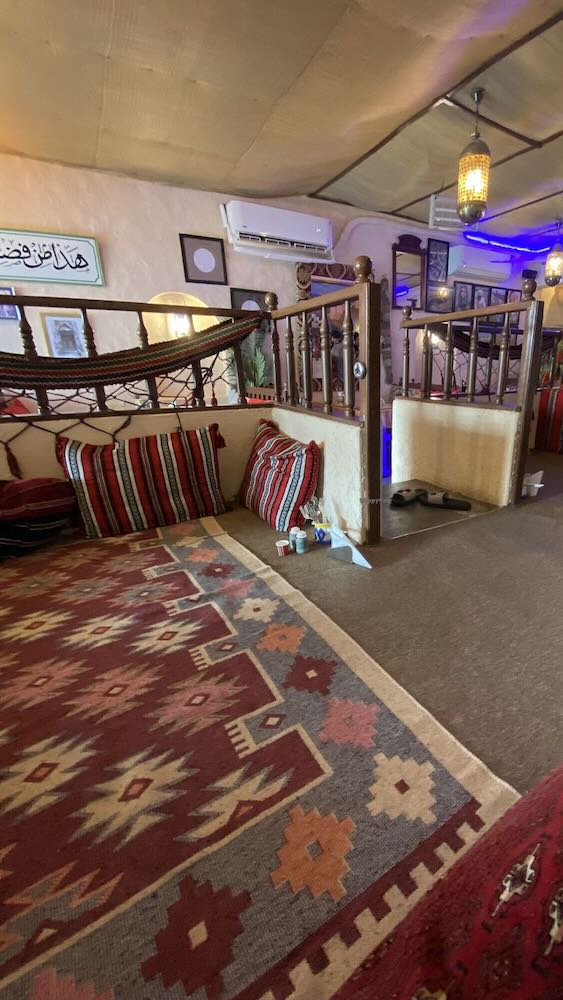
Towards evening, we found a restaurant popular with locals and tried some traditional food. Omani cuisine combines Arab, Persian, African and Indian influences. It is full of flavour, with rice as its foundation. This restaurant has an area where you sit on the floor and eat from a mat. You have to remove your shoes before stepping onto the platform, which we did, of course, and enjoyed the successive courses.
The fresh fruit juice is excellent. We also tried camel meat. The taste? A bit like camel. It is good—more distinctive and stronger than beef, with a slight earthy note. It is lean and high in protein, and has less cholesterol and saturated fat than beef. Here, pieces of meat are dipped in honey before eating.
We ended the day—and spent the rest of the evening—enjoying the heated pool on the hotel rooftop.
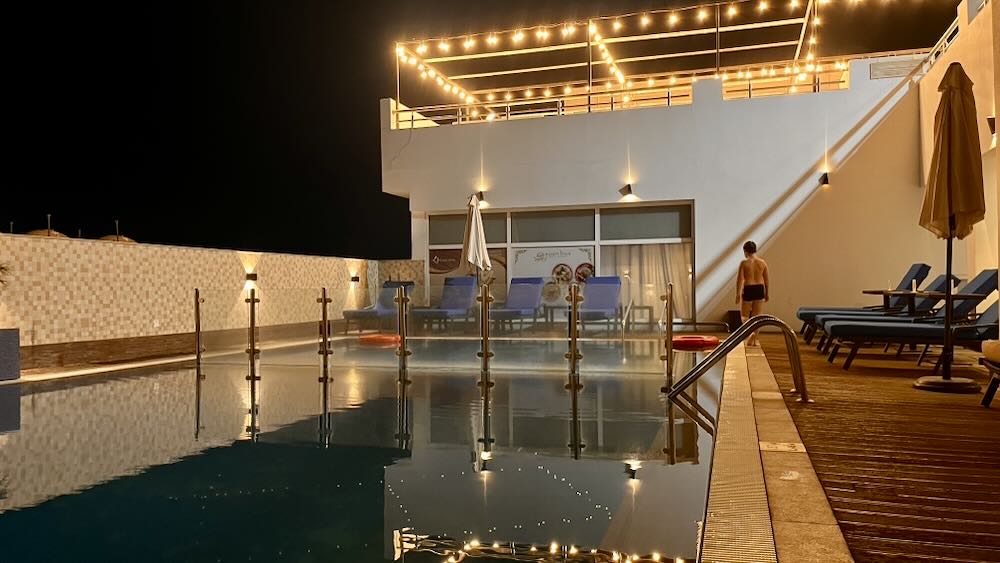
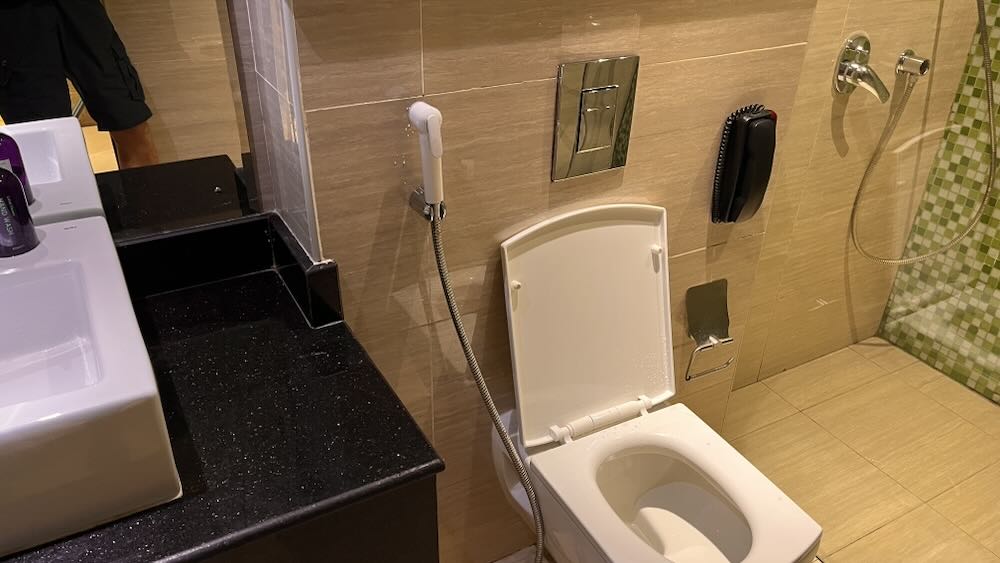
The hotel uses solar power to heat its water, so the hot water runs out quickly: fewer hours of sunshine combined with more guests means it is barely warm. But there is a small shower beside the toilet, and, well... hot water comes out of it. Bliss. I thought about taking a shower with it, but then again... I don't know, somehow...
Day Four
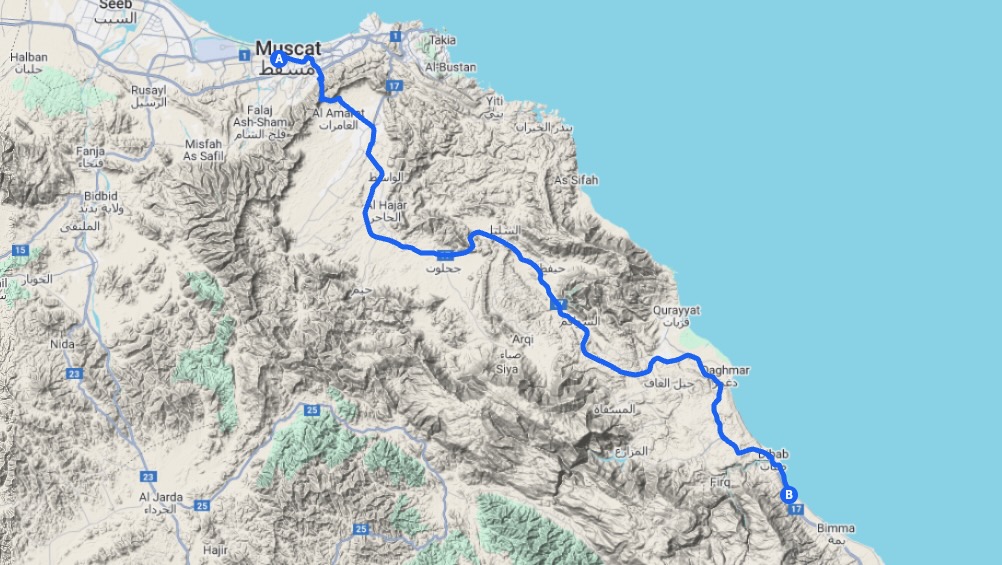
We checked out of the hotel and left Muscat, heading southeast along the coast of the Gulf of Oman. Our next destination was 130 km away: the geological wonder known as Bimmah Sinkhole.
Bimmah Sinkhole
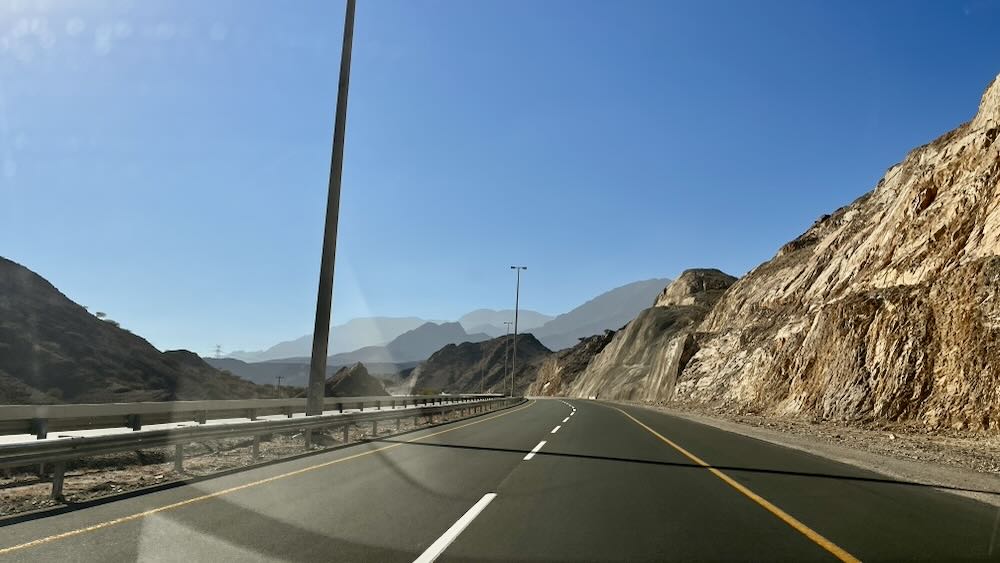
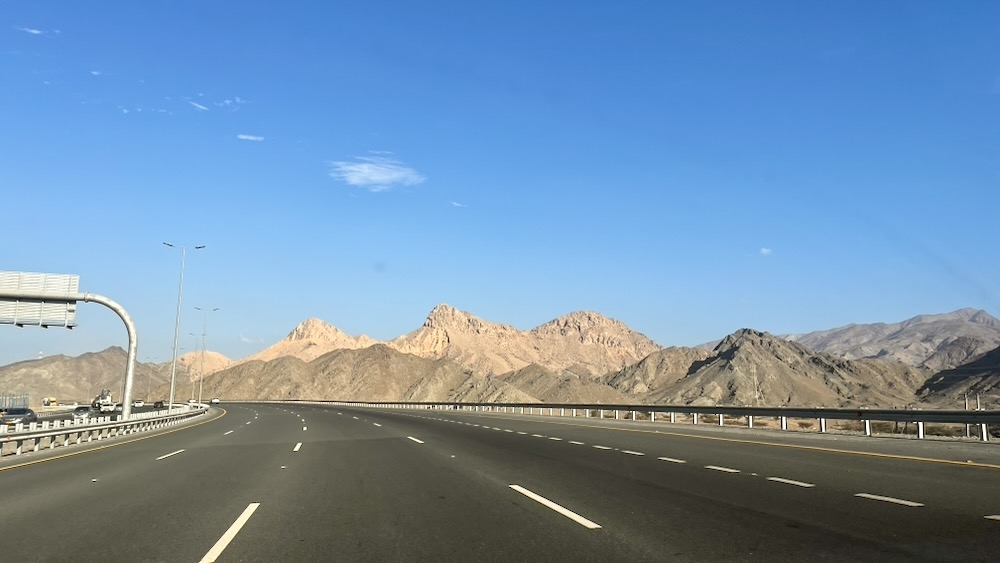
We drove along a modern motorway through the Al Hajar mountain range. The roads are smooth, unexpectedly good, wide, incredible, lit across the country—and, most importantly, free. According to the 2024 WEF Road Quality Index, Oman ranks eighth in the world for road quality and second in the Arab world, just behind the UAE. The speed limit is 120 km/h; if you go over that magic number, an alarm starts beeping in the car. By law, every car must have this warning device. The problem is the speed cameras, which appear every few kilometres, and the speed bumps. They look like little hills and are often hard to see from a distance because they are either unmarked or barely marked.
Our first stop today was the geological wonder of Bimmah Sinkhole—a huge hole in the ground, basically. Stairs lead down to the bottom.
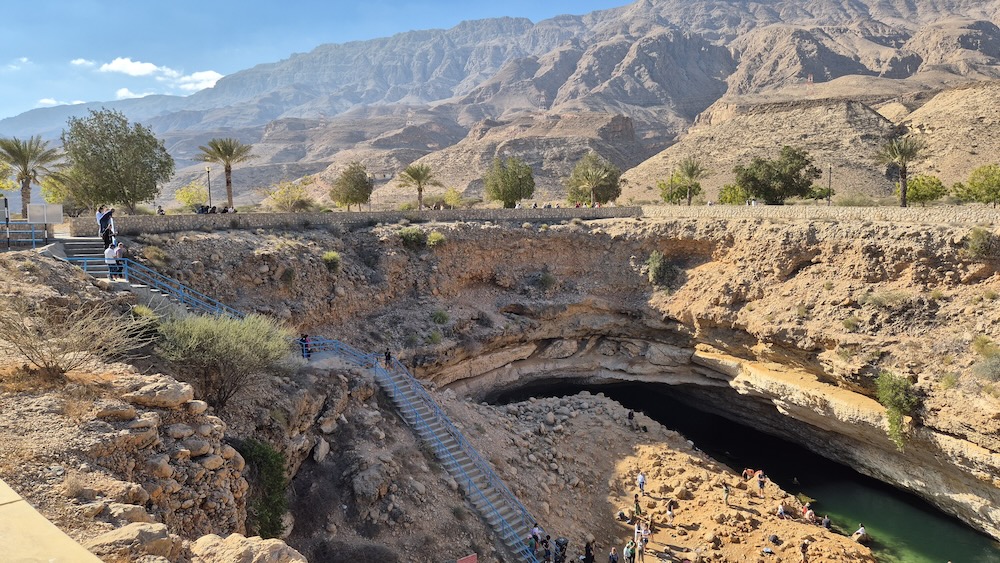
It is a natural sinkhole filled with turquoise water, set in the middle of a dry, rocky landscape. It was formed when the limestone ground collapsed, although local legends tell of a meteor strike; there is no scientific evidence for that story.
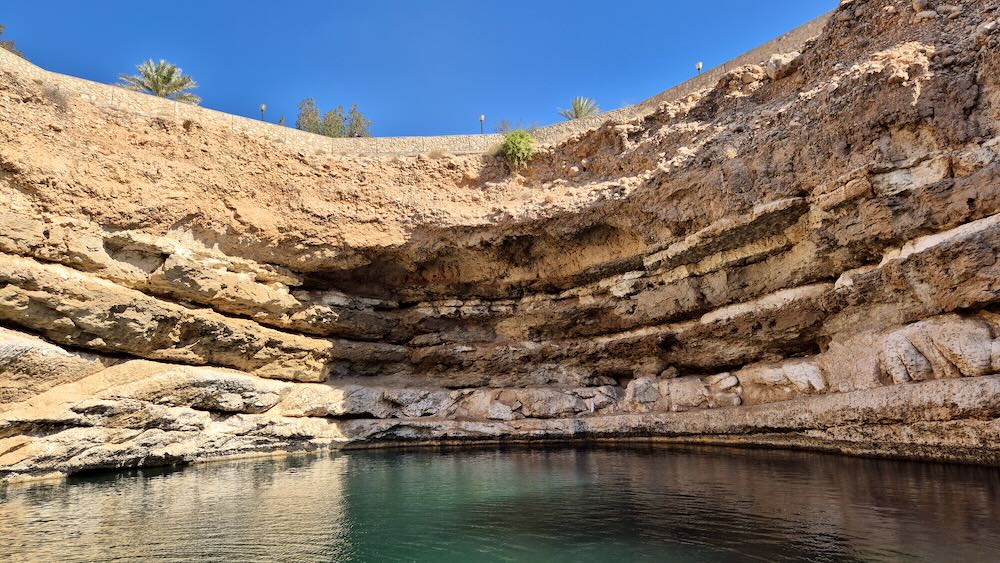
The sinkhole is 20 metres deep and 50 metres wide. Because it is close to the coast, the water is a mix of fresh and seawater, clean enough for swimming. Small fish swim around freely with the bathers. We did not swim, but we dipped our feet in.
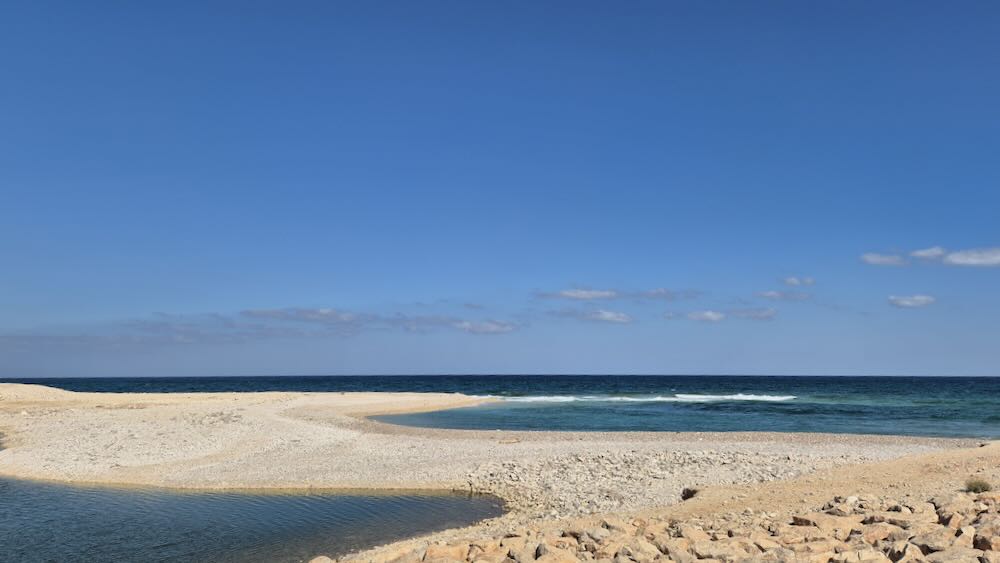
The road continues along the sea. There are no swimmers on the beaches, but plenty of people camping in tents. Wild camping is widely accepted, especially in less populated areas, deserts and along the beaches.
Wadi Shab
We continued about 30 km along the coast to visit one of Oman's most beautiful wadis: Wadi Shab.
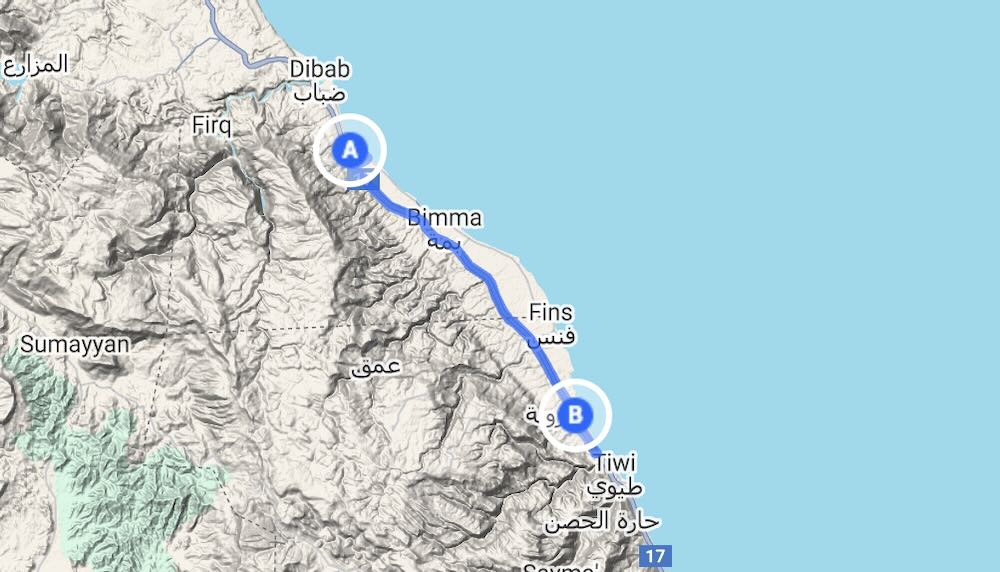
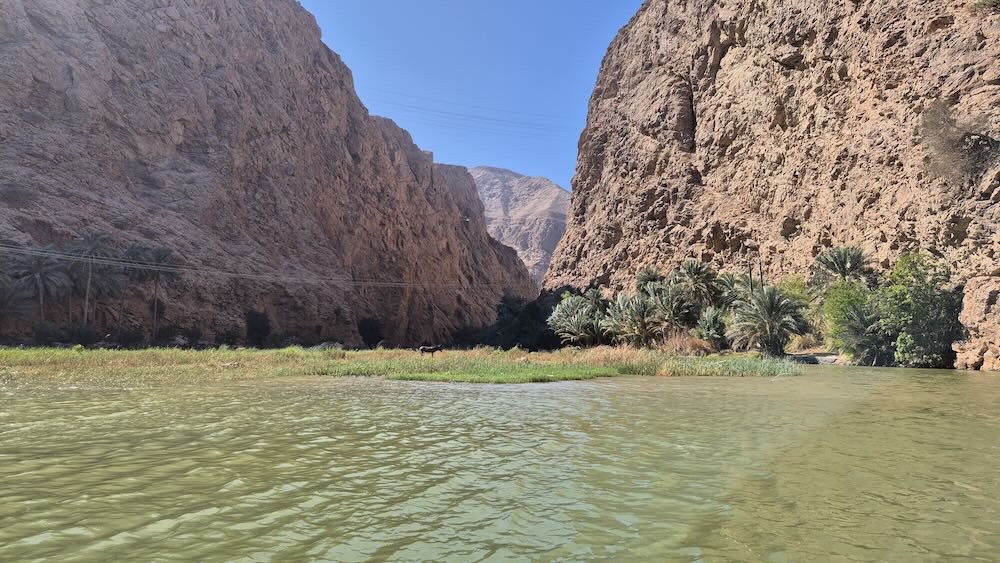
Wadis are natural dry riverbeds that fill with water from time to time, usually after rain in the mountains. For most of the year they look like dry canyons of rock and sand, but when the water arrives, they become natural pools, streams and waterfalls. They hide real oases of palms and greenery. Unlike most wadis, Wadi Shab has pools that remain year-round, which is unusual in Oman's desert environment. We visited the two most popular and beautiful wadis; this was the first.
We parked near the entrance and were surprised by how many tourists visit this wadi. For 1 OMR, small boats ferry you across the pond to the start of the trail; that is the only way to get there unless you swim.
We expected to do some swimming, so we bought a waterproof backpack and put all our belongings inside. Our goal was to reach the hidden cave at the end of the wadi, about an hour's walk along the canyon.
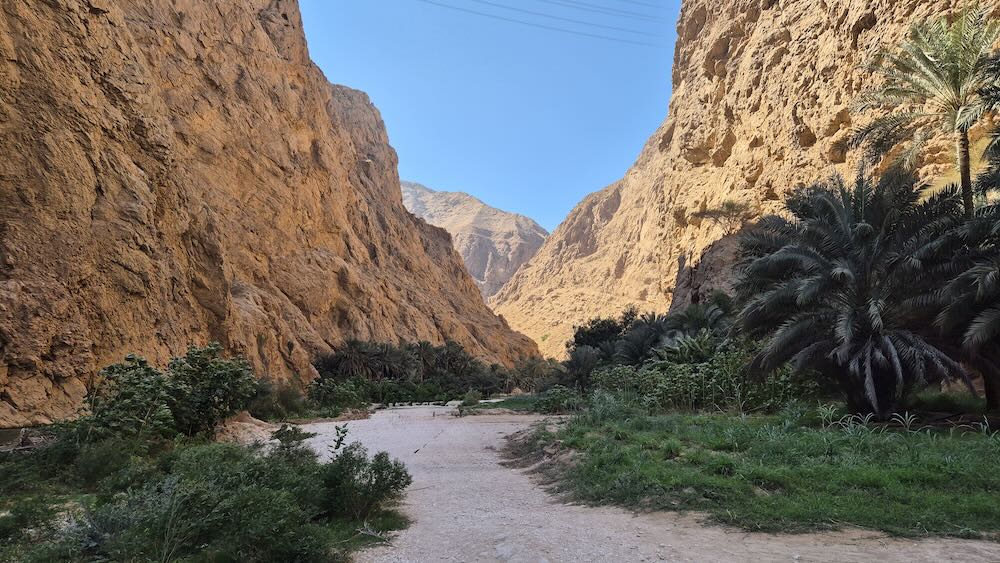
The first part is quite green, but further on the landscape becomes mostly rocky.
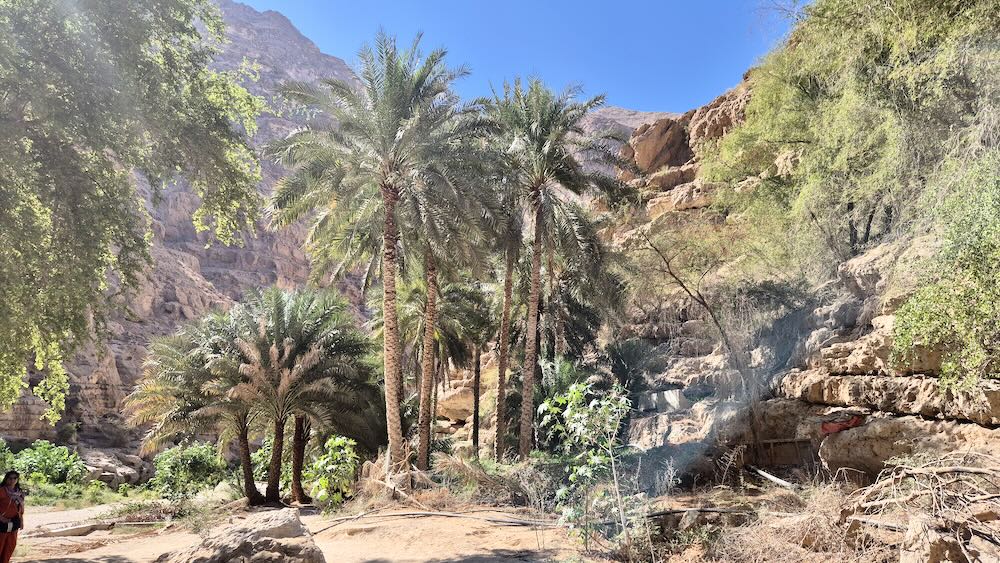
We came across little aqueducts everywhere. In Oman, these channels are called a falaj (plural aflaj). The falaj system is a traditional form of irrigation more than 2,000 years old, carrying water from springs, groundwater or mountain areas to villages, fields and oases. Water flows by gravity alone through underground tunnels and open stone channels. It is estimated that more than 3,000 active aflaj are still in use in Oman.
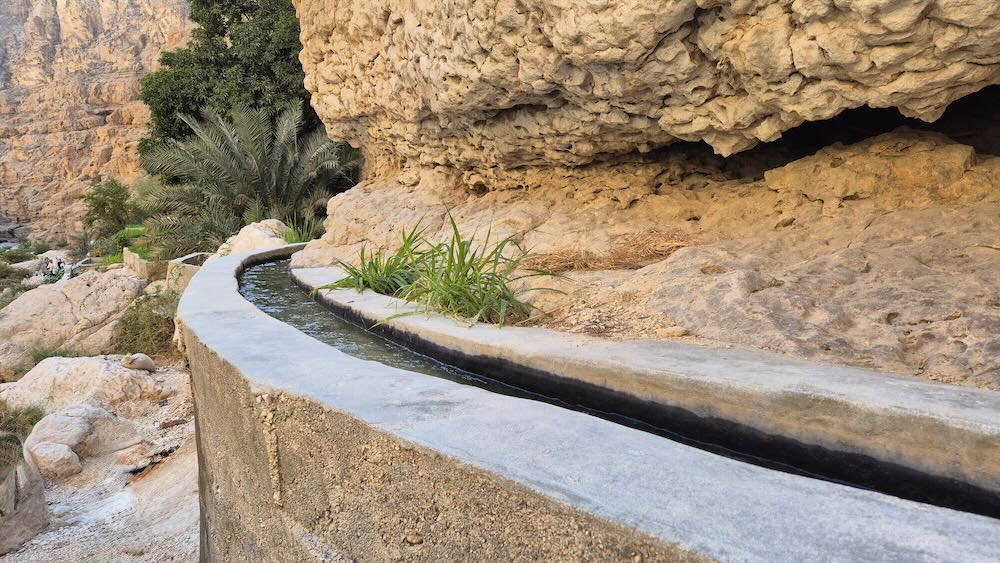
Interestingly, falaj systems allocate water according to fixed time slots, not the volume of water that flows, and the right to use water is often inherited. Five of the best-known falaj systems are on the UNESCO World Heritage List.
The trail is not maintained, so you need to watch your step.
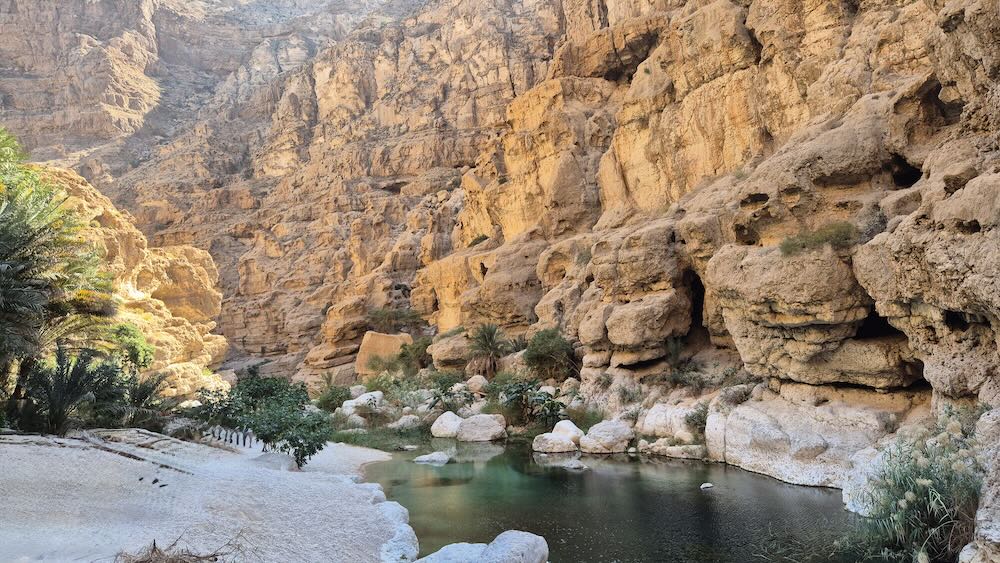
After an hour of walking, we could go no further on foot, so we had to swim upstream. That meant taking everything off and putting it in the waterproof backpack.
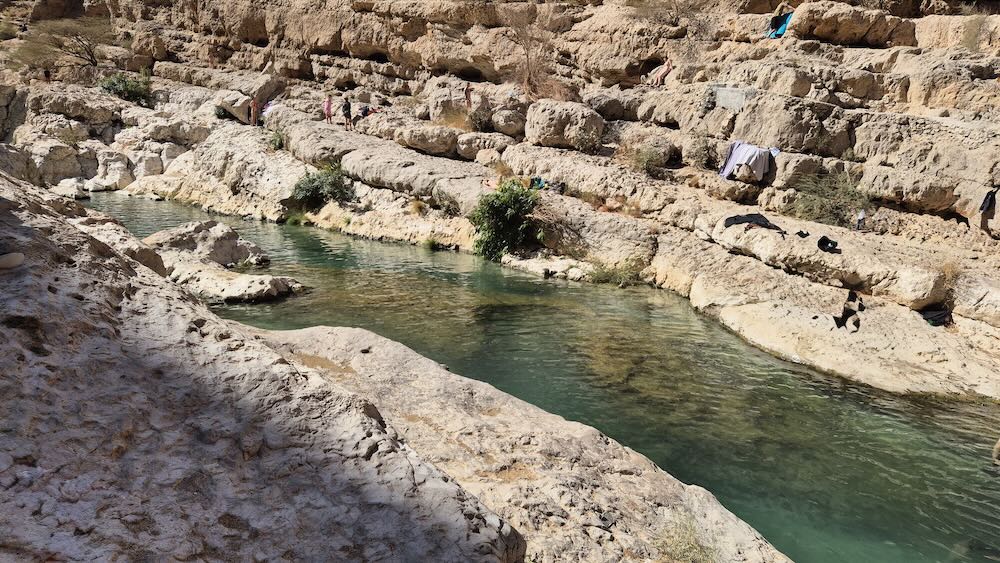
It is not easy to push the backpack along, and much of the time you have to wade because the submerged rocks are too slippery. Banging your feet against them is almost guaranteed. It takes about half an hour of swimming through two or three pools to reach the hidden cave. The entrance is not for anyone who is claustrophobic: at one point, it feels as if your head might get stuck in the narrow passage.
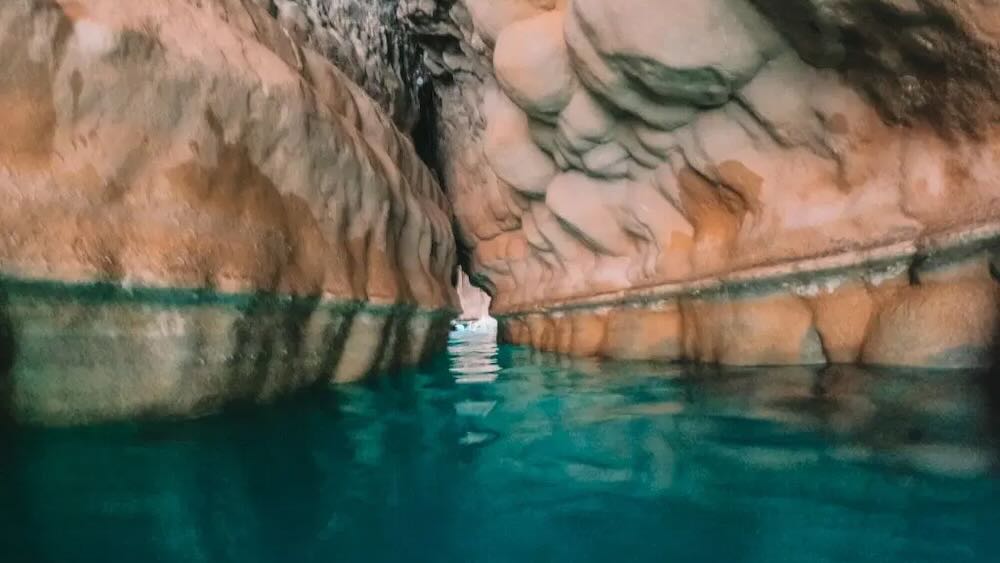
But it was worth it in the end: the hidden cave is incredible, with a waterfall inside.
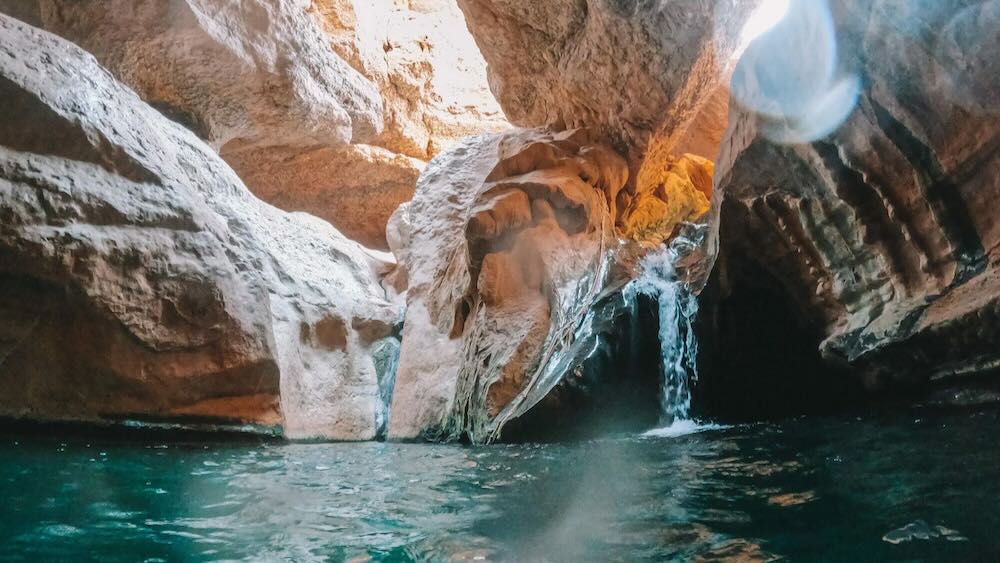
The whole trip takes about four hours. We returned the same way.
Sur
About 50 km further on, we headed for Sur.
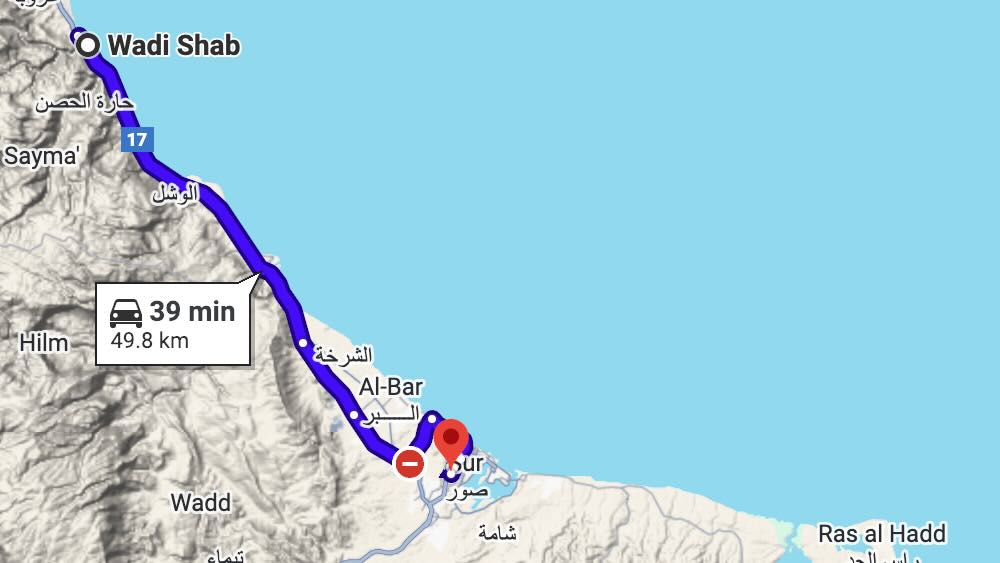
We looked for somewhere to stay here because tomorrow we would visit another wadi and the desert. We also planned to visit the turtle-nesting beaches later that day or evening. Oman is famous for its sea turtles and is one of the world's most important nesting sites. Ras al Hadd Beach is said to be the largest turtle-nesting beach in the Indian Ocean, with more than 20,000 turtles nesting there each year.
The nesting season is in summer, and locals said we had very little chance of seeing any now.
Our second accommodation was Arkan al Barzah, a hotel—or rather, an apartment. It looks a bit tacky but is clean. The owners have covered the furniture in transparent plastic to protect it, so the place feels a little like a brothel. The accommodation is spacious and comfortable.

We ended the evening at a local Indian restaurant, where we had a feast for very little money. After a big dinner, with the day's fatigue setting in and darkness already upon us, we did not feel like driving 40 km to Ras al Hadd with almost no chance of seeing turtles at night. We wisely decided to rest. The town feels a little sleepy, and sailing ships appear everywhere throughout it.
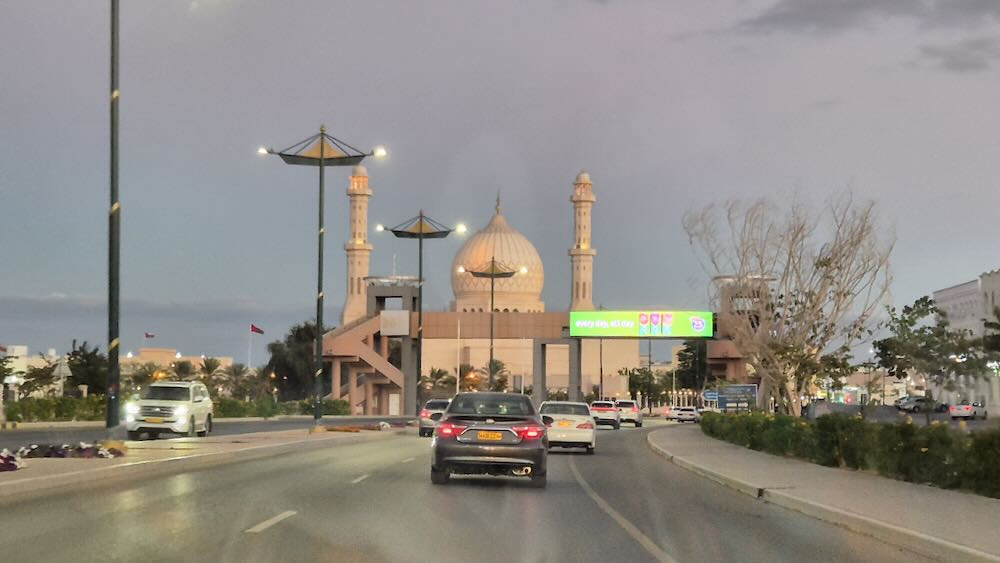
The hotel also has a rather pleasant café where you can get breakfast—and a good one, too.
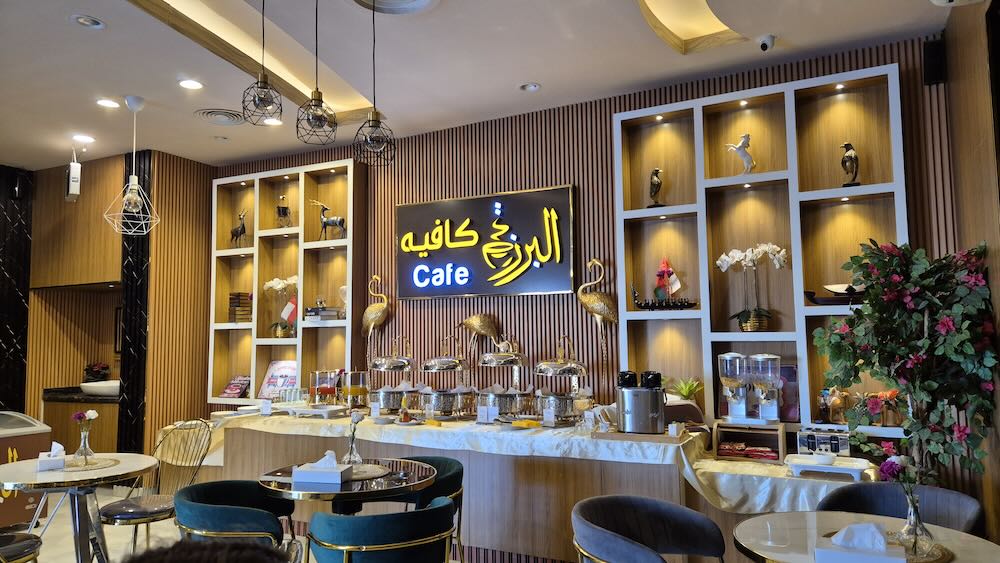
Sur is known for its traditional wooden boats, called dhows. These are traditional Arab sailing vessels, and Sur is one of the last places in the world where they are still built by hand, without plans or modern technology.
Day Five
Wadi Bani Khalid
The drive to our second wadi was about 120 km.
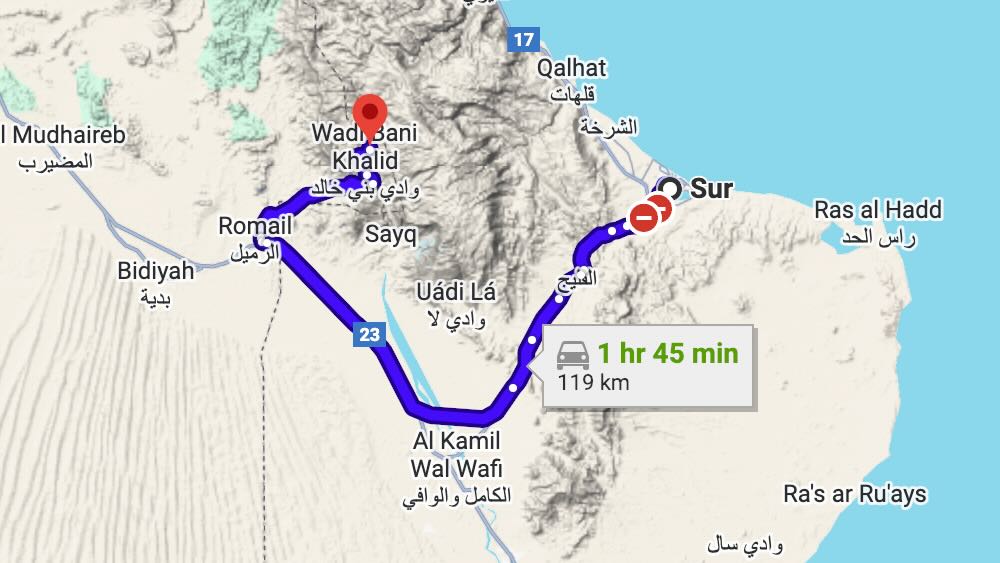
We drove along the edge of the desert and into the mountains. The roads were still excellent. The mountain road has some brutal hairpin turns; if you do not engage low range, you risk burning out your brakes.
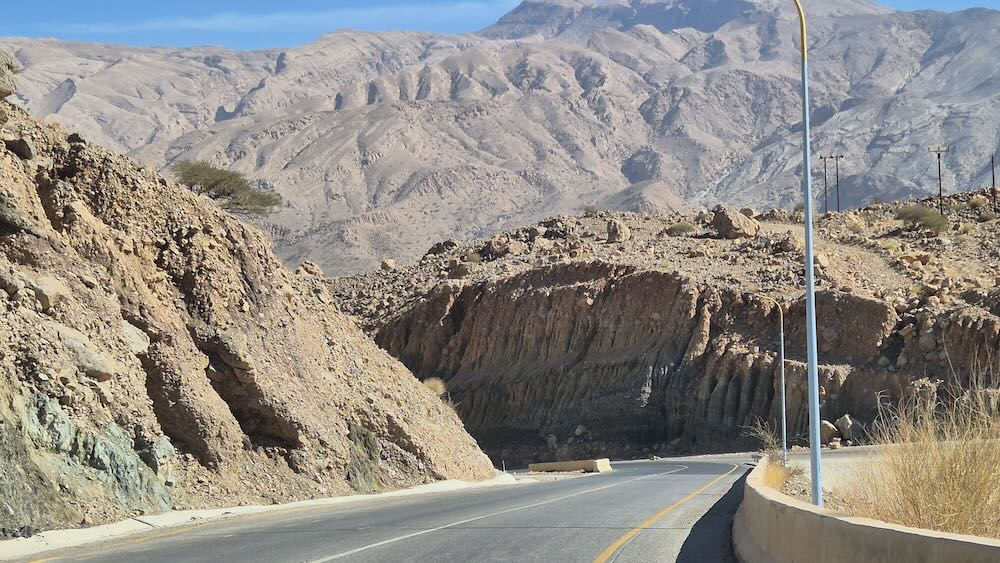
Wadi Bani Khalid has permanent pools, even in the hottest months.
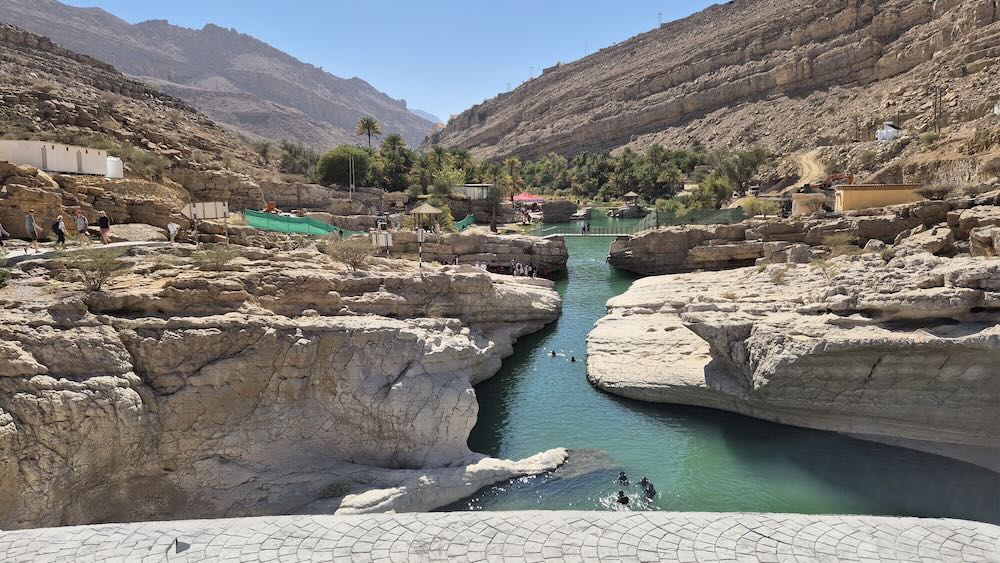
It is one of the most accessible wadis: there is no long walk, and the entire footpath is paved.
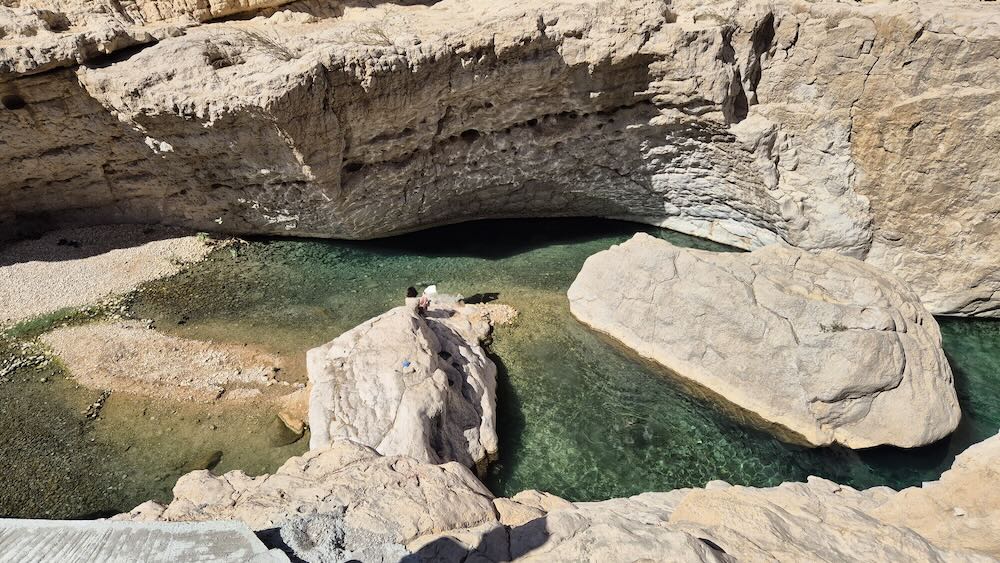
Unlike Wadi Shab, there is no need to swim through narrow passages here. Everything is open and easy to see.
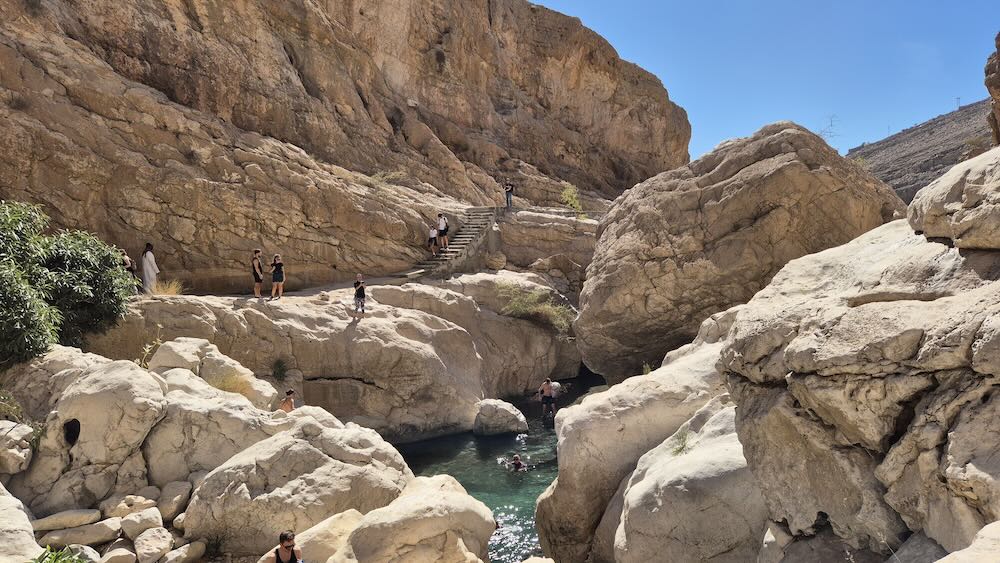
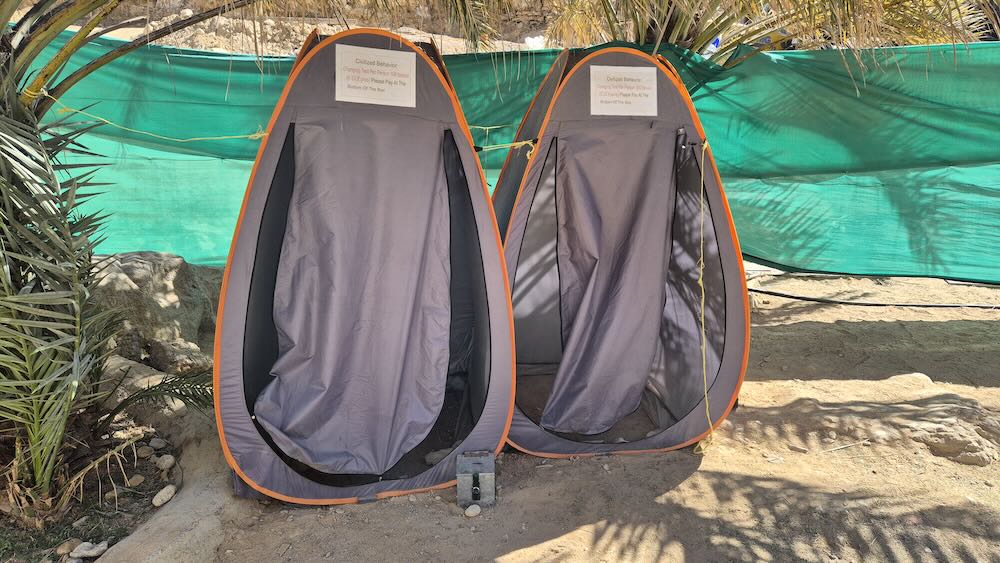
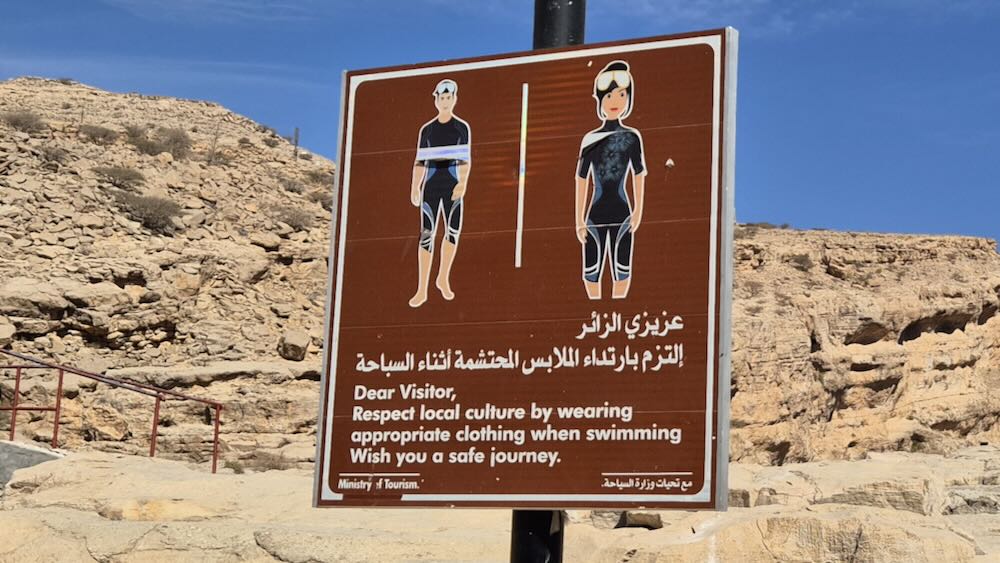
We thought there was no point swimming here. What a mistake—a total mistake. We had not brought our swimsuits. The pools are more pleasant than those at Wadi Shab. That is all the better because there are small changing tents at several spots; Wadi Shab has none, so you have to hide behind a boulder to change. Beside the tents is an “honesty box” where you can leave 100 baisa (0.1 OMR, or €0.23).
The general rule in Oman is not to expose too much skin in public, although foreigners often ignore it. Young Omanis then take the opportunity to see a bit of “skin” before their (arranged) marriages.
Wahiba Sands
After this wadi, we hurried towards the desert, the destination we may have been looking forward to most. The camp where we would stay was about 75 km from Wadi Bani Khalid.
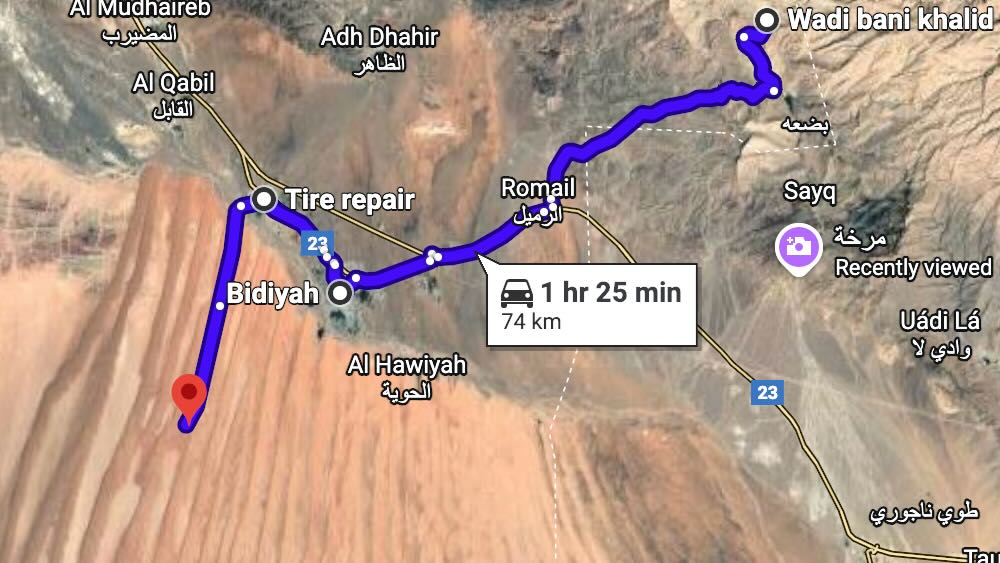
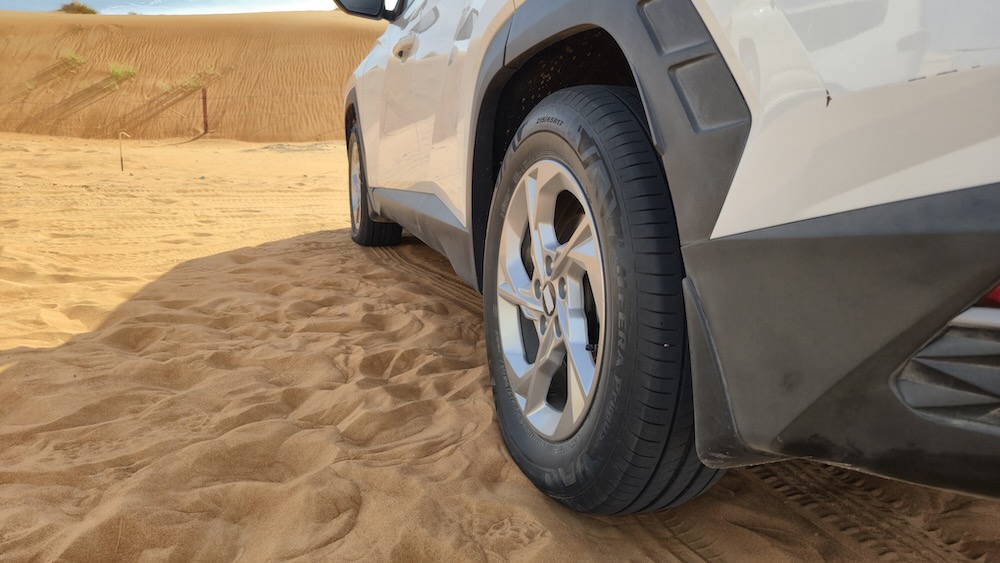
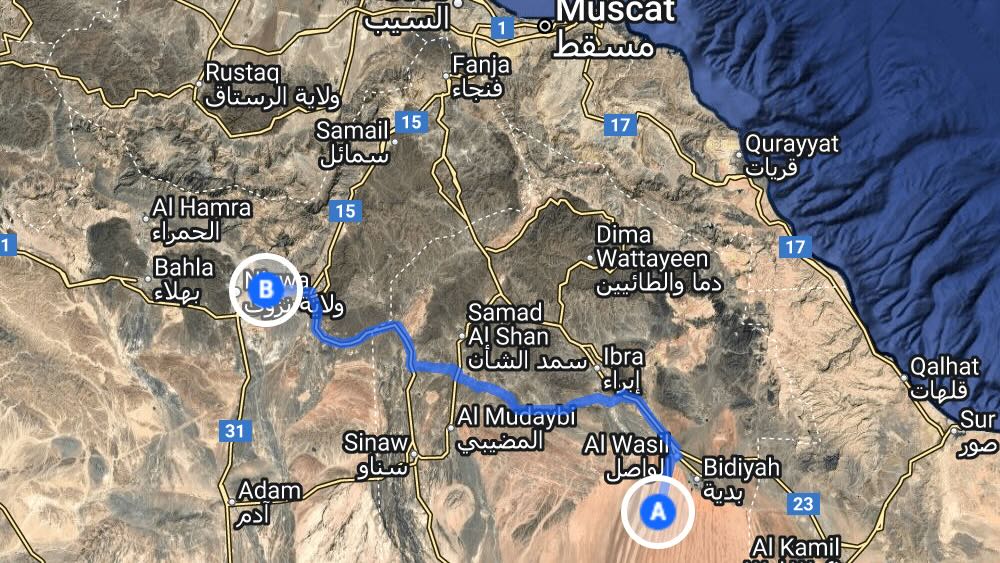
We had arranged for the camp owner to meet us “somewhere” at 3:30 p.m., but first we needed to lower our tyre pressure to about 1.3 bar at most. Since we had plenty of time, we stopped in the small town of Bidiyah for fruit juices and local sweets. The settlements on the edge of the desert are not particularly prosperous; I am not sure whether to call it poverty or a Bedouin way of life. The desert route begins near the village of Al Wasil, where there is also a tyre shop. That is where I discovered we had misunderstood the meeting point with the camp owner. We thought he would meet us in Al Wasil, but he was waiting in the heart of the desert. So off we went, racing along a bumpy, packed-sand track between the dunes. No car without four-wheel drive belongs here. I am not even sure a car that is not a Land Cruiser belongs here—and ours was a Tucson.
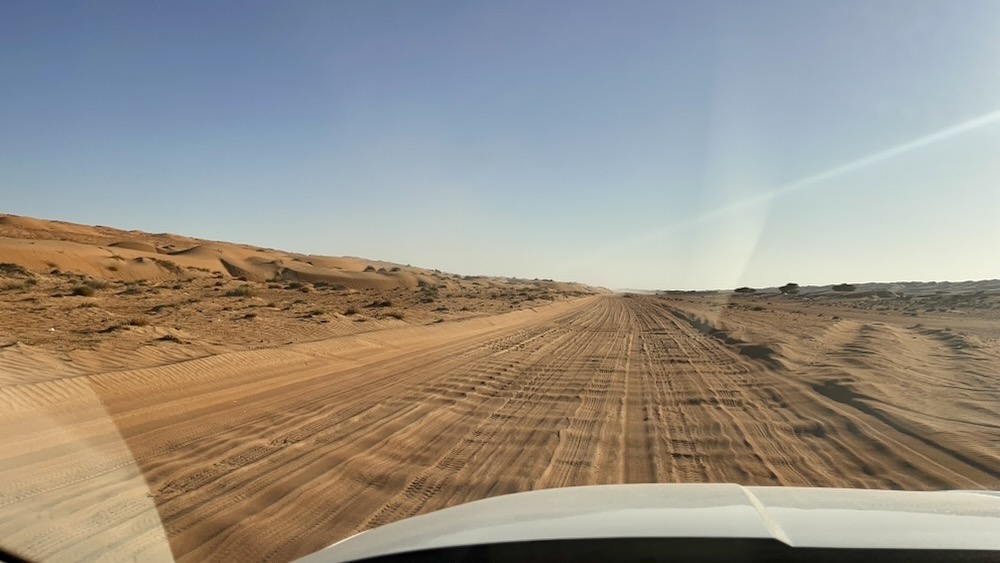
There were another 18 km of this sort of jolting. It was a miracle the car did not fall apart—and a good thing it was not mine. For anyone who does not dare drive in the desert or does not have a 4x4, local drivers will cover those 18–20 km for €75, after some bargaining.
The camp is on one of the dunes, out of sight from the flat desert track. I started charging up a dune, guessing where the camp might be, when I came across some foolish quad bikes stopped in the middle of the sandy track. Idiots! They had got themselves stuck right in the middle of the “road”, so I had to stop too. And as soon as you stop on a dune, you get stuck. You curse the stars, karma, your aunt, your sister-in-law, your brother-in-law's wife—everyone and everything. Luckily, a Jordanian and a Turk arrived in a huge pickup. They let some more air out of my tyres, down to 0.7 bar, and recommended switching off all the car's electronic aids. We dug the sand out from under the car by hand, then followed them right to the camp.
Afterwards, the camp owner could not believe we had managed to find them.
It sounds like the beginning of a joke: a Jordanian and a Turk dig a Croatian family's car out of the sand in Oman.
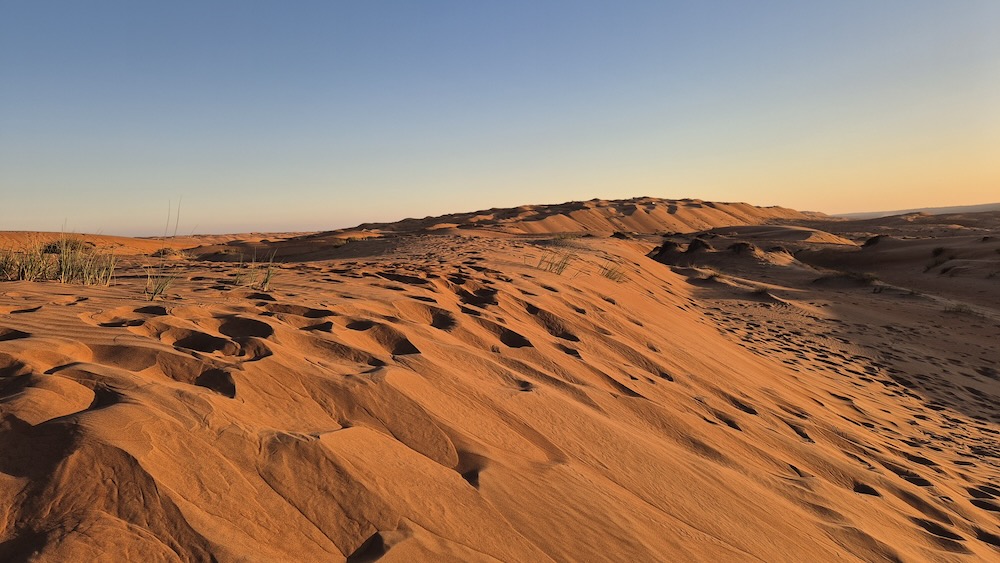
Wahiba Sands is officially known as the “Eastern Desert”, but takes its commonly used name from the Bani Wahiba tribe, who have lived on the desert's edges and within it for centuries. About 3,000 Bedouins still live here. The sand dunes rise more than 100 metres and are constantly shifting in the wind. Depending on the light, the sand changes from gold to orange, red and even purple at sunset. The dunes form perfect lines stretching for up to 200 km.
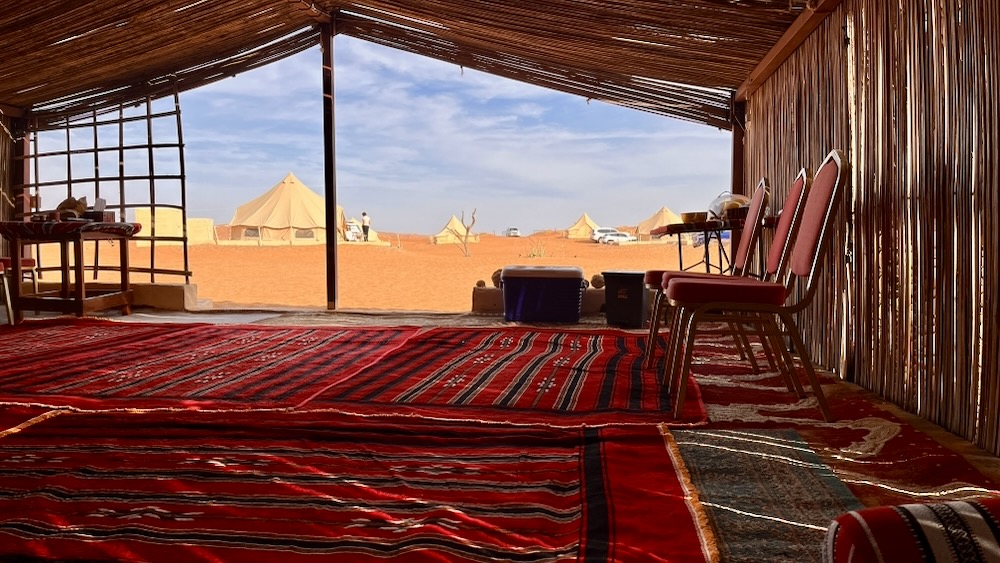
Our camp and tent:
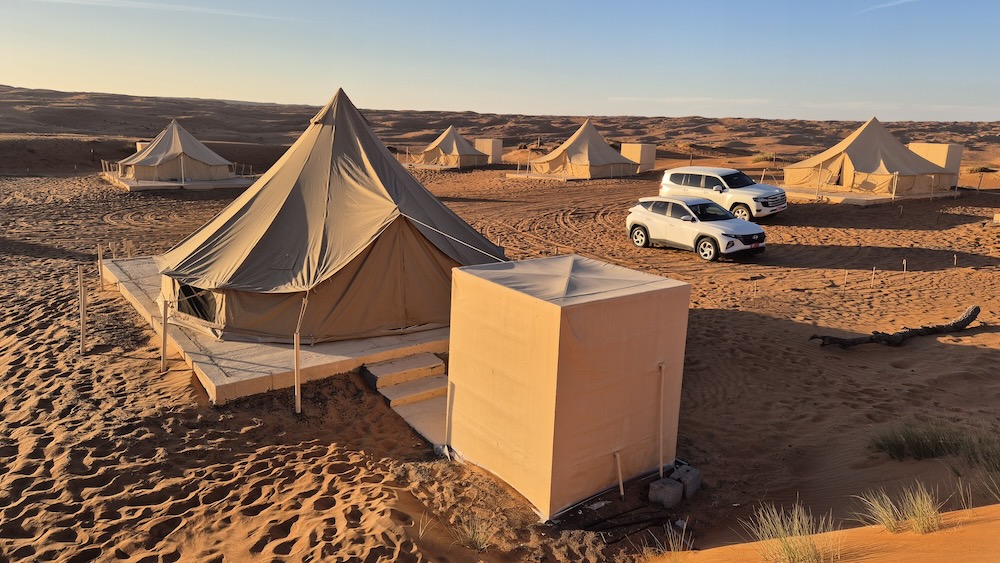
This was our third place to stay in Oman: Desert Stars Camp. The square structure beside the tent is the bathroom and toilet. The camp is open from October to April. It closes in summer because the conditions are unsuitable for tourism; temperatures can reach 50°C, and the sand gets so hot you would not want to walk on it without shoes. The temperature swings between day and night are huge, but the dry air makes the heat feel different.
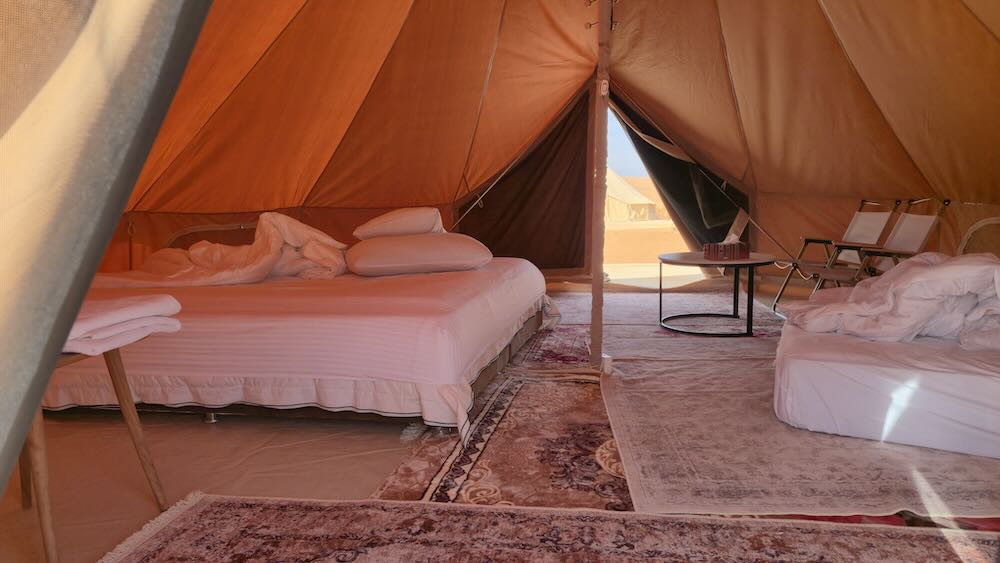
Here, you learn to truly appreciate water. The hosts bring it in large tanks on off-road vehicles. You can take a shower, but with nighttime temperatures in the desert around 12°C, the thought of showering outside in cold water is out of the question. During the day, though, it is fine. The tent is more than comfortable. It has “doors” on both sides, so the “cross-breeze” does its job.
The afternoon sun adds even more colour to the desert.
Lizards, mice, foxes, scorpions, snakes and various plants live in Wahiba, all perfectly adapted to the extreme conditions. Luckily, the dangerous reptiles were nowhere to be seen; it was too cold for them.
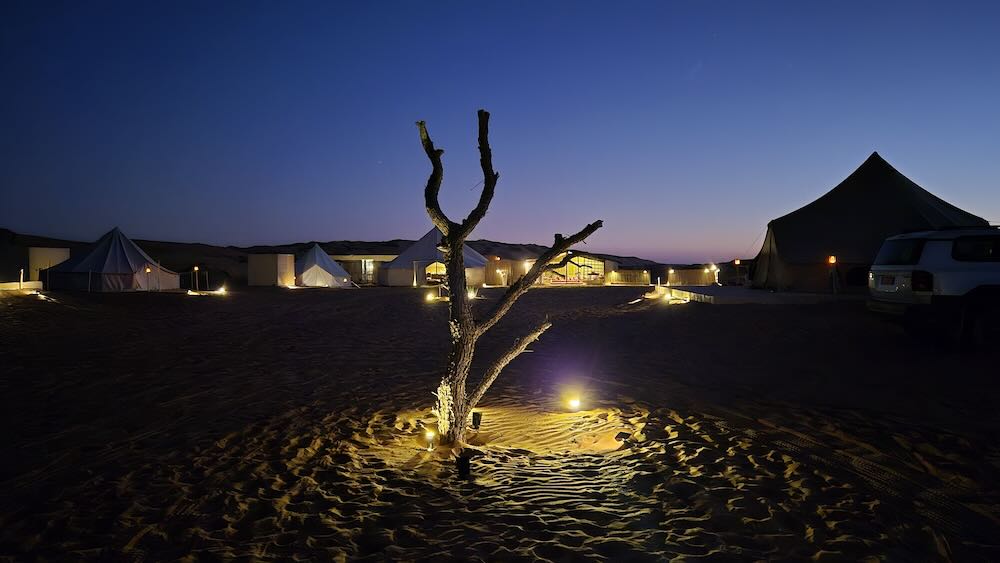
With so little light pollution, the desert night sky looks almost unreal. You can see the Milky Way with the naked eye. Camels are an essential part of the desert scenery and kept us company.

Far from roads and cities, the desert offers complete silence—a rare experience in the modern world.
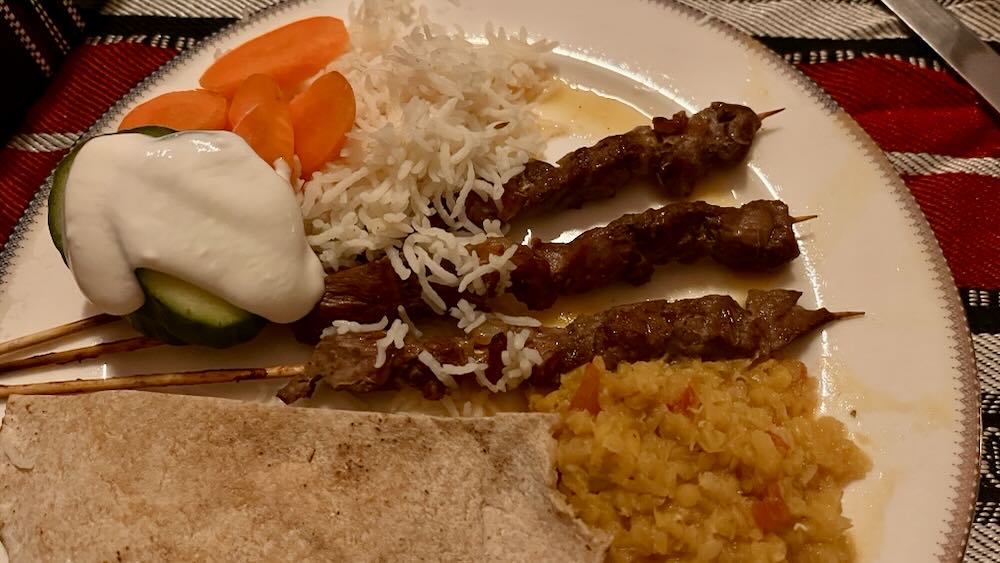
Dinner included camel-meat kebabs, among other things. These were finger-licking good.
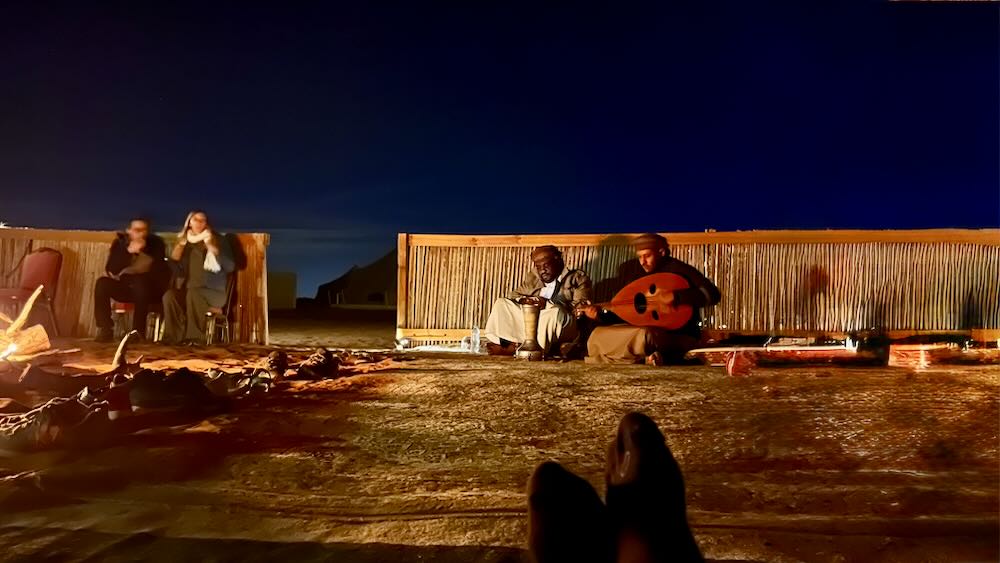
We spent the rest of the evening by the fire, listening to traditional Omani Bedouin songs and music. There was even dancing at the end.
Day Six
We woke in the morning, with the desert calling us to explore. Breakfast, morning coffee and dates.
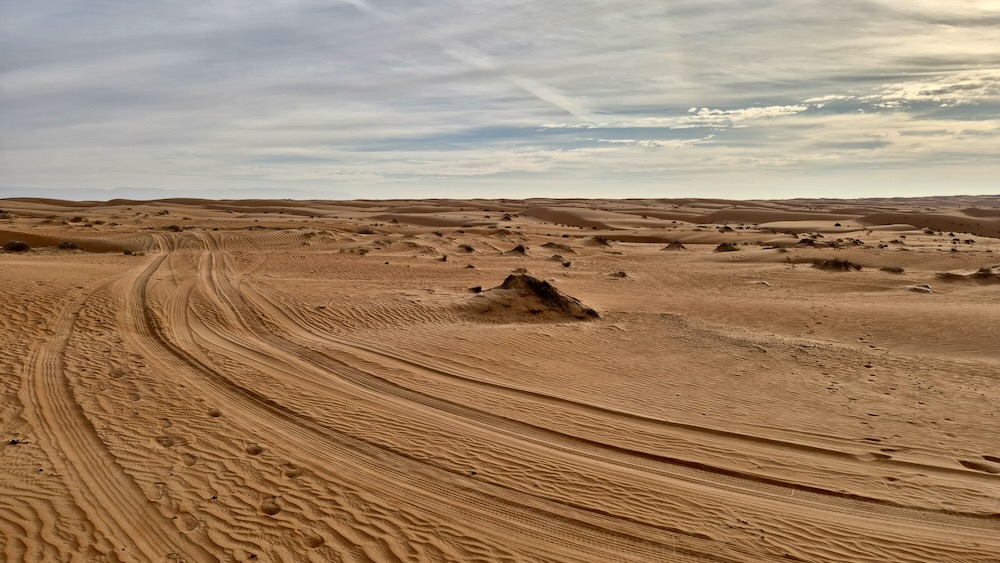
It is easy to lose your sense of direction and get lost. Finding a landmark to guide you is not easy. A compass helps.
“Even your dad could do that, son!”
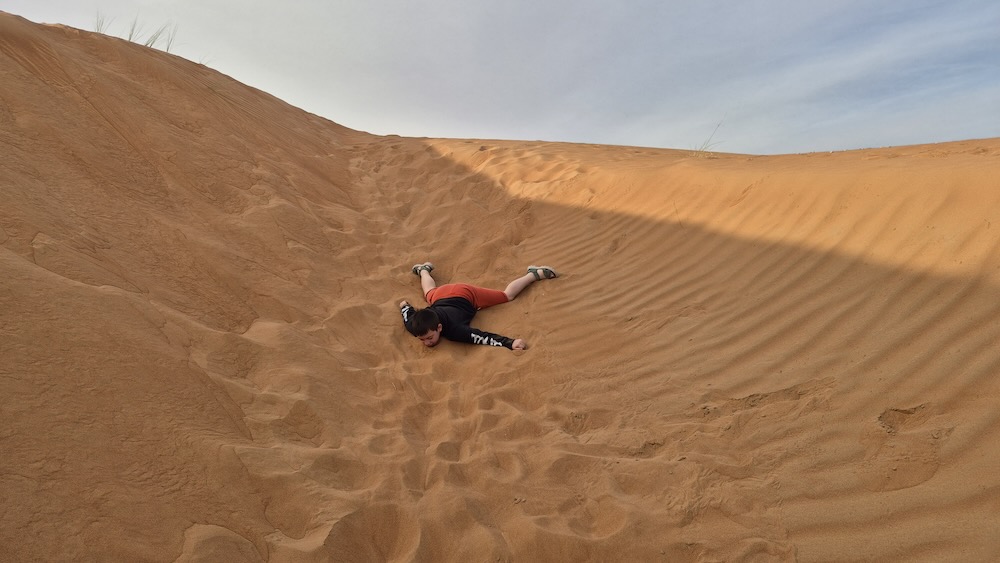
The sand is soft. Cold in the morning, but it warms up quickly.
The recommendation is to stay for at least two nights and days, which we did not do. On the way back, all we had to do was drive down the dune to reach the flat, hard part of the track. The bumpy part.
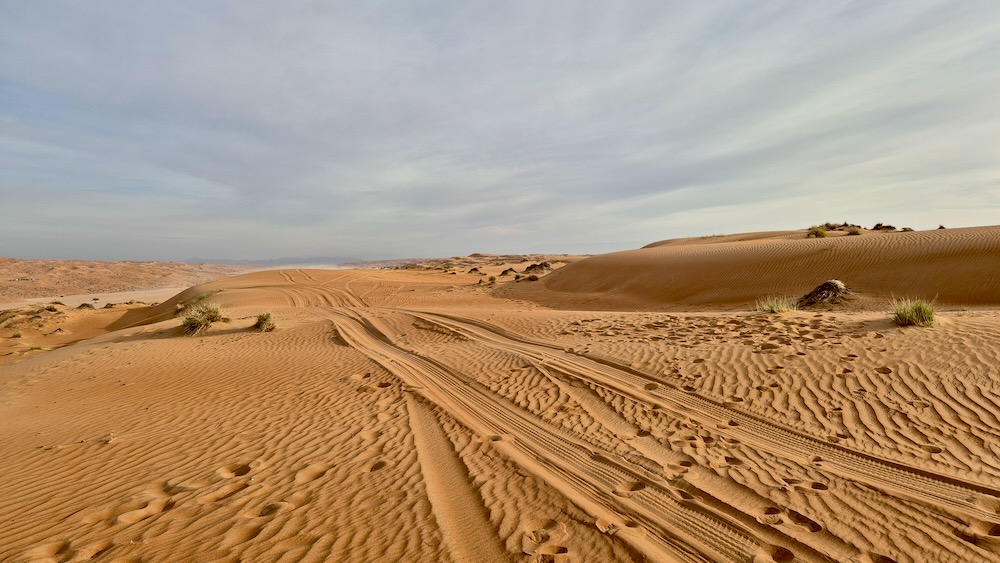
Of course, we had to inflate the tyres again. Then we continued towards Nizwa.
Nizwa
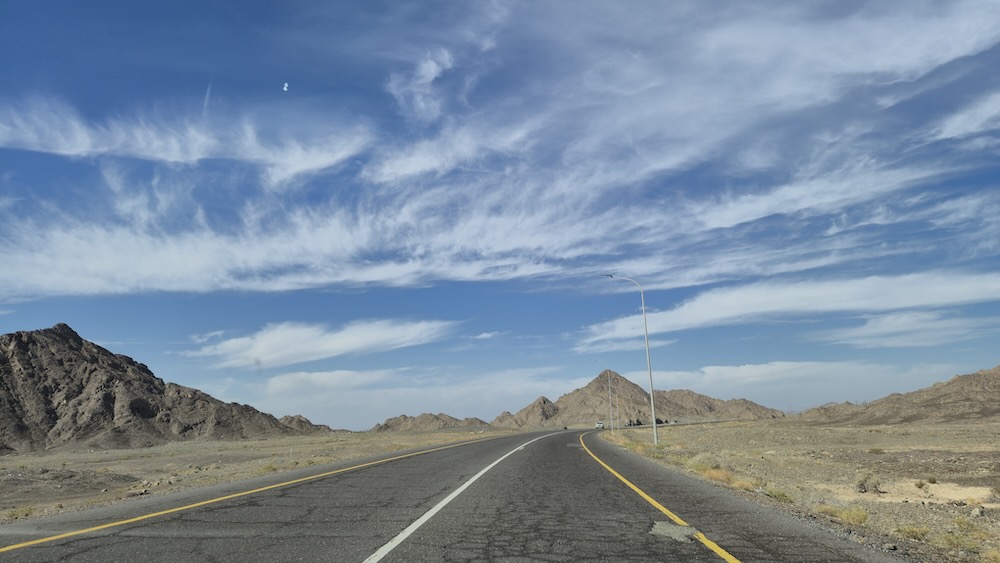
Our next destination was 175 km away, about a two-hour drive: Nizwa, the most beautiful city in Oman.
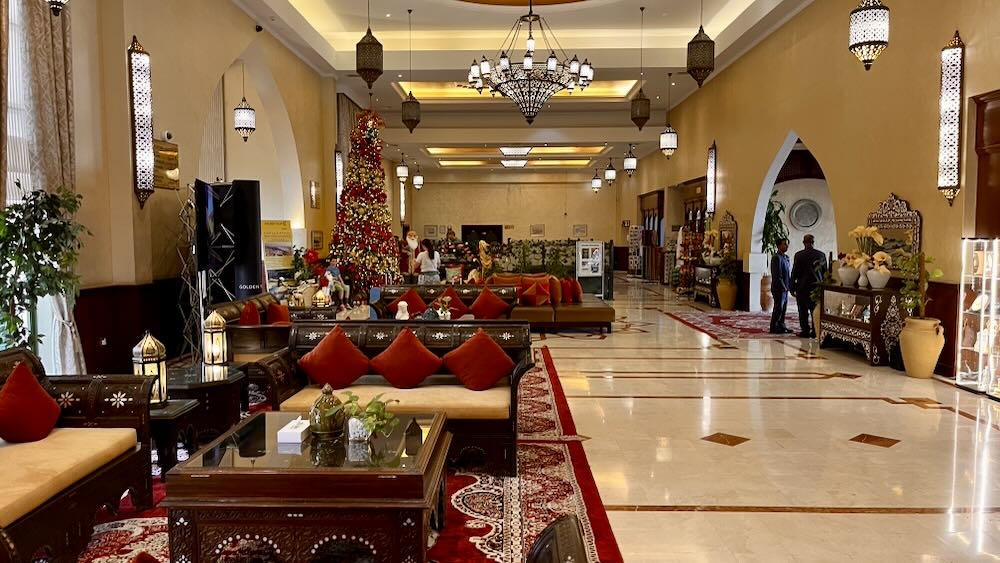
About 20 km before Nizwa, we reached our fourth accommodation, the Golden Tulip resort—not exactly cheap by Omani standards.
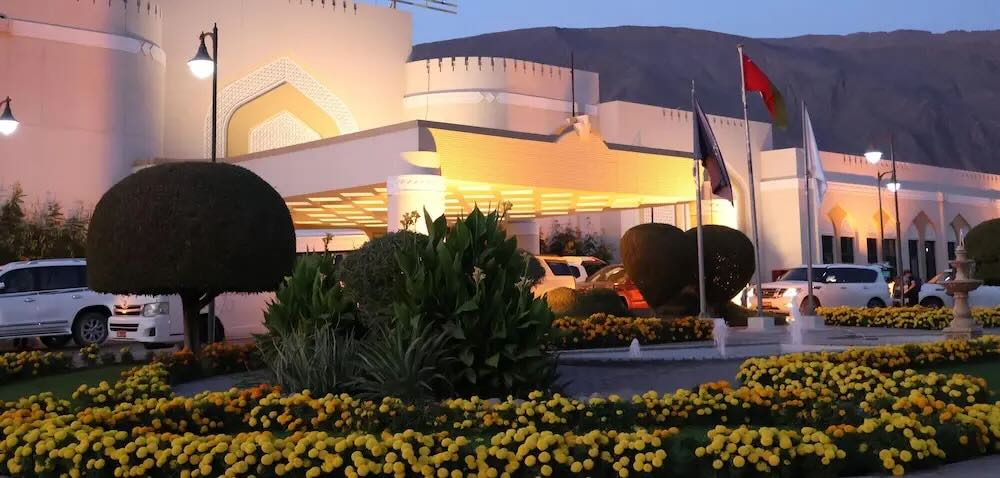
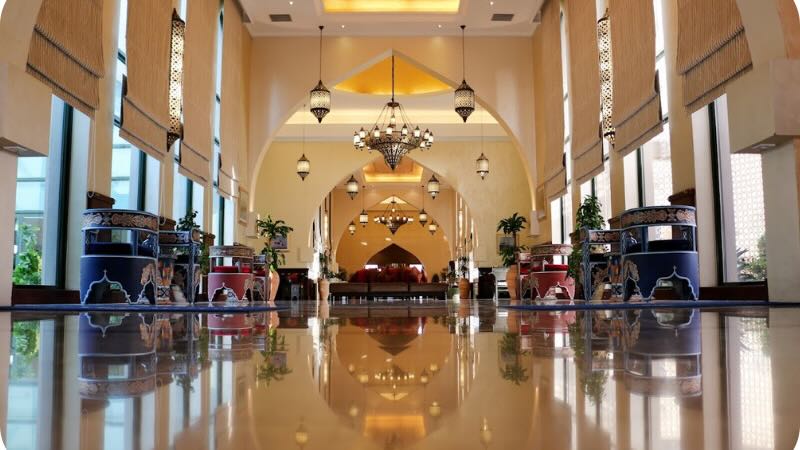
The interior is lavish: finally, the real Orient.
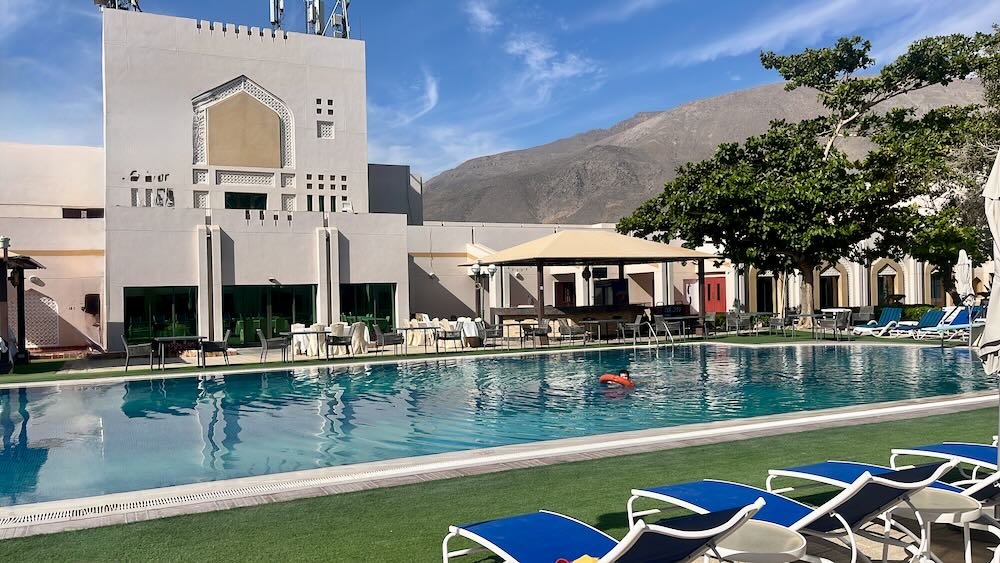
Our original plan was to spend the rest of the day relaxing by the hotel pool, because our little one loves that kind of “fun”. You could not get him out of the water.
But we are not really the sort to do nothing. We soon got bored, so we decided to visit Nizwa after all, about 20 km away.
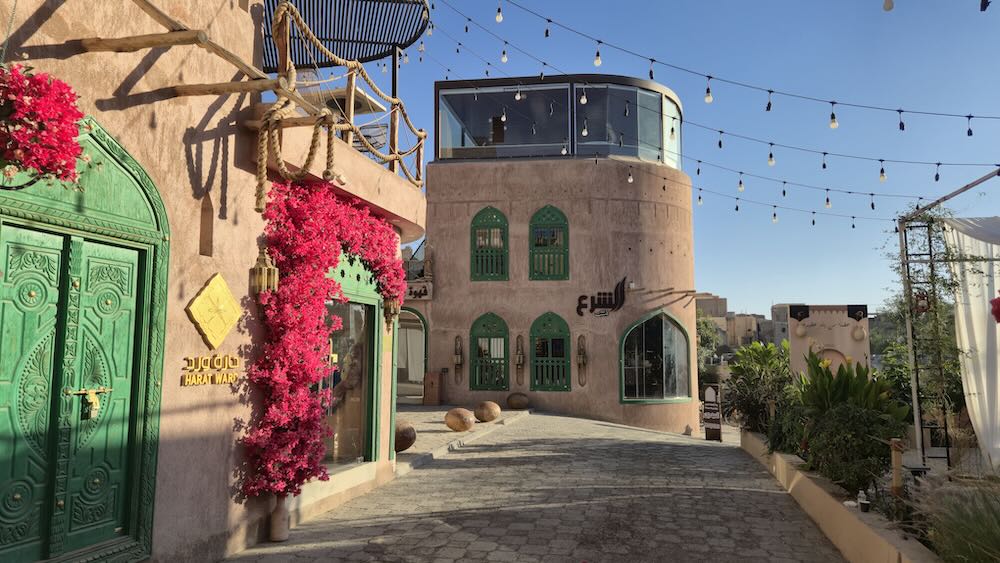
Nizwa is the former capital of Oman. Set at the foot of the western Hajar Mountains and surrounded by large date-palm plantations, it was an early trading and agricultural centre connecting the country's interior with Muscat and the south. It lies at the meeting point of ancient routes. Nizwa has been inhabited since 4,000 BC and is considered Oman's oldest city. Persians lived here in the past. The city is steeped in history and was an educational centre for centuries, attracting scholars from all over Oman.
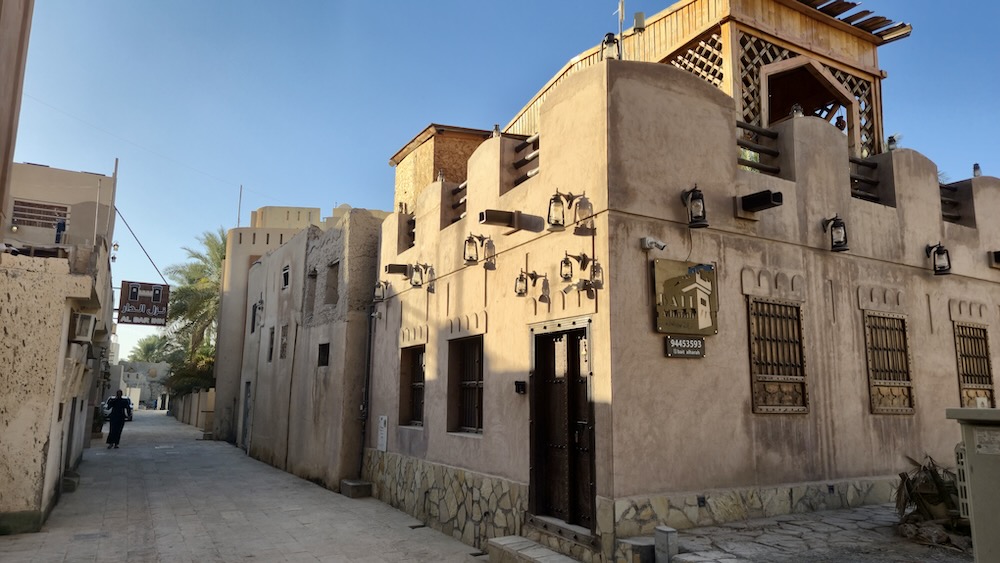
Nizwa's souq is a little smaller than the one in Muscat, but somehow more beautiful. You can bargain, though it is not as spectacular as in Muscat. Some of that Oriental charm seems to be missing.
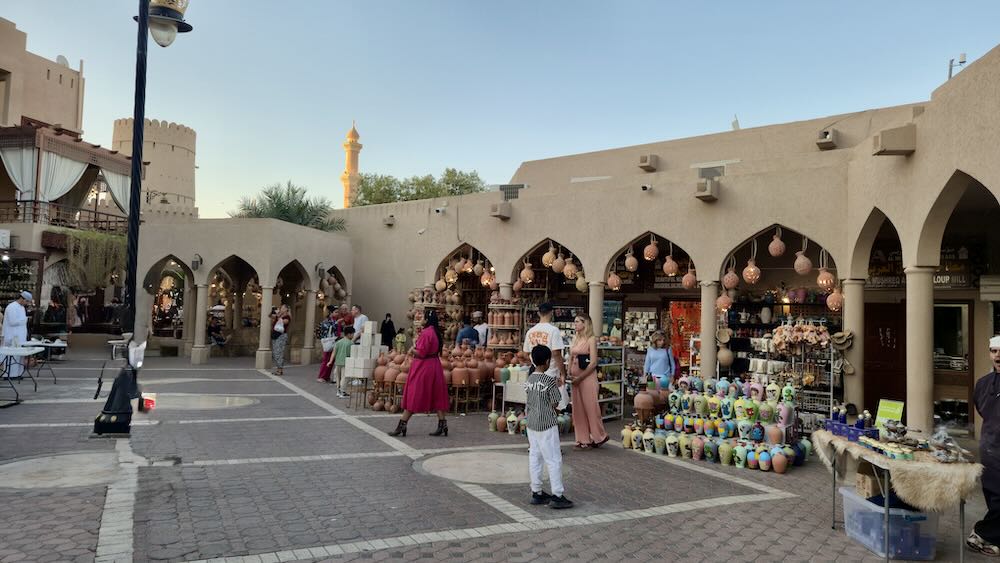
The focus is on local products.
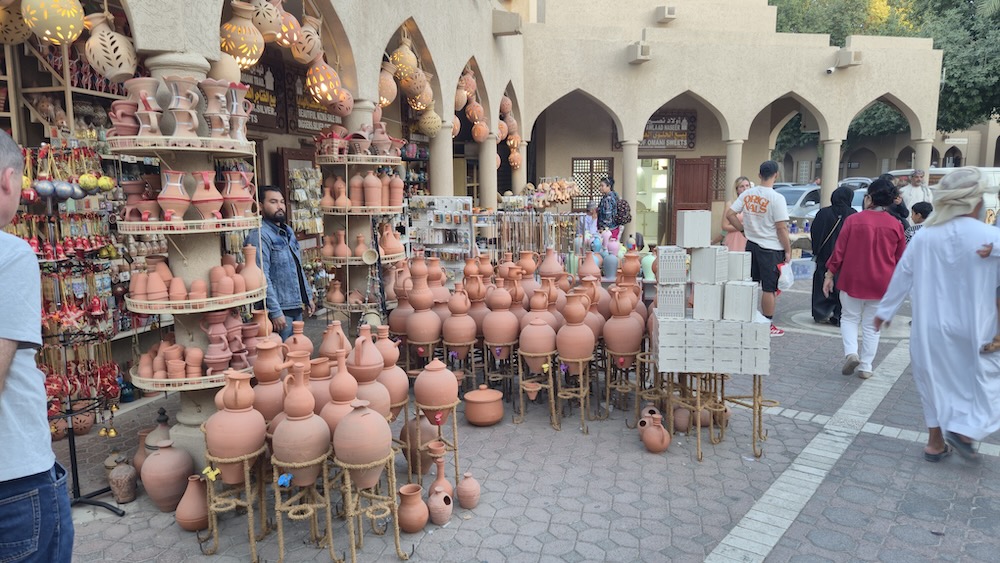
The souq is divided by product: fruit and vegetables, fish, meat, odds and ends, and so on. One of the more exotic sections is certainly the date market.
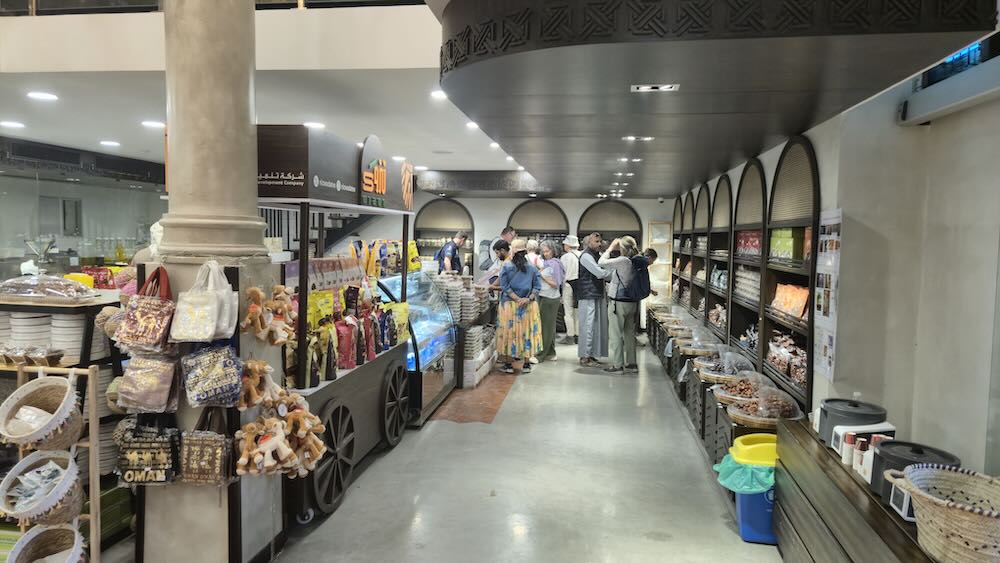
At least twenty varieties of dates are on display here, and you can taste them before buying. Many people take full advantage and eat their fill. Until today, I thought there were only three or four varieties, but Oman grows more than 250. Dates are central to Omani culture and diet. Almost every home keeps dates for guests as a gesture of hospitality. In the past, dates in Nizwa were used as currency as well as food.
The same shop also sells liquid halwa:
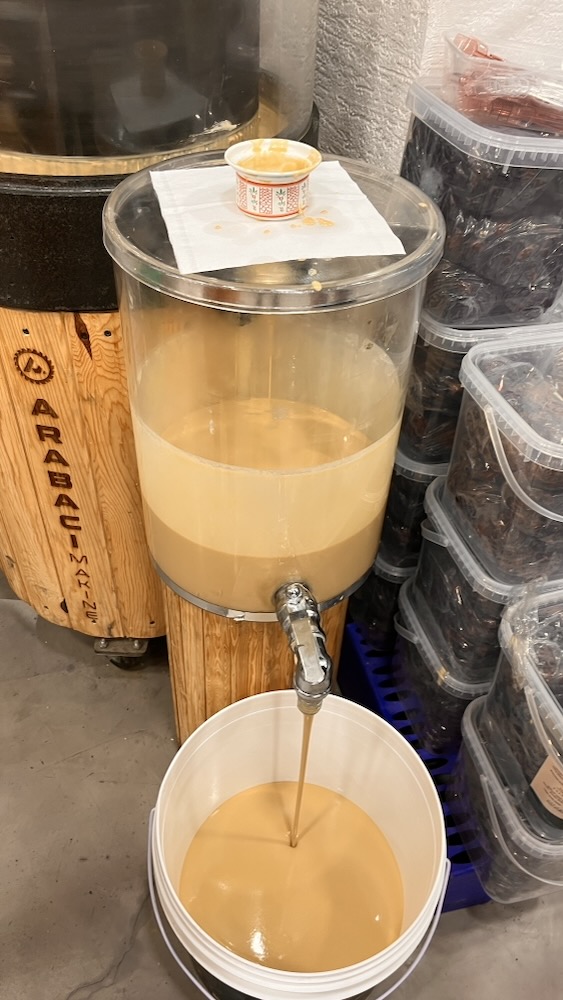
Did you think I would not dip my finger in? For hygiene reasons, I did it in a little dish on top of the transparent container. I was tempted not just to dip a finger into the tub, but to stick my whole head in—mouth wide open. “Aaaaah!”
I tried to find and buy a traditional Omani dagger, the khanjar. It is a national symbol of Oman, so important that it appears on the country's coat of arms and on the Omani rial. Its curved, J-shaped blade distinguishes it from other Arab daggers.
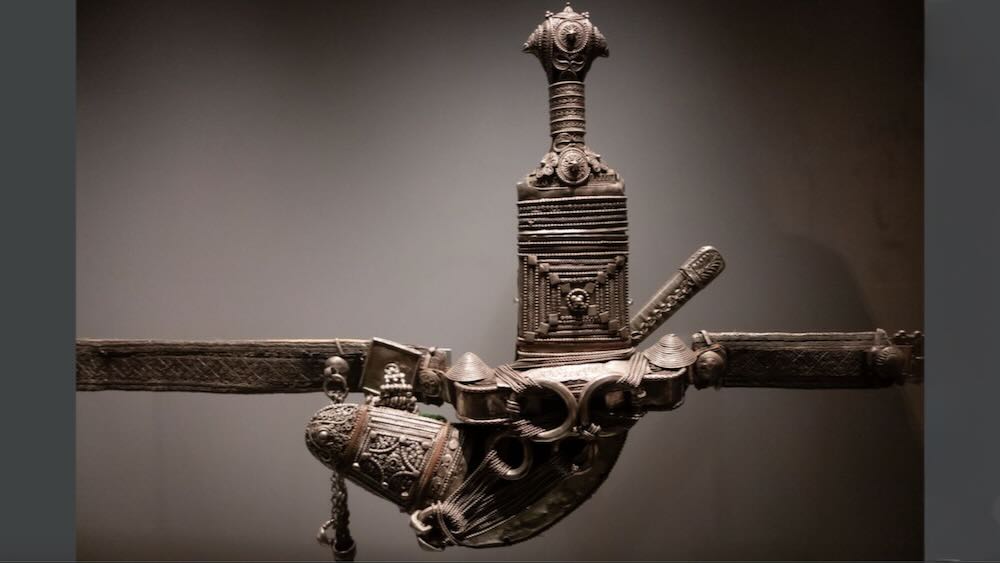
Once a weapon of self-defence and a symbol of power, the khanjar is now worn as part of traditional dress at weddings, holidays and state ceremonies.
I checked the prices, and they were unbelievable. Decorated luxury models cost between €2,000 and €3,300. “Fine,” I thought, “I am not into luxury.” The cheaper ones were €1,100 to €1,500. Seriously!? How much was a basic one? €675.
Tradition does not come cheap. The high prices are due to the materials: most are made of silver, while the most expensive are gold. The “ordinary” ones are copper and brass. Every khanjar is handmade, and making one takes months. It is also a status symbol in Oman, a sign of masculinity and maturity, and is often passed down through generations as a family treasure.
In the end, a khanjar-shaped souvenir was good enough for me.
The day was drawing to a close. It was Christmas, and there was a celebration and dinner at the hotel. In the hotel lobby, this:
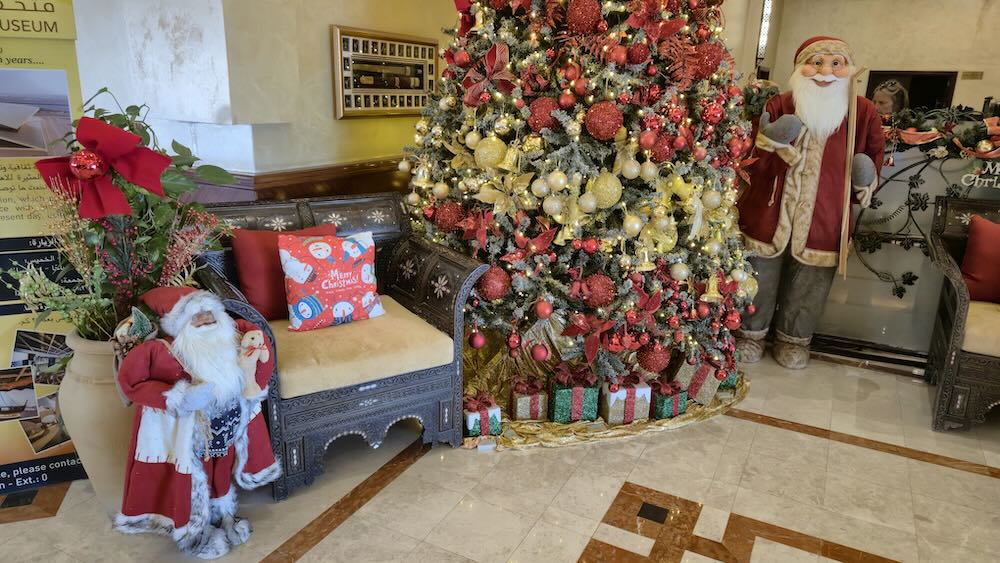
That fit into the Omani setting like a turd in a punch bowl. I suppose the global rule of adapting everything to tourists applies here too. Is not the joy of travel in seeing something unfamiliar? We do not need freaking Santa Clauses; we left them at home, where we came from. But fine, let us celebrate Christmas like all the other hotel tourists—with food and drink. And what a feast (without pork, please).
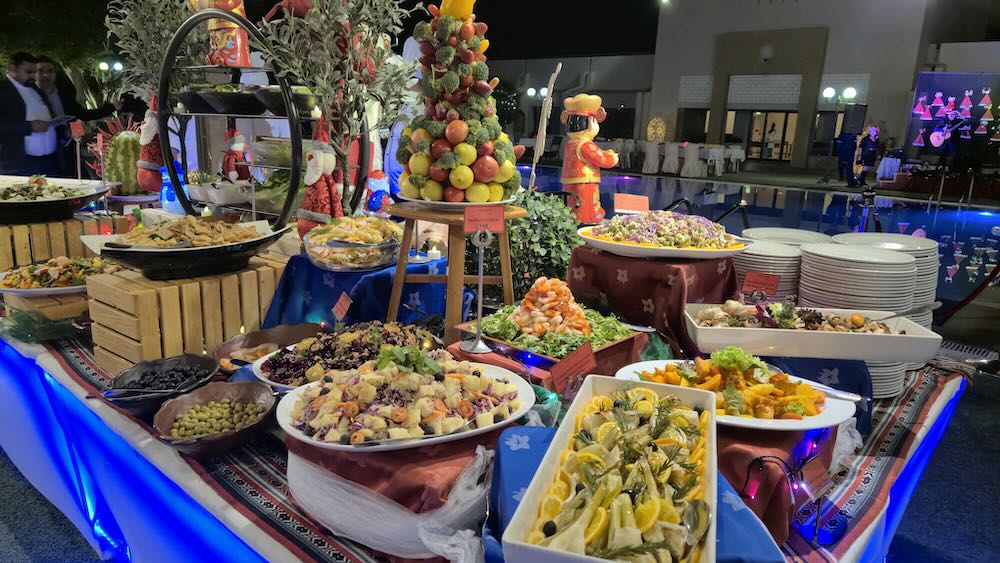
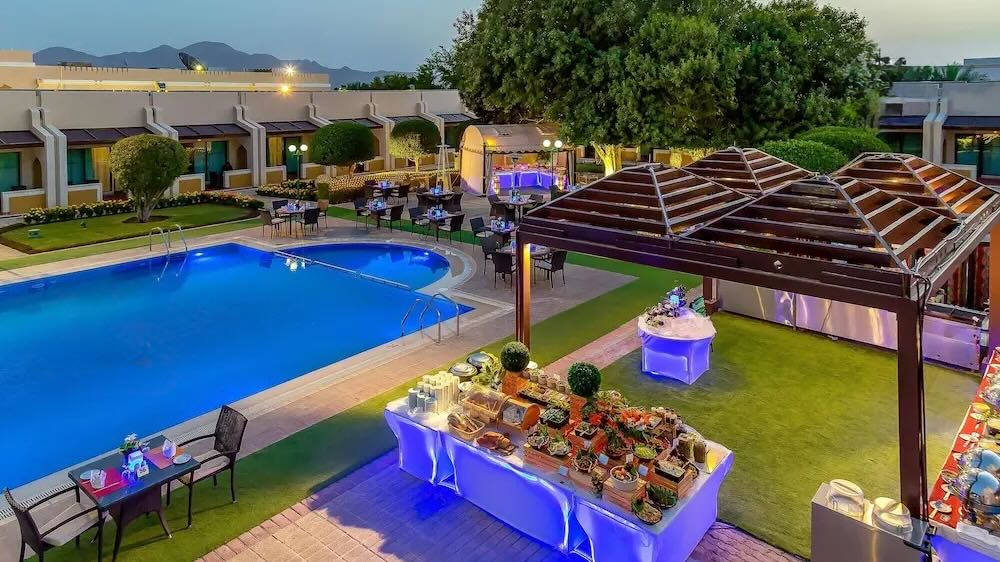
There were five or six tables like this, all covered with different dishes, so it was physically impossible to try everything. We later found out—and confirmed it personally, and with our stomachs—that it was like this every night. The tables are set up beside the pool, and the eating is full-on.
Day Seven
It was Friday, a day off in Oman. We headed for Nizwa, where a proper market day awaited us. We entered the city.
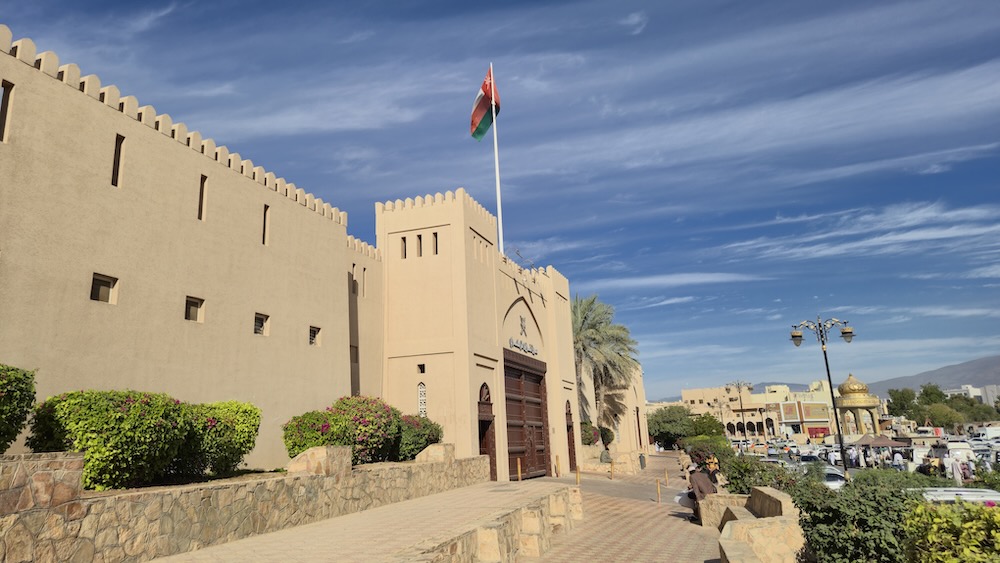
We made our way to the livestock market. The souq is surrounded by walls and has several entrances.
Goat Market
The goat market in Nizwa is not a tourist attraction; it is real business. It takes place every Friday morning, before the sun gets too hot. You can smell the livestock as soon as you enter. Everyone is there: sellers, buyers, curious onlookers and tourists. Some sellers have shaded stalls, while others sell directly from the ground or from truck trailers.
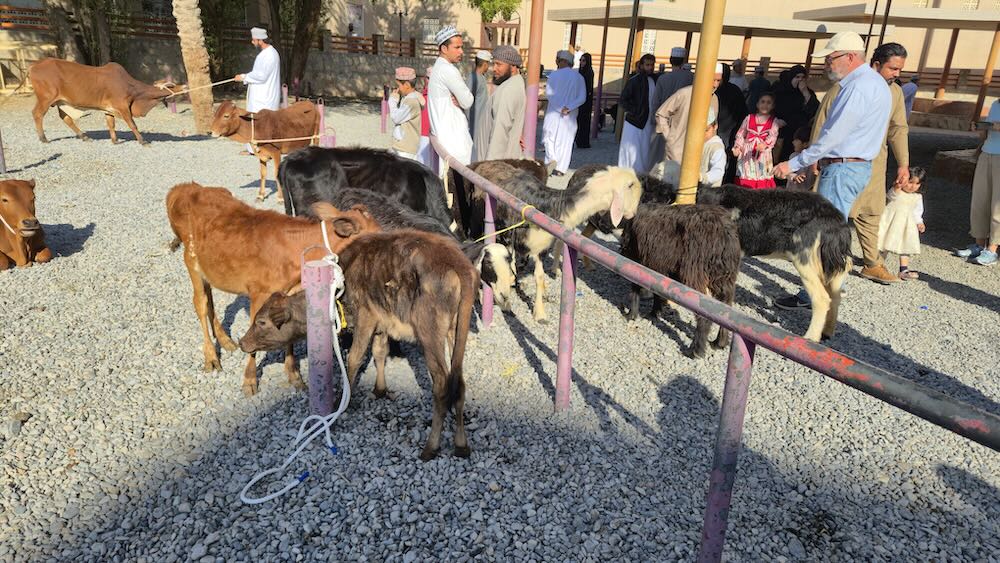
The goats are led in on ropes and inspected with little talk. Deals are often sealed with a quick handshake. There is no loud haggling or drama. Everything is quick, direct and efficient. For locals, it is routine shopping; for visitors, it is a rare glimpse of how Oman really works.
Nizwa Fort
Nizwa Fort is the city's main attraction. It was built in the 17th century using mud, stone and wood, although its foundations date back to the 12th century. It is the most visited monument in Oman.
The fort was built purely for defence, above an underground stream to ensure access to water during a long siege. It is a complex of rooms, passages and stairways.

The fort took 12 years to build.
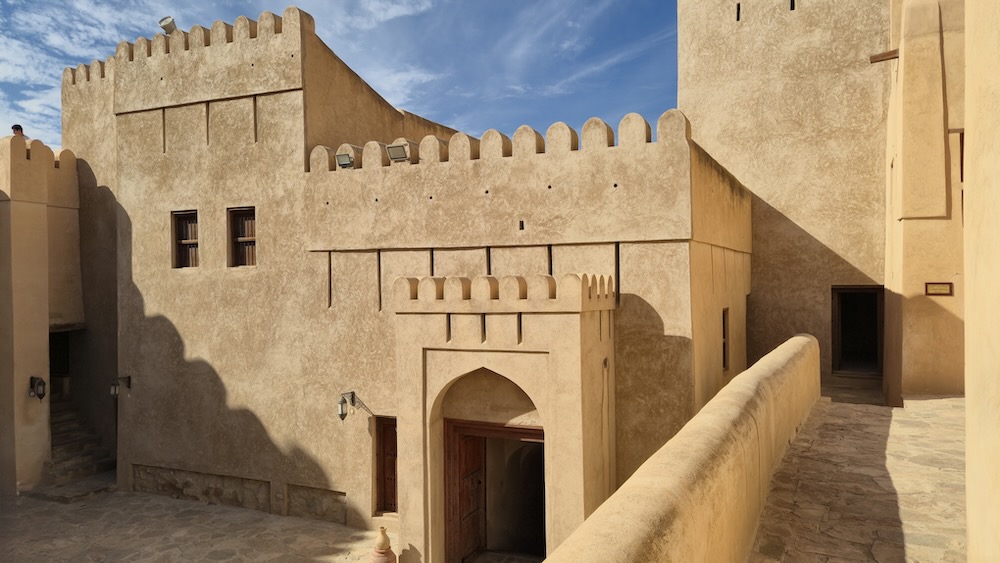
Nizwa Fort has one of the largest round towers in Oman, built to withstand sieges and cannon fire. It is 36 metres in diameter and 30 metres tall, with foundations reaching 30 metres underground.
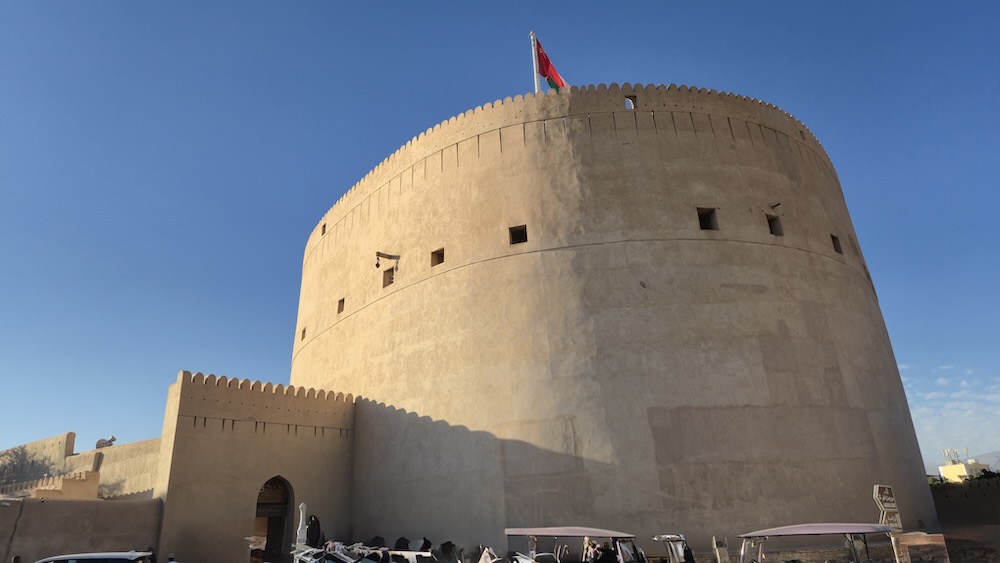
The only way to reach the top is via a narrow, winding staircase sealed by heavy wooden doors studded with metal spikes, designed to exhaust the enemy and slow their progress up the tower. Anyone who made it through the obstacles risked being scalded with boiling oil or water poured through openings directly above each door, known as murder holes.
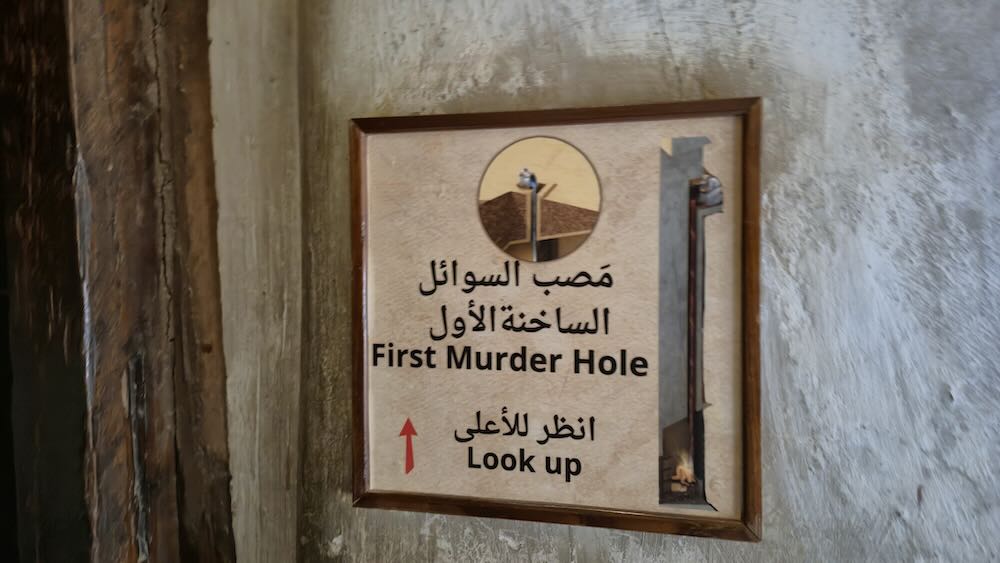
There are six such trapdoors in the dark passage, ready to surprise intruders. Wooden planks covered them and could be removed to reveal deep, gaping pits that would surely kill anyone who fell in.
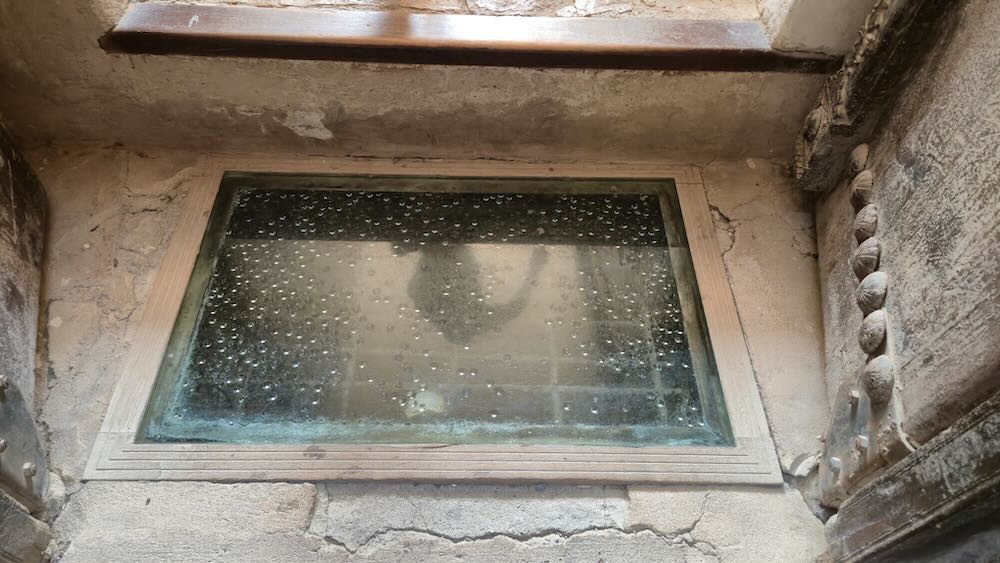
I cannot imagine how they got anyone out of there; after a while, it must have started to smell if someone fell in.
There are also many hidden openings through which hot oil or water could be poured onto intruders—or even date syrup if oil was unavailable. The fort contains many false doors, underground passages and secret routes.
Once you survive the climb, you are rewarded with a spacious area whose primary purpose was defence.
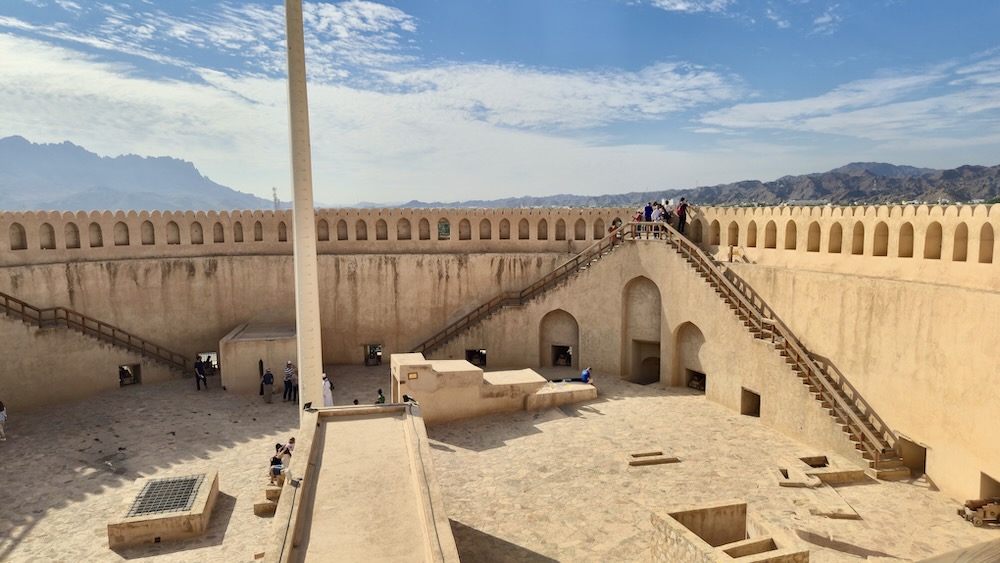
From the top, you get a sweeping view of Nizwa, the mountains and the surrounding area.
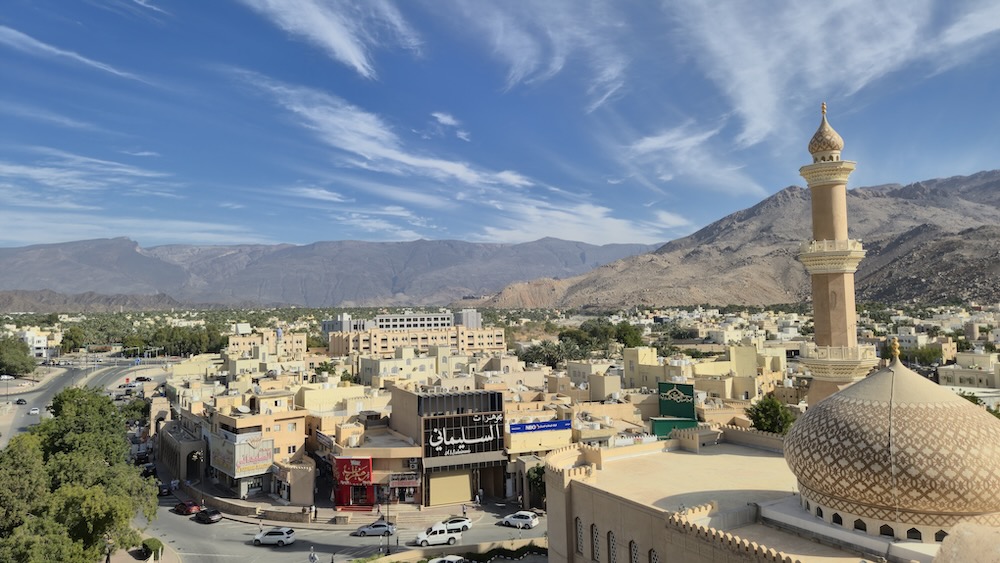
Falaj Daris Park
We thought there might be a reason to drive about 7 km to Falaj Daris Park, but it turned out to be an ordinary park. Since it was Friday, lots of local families had gathered for picnics. The park is nicely laid out, with walking paths, children's playgrounds and barbecue areas.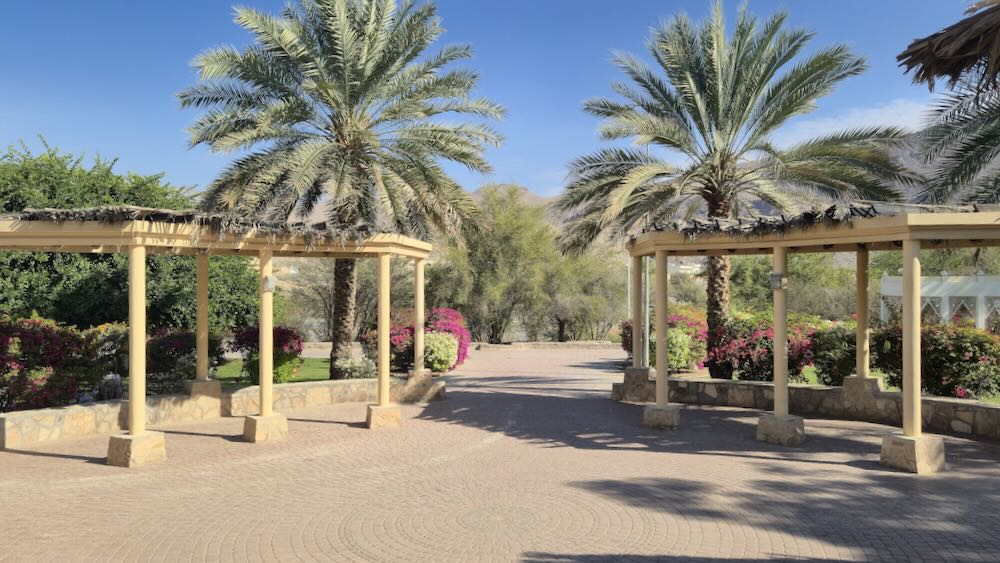
What makes it interesting is that it lies beside the largest falaj in Oman, which is protected by UNESCO. Falaj Daris combines underground tunnels with open water channels.
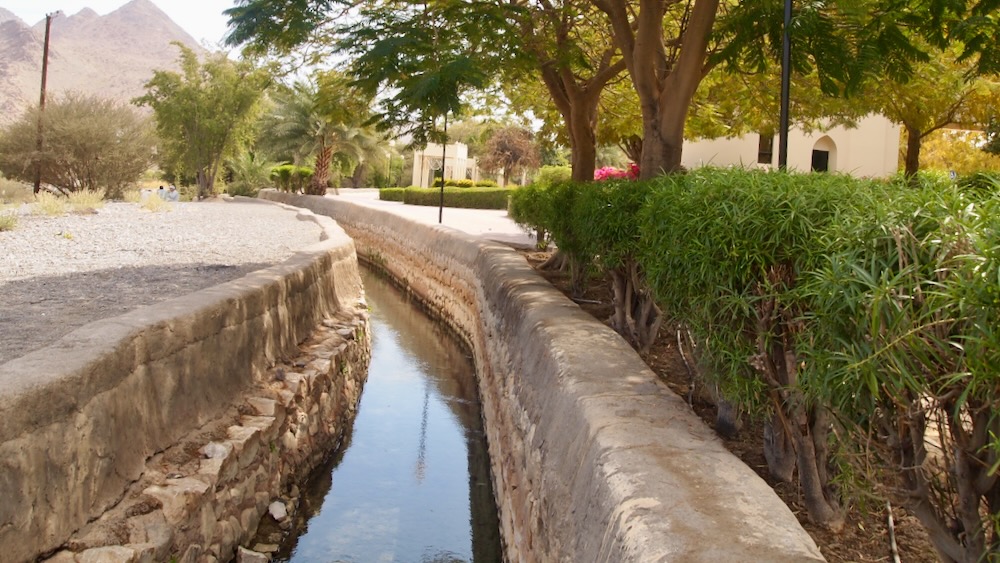
As the largest falaj in Oman, it has been crucial for centuries in irrigating date palms, orchards and fields, enabling one of the country's most important cities to grow. It was a vital source of life. Aflaj were so important that they were protected by watchtowers.

We spent the rest of the evening by the pool, followed by another generous dinner.
Day Eight
Jebel Shams
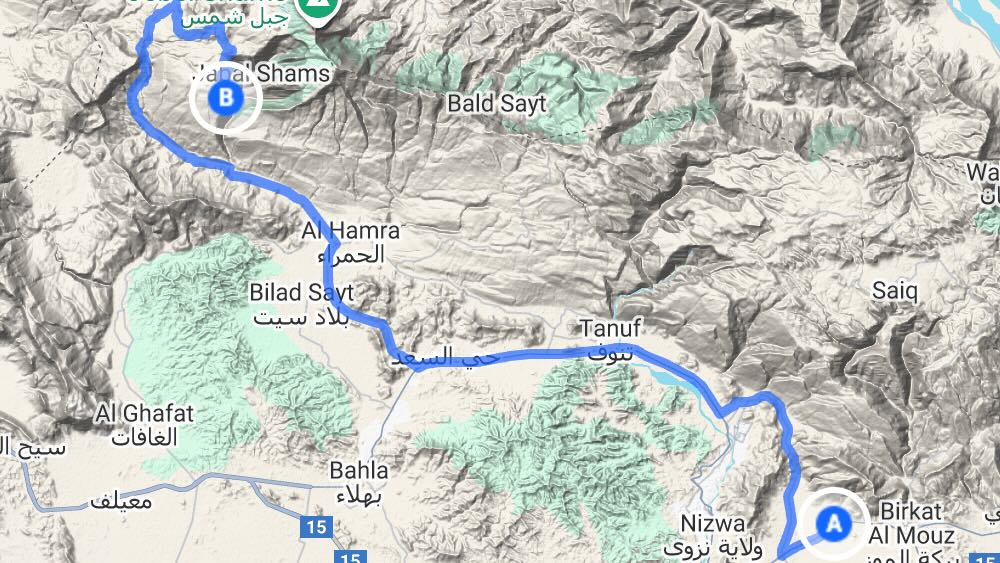
We were going hiking—straight to Jebel Shams, the mountain with Oman's highest peak at 3,009 metres. It is called Oman's “Grand Canyon” because we would be walking above a deep canyon. The trail is popularly known as the “Balcony Walk” because it follows a ledge along the canyon. It is one of the most spectacular hikes in the Middle East. The drive from Nizwa is about 100 km and takes two hours.
Family homes line the road.

Houses are usually spaced at least one plot apart. Omanis value their privacy. Their yards are enclosed by walls that can reach the height of a first floor. Every Omani who turns 23 and is the family's main provider is given a free 600-square-metre plot on which to build a home. Omani families are large; it is not unusual to have six to eight children, although that number is now falling. While women traditionally look after the home and children, Oman is one of the Arabian Peninsula's most progressive countries when it comes to women's rights. Women are regarded as partners, not as men's property. Many work and contribute to their household income. Girls' education is considered just as important as boys'. Women have the right to divorce.
The road from Nizwa to Al Hamra is relatively easy, and then the climb begins.
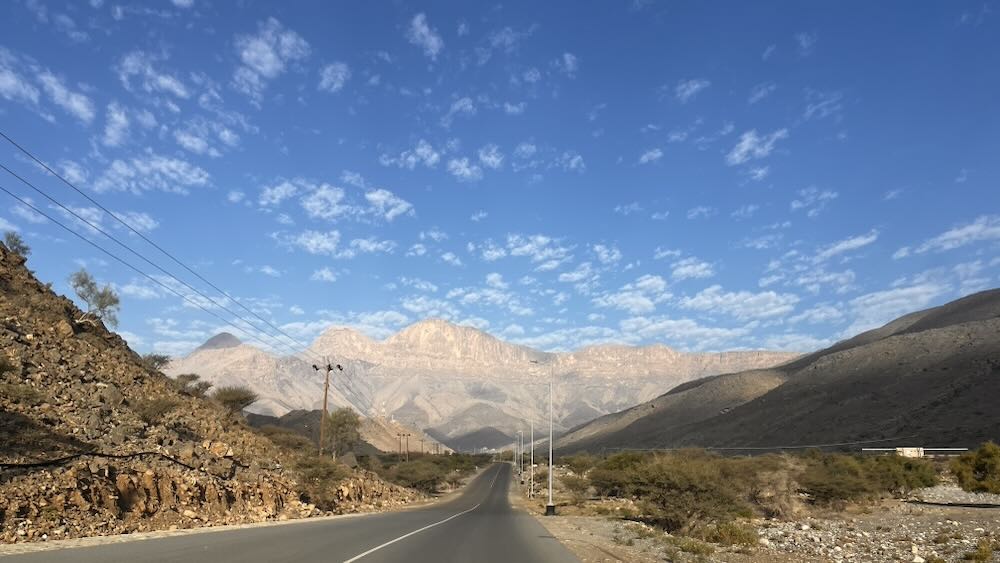
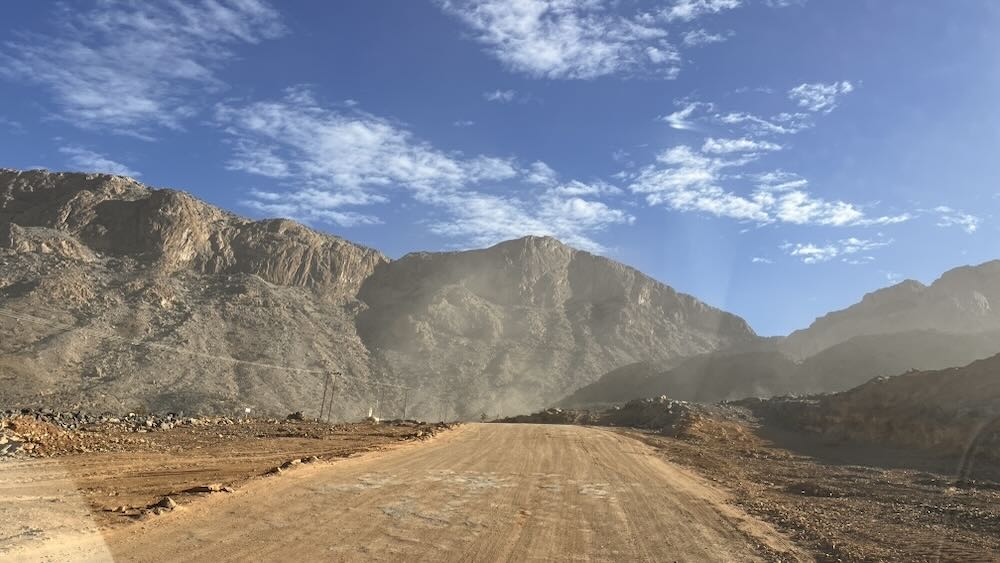
The road has many steep climbs. The last few kilometres are steep gravel, though wide enough; a 4x4 is strongly recommended.
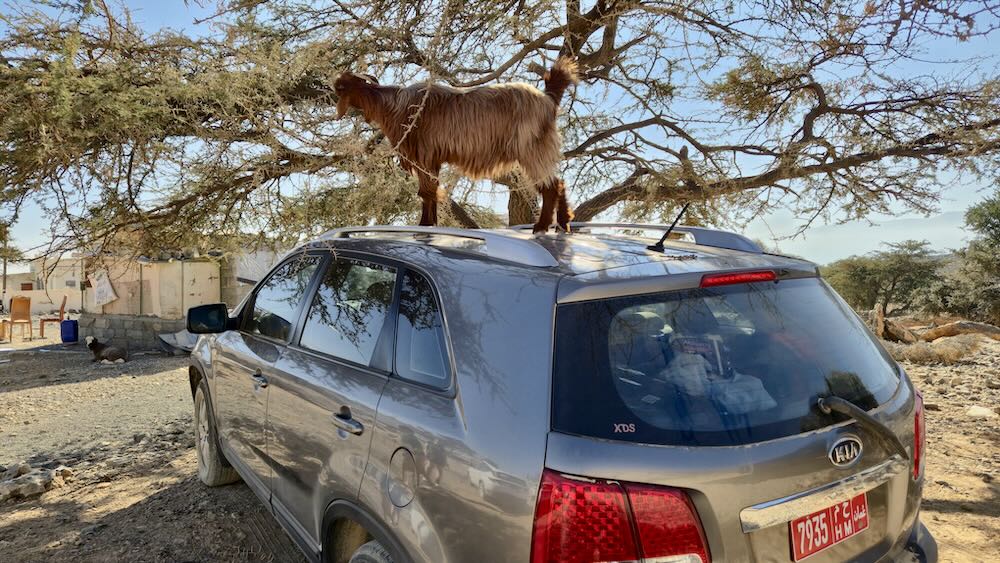
When you reach the end of the road and the start of the hiking trail, be careful where you park. Do not, under any circumstances, park beneath a tree. Local goats use them to reach the leaves.
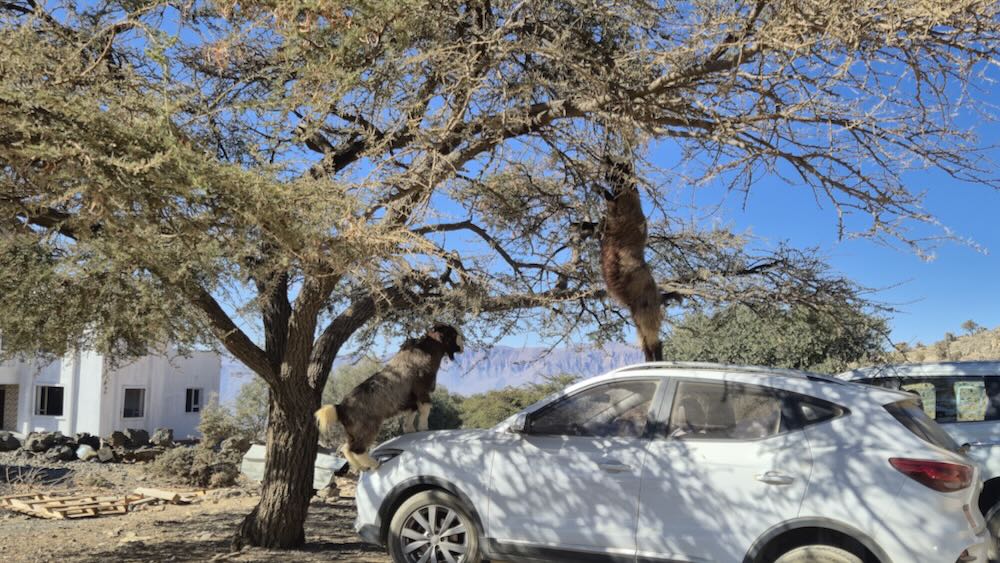
These were our constant visitors along the trail, faithful companions hoping to get a little food.
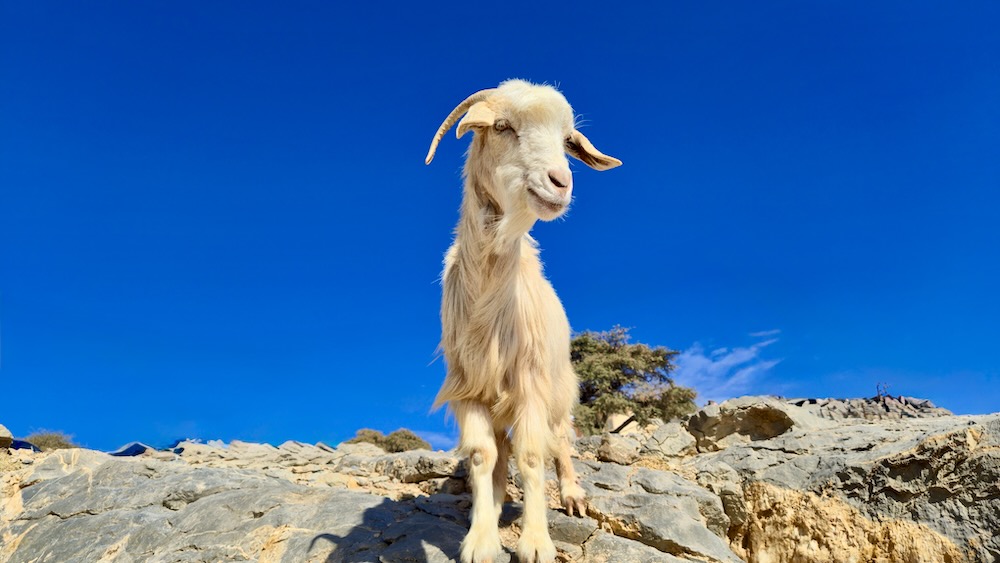
Well, who could resist eating her? She is so sweet. With potatoes.
Wadi Ghul runs alongside the mountain. It is one of the deepest canyons in the Middle East, with cliffs dropping as much as 1,000 metres. There are no guardrails in many places. The Balcony Walk follows the canyon cliffs, often literally just a few metres from the edge.
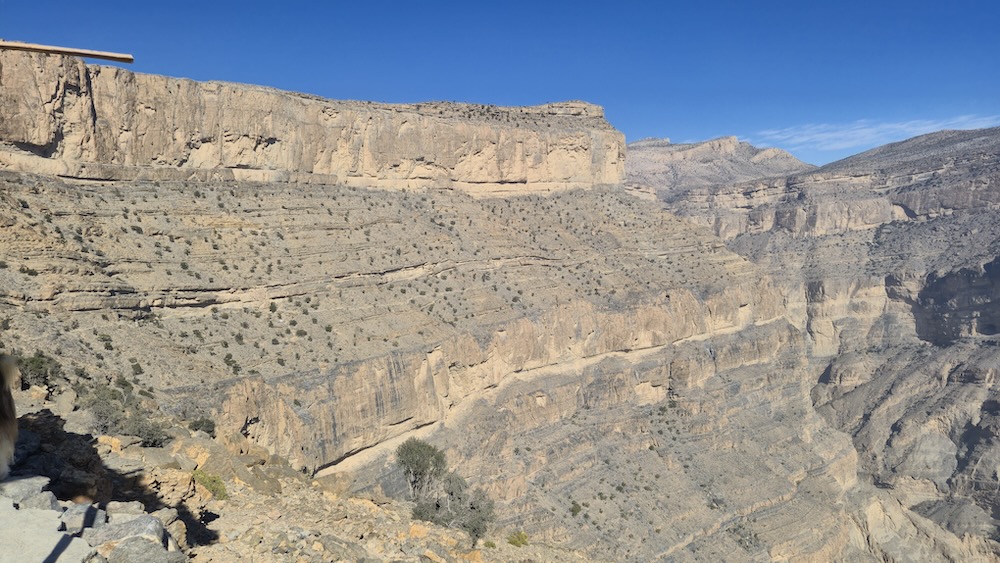
This is one of the most beautiful walks in Oman. The trail is 7–8 km long, but it takes about four hours, because you cannot walk along the “Omani Grand Canyon” without stopping now and then to look down. The trail is not technically difficult, but it does require a cool head and sure footing.
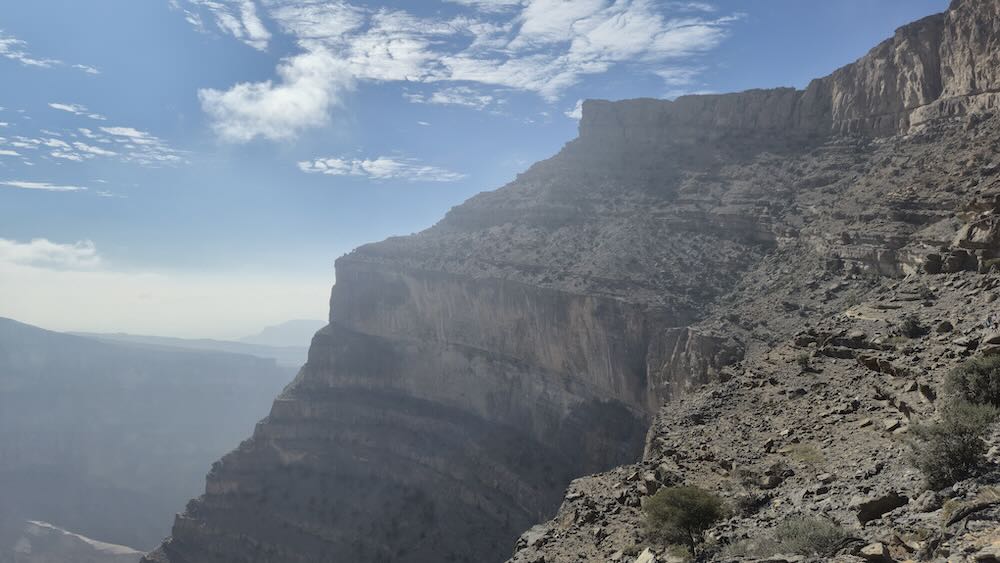
Even the haze could not spoil the magnificent view. While the desert below is dry and hot, it can be cold, windy and even foggy up here. Experiencing all four seasons in one day is not unusual.
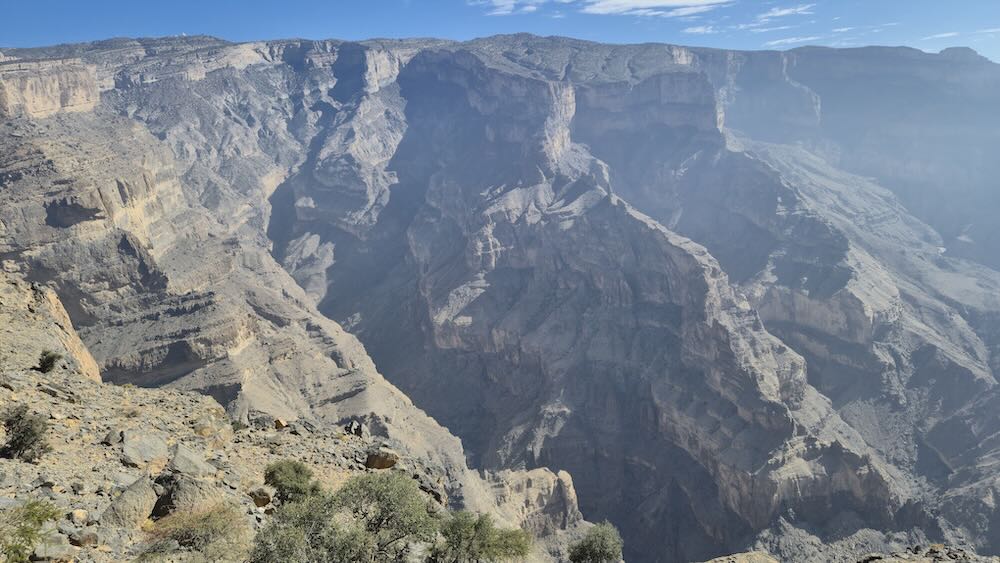
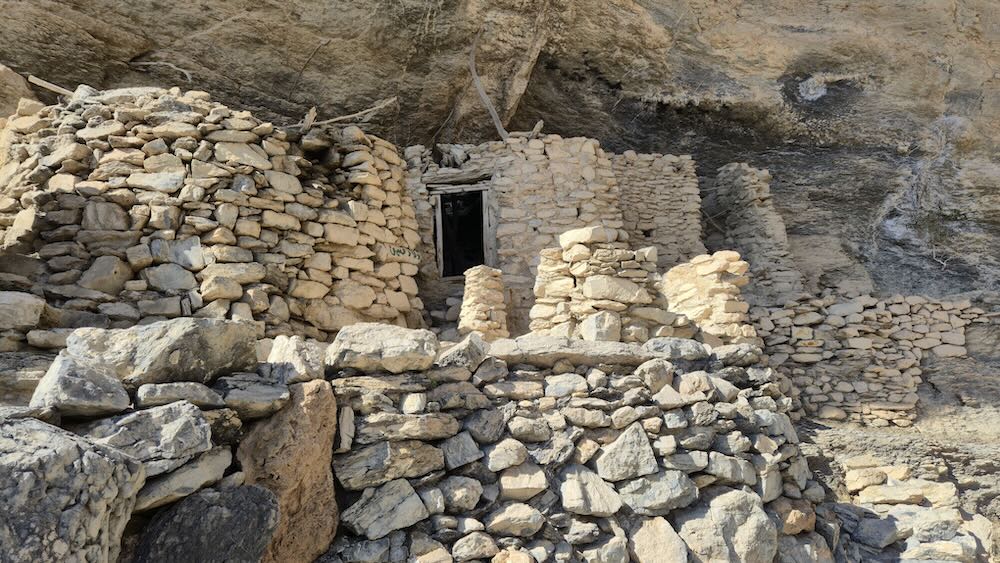
The summit of Jebel Shams is across the canyon and off-limits to civilians because military radar installations are located there. In a few places along the trail, there are long-abandoned houses. Imagine someone living in a place like this.
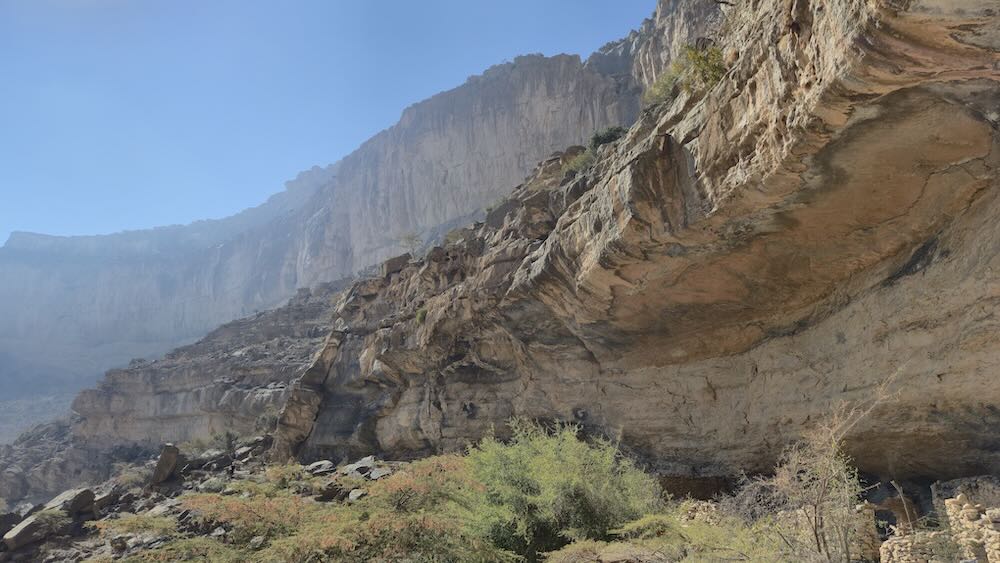
Tall cliffs rise above our heads.
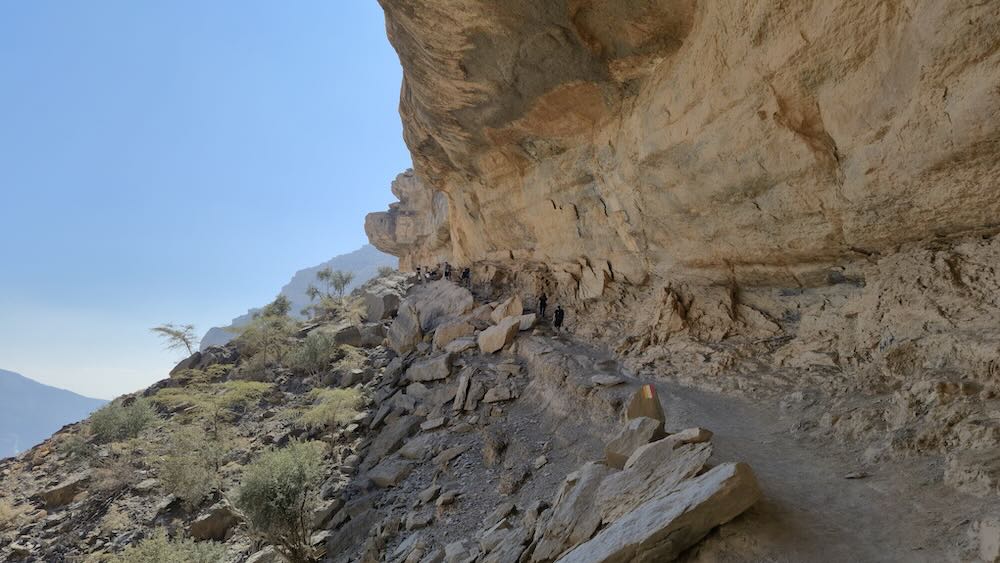
By Omani standards, the trail is well marked, so it is hard to get lost.
At the end of the trail, we tried to find a hidden lake but could not. Later, we saw some climbers tackling a 75-metre cliff—not an easy one—so we gave up and headed back.
Oh no, again!
We continued towards Nizwa along the same road, stopping in Al Hamra for refreshments.
Al Hamra
A must-stop in Al Hamra is a Yemeni-Omani restaurant with very reasonable prices and exceptionally tasty food. A detail from the “bread”:

Al Hamra is surrounded by date plantations. I asked the waiter where I could buy some. He told me to wait a minute, then came back carrying a kilo of dates and handed them to me. Naturally, I asked, “How much?” He said, “Nothing, they are for you.”
I blushed a little. I wonder if anyone on our “touristy” Adriatic coast is reading this?
We continued to the plantations.

The village is surrounded by date groves irrigated by a falaj, often the same one that has been used for centuries. Dates are picked by hand and dried in the sun, with no rush. Some palms are older than modern states and still bear fruit regularly. We drove through the plantations.
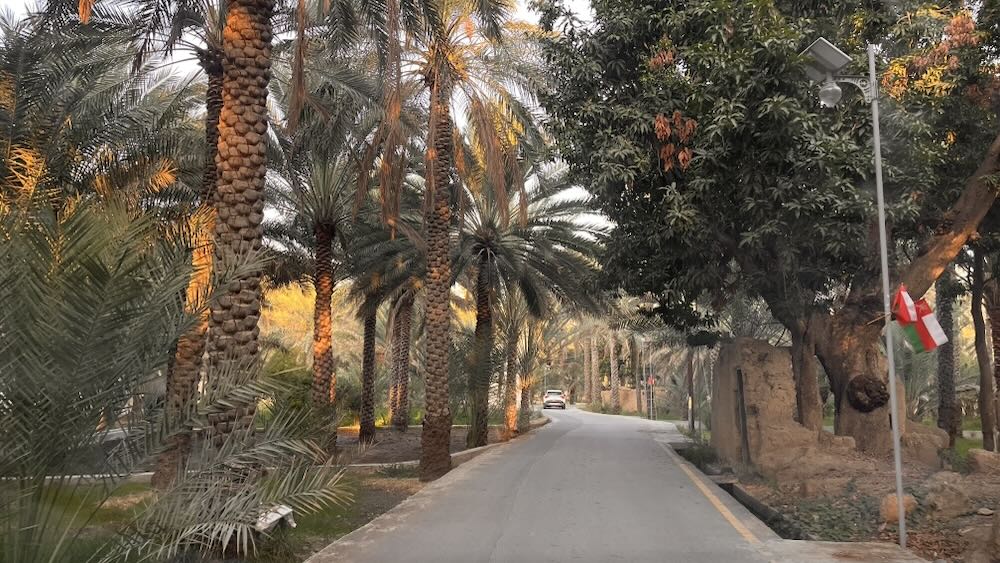
This was exactly where our fifth accommodation was supposed to be. But having been spoiled by the Golden Tulip, we decided to extend our stay there by another night. Perhaps we regret it a little now, but that is how it goes.
After that, we visited the historic village, or rather, the old part of town.
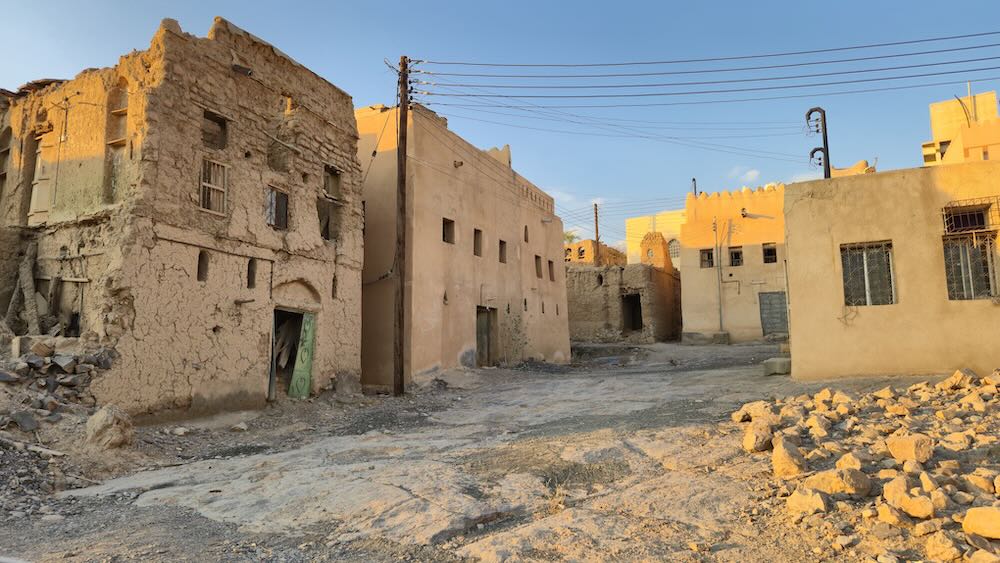
This area is known for hundreds of mud-and-stone houses built without modern cement, some more than 400 years old. Despite their age, Al Hamra has never been completely abandoned; people still live among these walls. It is one of the oldest inhabited places in Oman and shows clearly how buildings here were designed to work with the climate, not against it: thick walls and small windows provide natural cooling.
Nizwa #2
We returned to the centre of Nizwa, this time in the evening. It was very, very beautiful to see the old buildings illuminated.
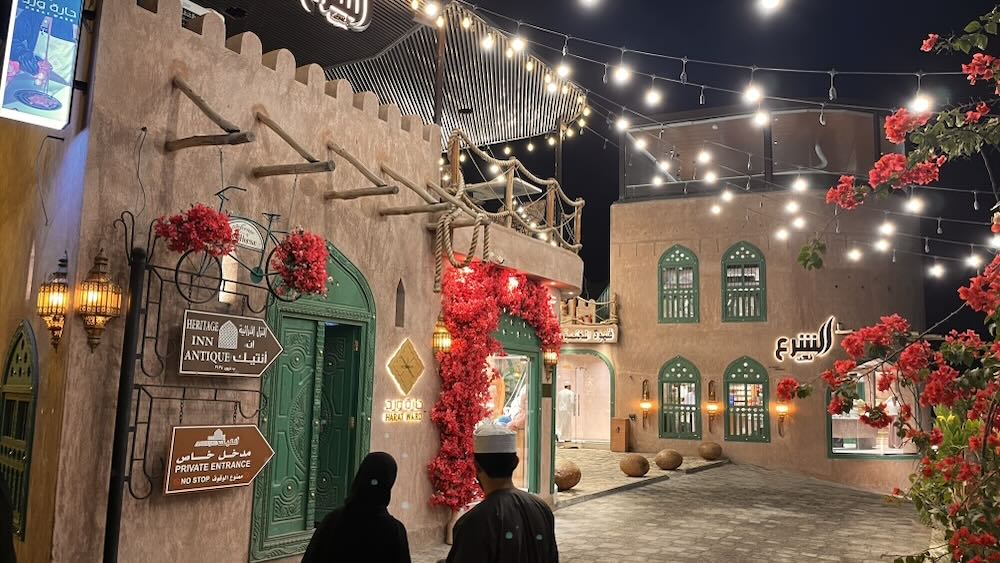
In Oman, great care is taken to decorate doors and windows. Wooden doors are often richly carved, while even metal doors are decorated.
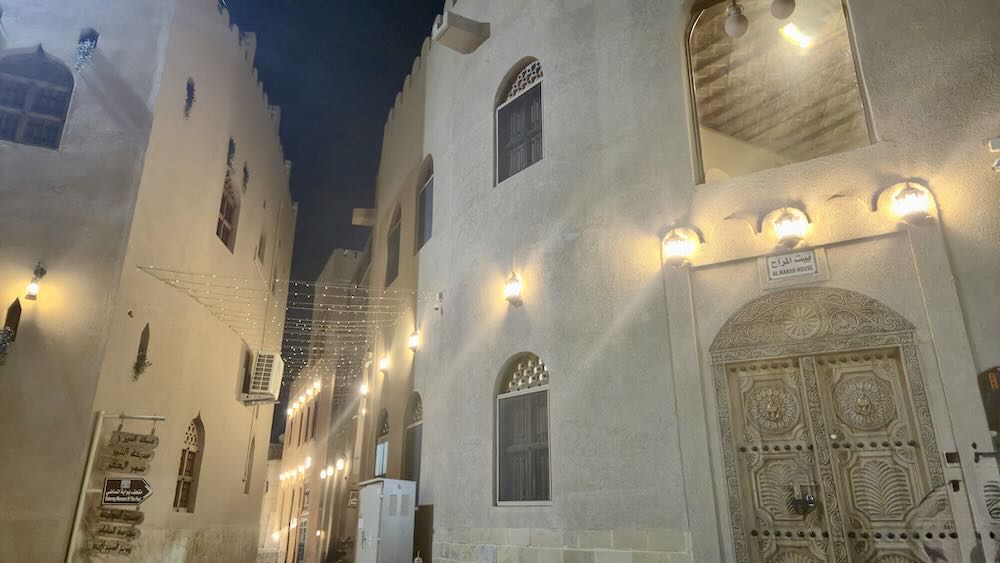
Historically, Nizwa was Oman's religious and intellectual centre, shaped by the Ibadi tradition. The Grand Mosque in Nizwa is often described as a symbol of spiritual discipline rather than monumentality.
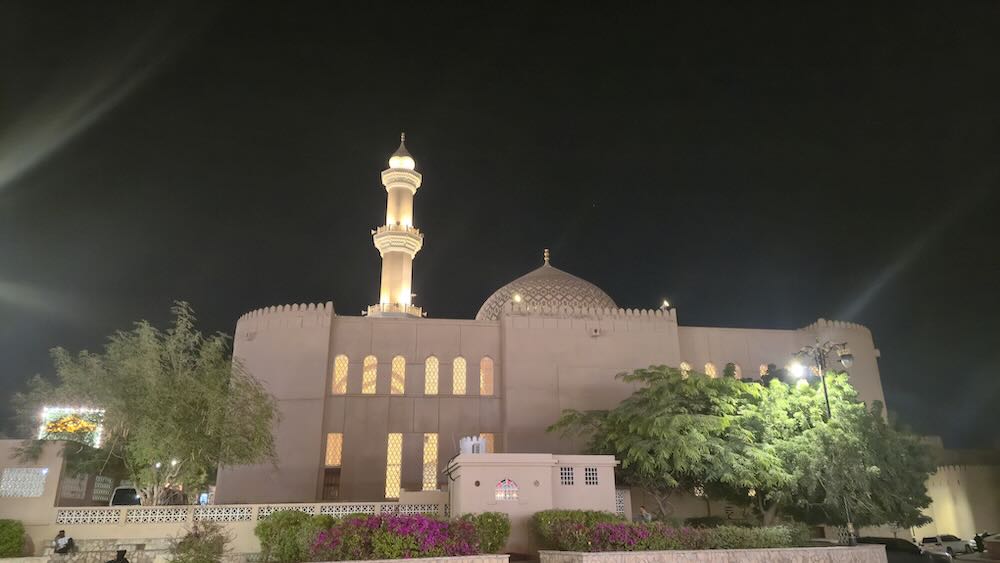
Imams, teachers and jurists who helped shape Oman came from Nizwa. The city has several historic mosques, including some dating to the 9th and 10th centuries.
Jewellery shops are everywhere, often dozens of them side by side. Omanis are accustomed to buying gold and do not hold back. The jewellery is 21-carat. It is not unusual to see women being given necklaces like this one, worth €30,000.
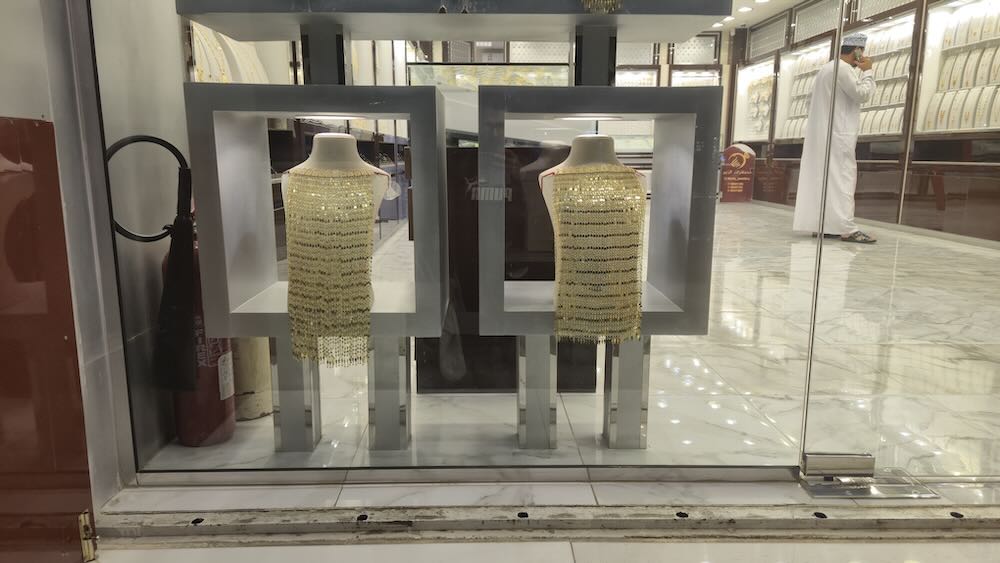
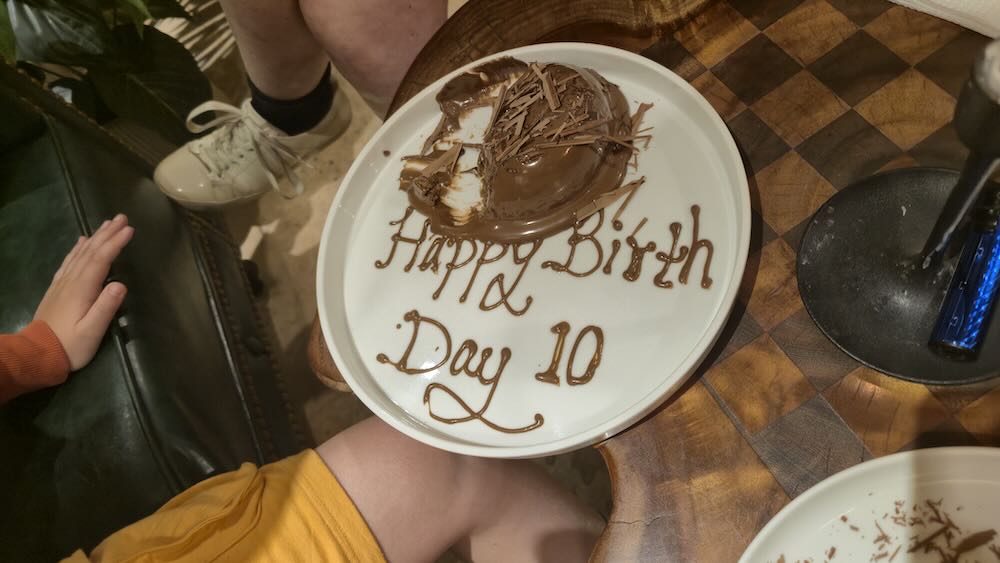
At the end of the day, we celebrated our little one's tenth birthday in style—although the cake had already been thoroughly “demolished”.
Day Nine
We checked out of the hotel.
Our next destination was Jebel Akhdar. The road into the mountains is smooth, modern and wide, but brutally steep. And where does it lead? Into the mountain.
Jebel Akhdar
Somewhere near the beginning, there is a police checkpoint where they check that you have a 4x4. You are not allowed through without one. They also record every passenger entering the mountain area. Technically, the road is not difficult and could be driven in any large, powerful car; the problem is the return trip. There is so little traffic that it is surprising the road was built at all. It runs about 30 km through the mountains and climbs from 1,000 metres to more than 2,000 metres above sea level. The steepest section is the last 7 km, with gradients of up to 15%.
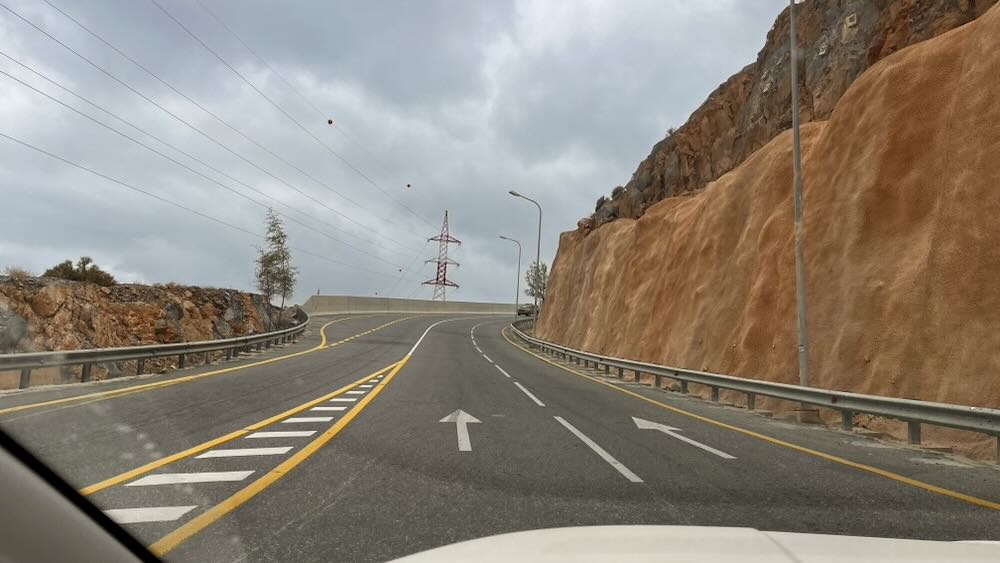
The steep sections continue for a long way. If you rely only on the brakes, you will burn them out. Engaging low range and driving at the lowest speed is the only option, as the many road signs warn you. One reason for the police checkpoint is that Jebel Akhdar was a closed zone—a military-restricted area—for a long time.
Several sections of the road have emergency exits, or escape ramps, in case your brakes fail.
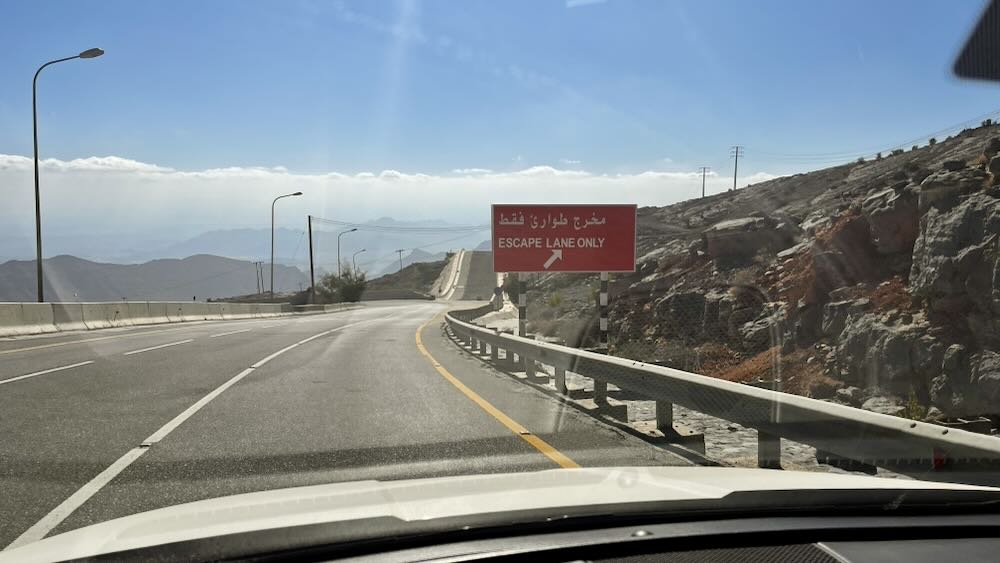
The first viewpoint where we stopped was at 2,090 metres. We were above the clouds. I can only imagine how spectacular the view must be when the sky is clear.

Jebel Akhdar literally means “the Green Mountain”. Above 2,000 metres, there are orchards, roses are cultivated and the terraces are full of greenery. Pomegranates, apricots, peaches, walnuts and almonds all grow on Jebel Akhdar. It is an almost unreal sight in Oman.
It is noticeably cooler on Akhdar, around 13°C, although it feels hot as soon as you step into the sun. Our first destination was the abandoned village of Al Bilad.
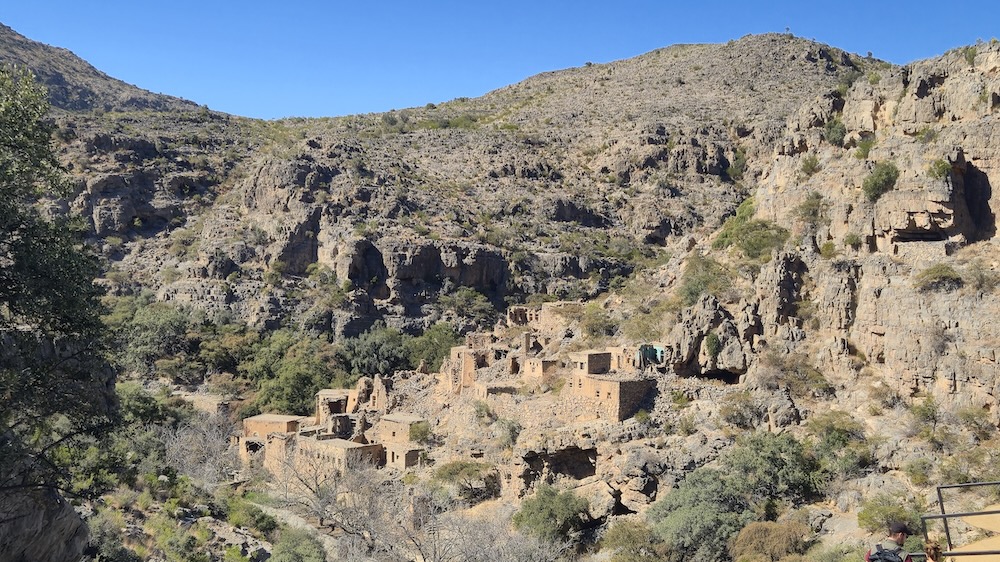
It seems remote from where we stand, but the village sits in the bed of Wadi Bani Habib. Long abandoned, it has a mystical feel. The houses are made of stone and mud and are literally built into the rock.
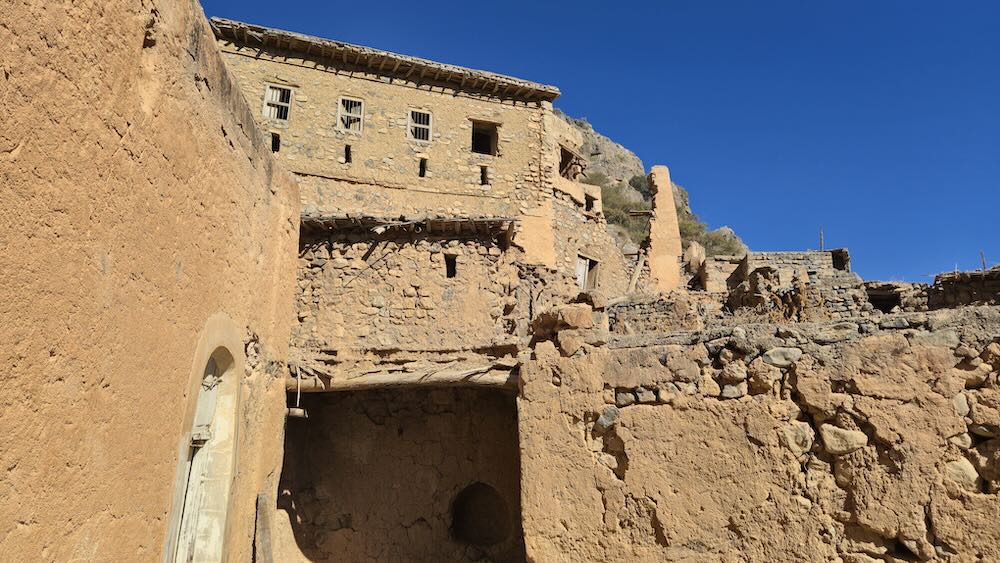
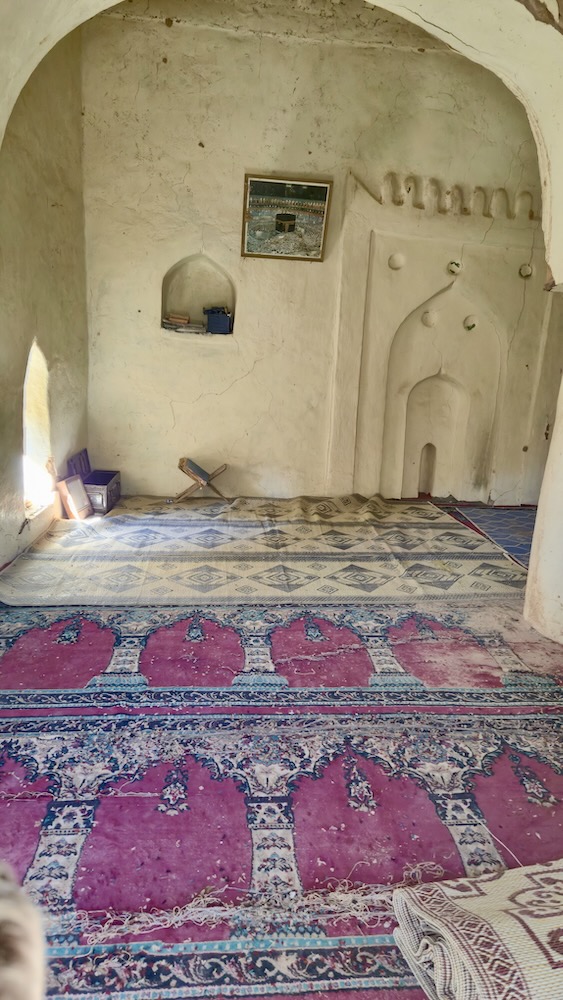
The only building still in use is, naturally, the mosque. There was a sign at the entrance saying “no entry for non-Muslims”, so I broke the rule—how else was I supposed to take a photo?
The fields around the village have not been abandoned; they are still in use. There are hardly any tourists here, and few people visit.
The most impressive feature is the handmade terraces. The whole mountain is carved into terraces that have been used for generations, perfectly adapted to the steep terrain. The falaj channels are essential.
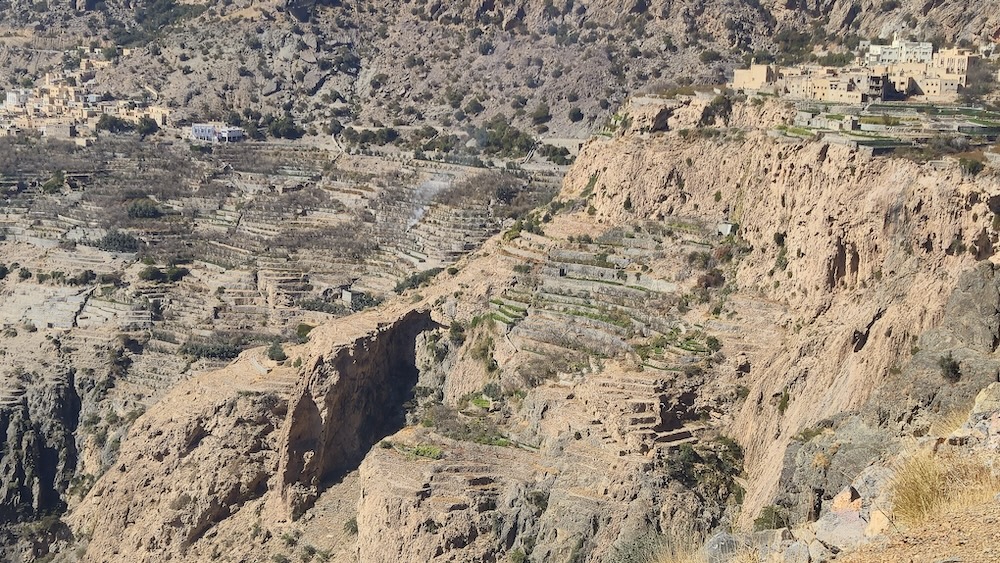
New terraces are still being restored and built today. They prevent soil erosion and keep fertile earth on the steep slopes. They are built by hand, carved into the rock without machinery. One thing is noticeable, though: Omanis no longer do this work. The labour force now comes from Bangladesh, India and elsewhere.
Cliffs drop hundreds of metres, and the views open up over deep wadis and mountain villages. Camping is quite popular in this area.
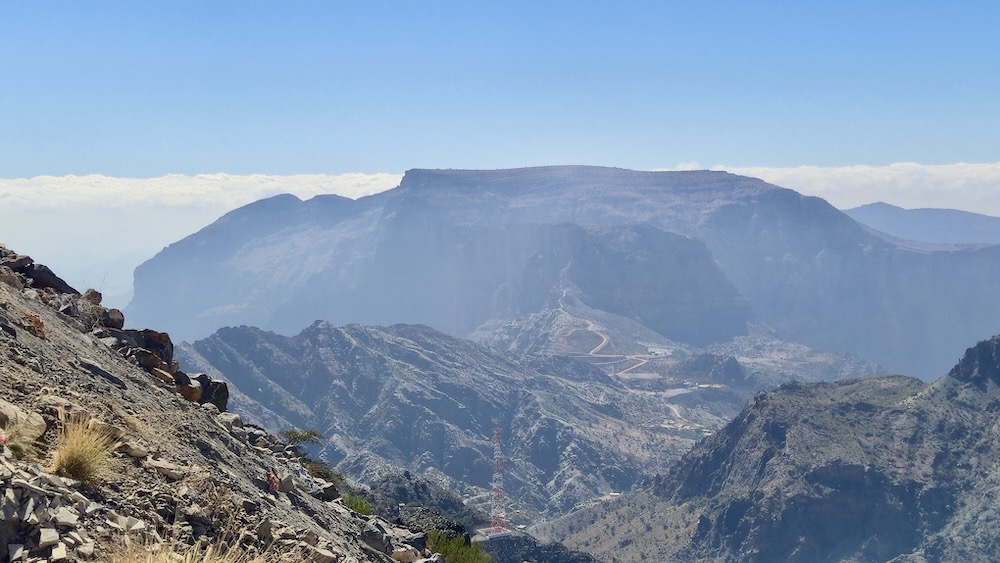
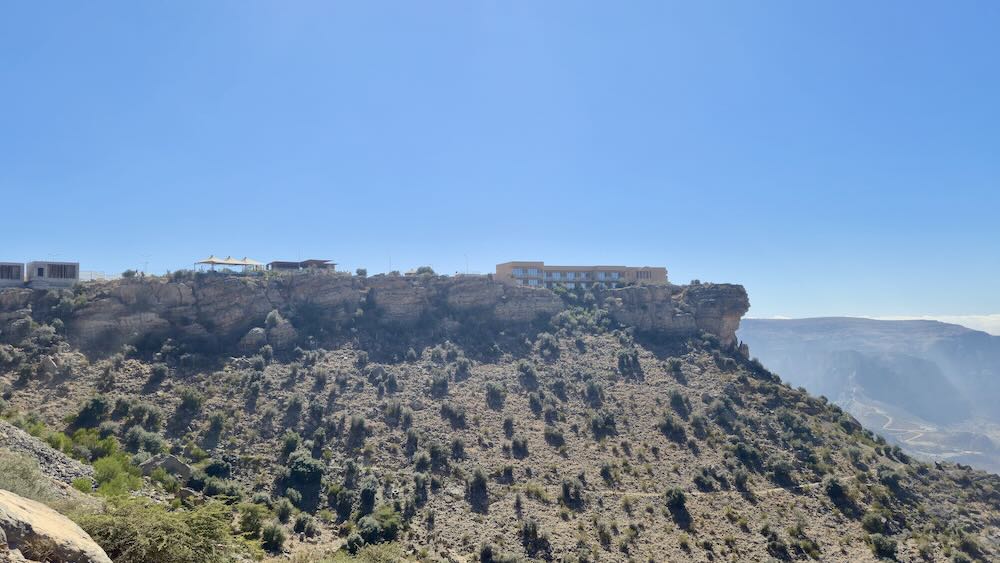
The Anantara resort is here—brutally expensive. It is known for the viewpoint called Diana's Point, named after Princess Diana and Prince Charles visited in 1986. It is now the best-known panoramic viewpoint on the mountain.
We continued towards the terraces themselves, passing through the lively little village of Al Aqar, with views over the canyon and wadi. One of Oman's oldest mountain communities is here, and the doors on some of the houses are still fascinating.
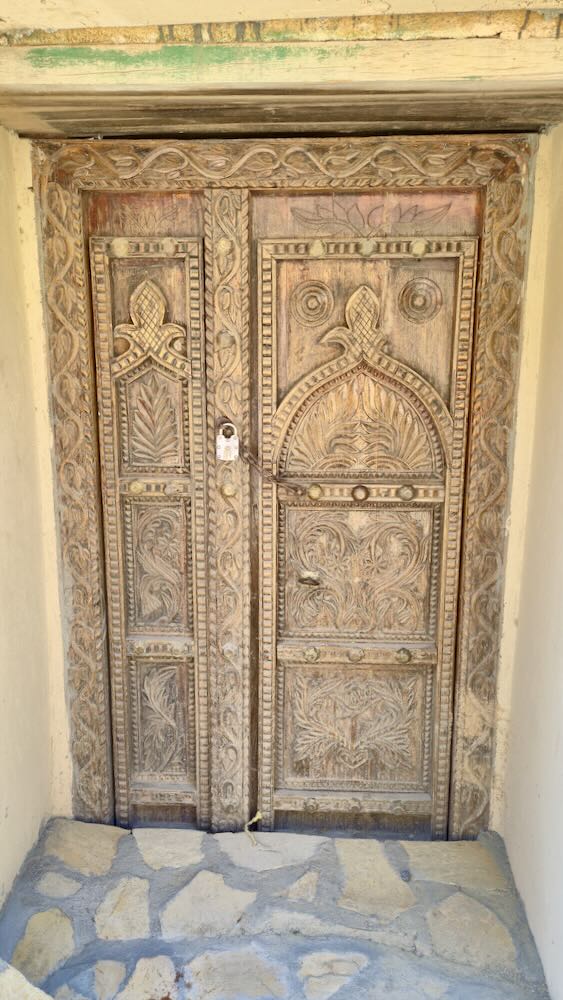
In Oman, a front door is not just a functional part of a house; it is a work of art, a status symbol and a storyteller, carrying the history of each family and place. That tradition is still alive. Doors were considered the most lavishly decorated part of a home, often made of teak imported from India and Zanzibar.
We peeked into people's courtyards.
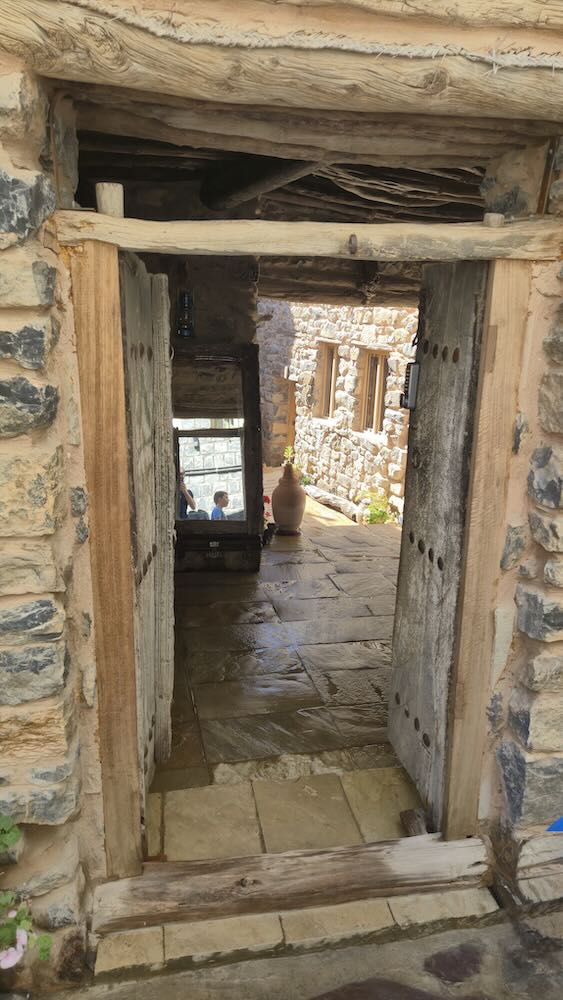
And through their windows:
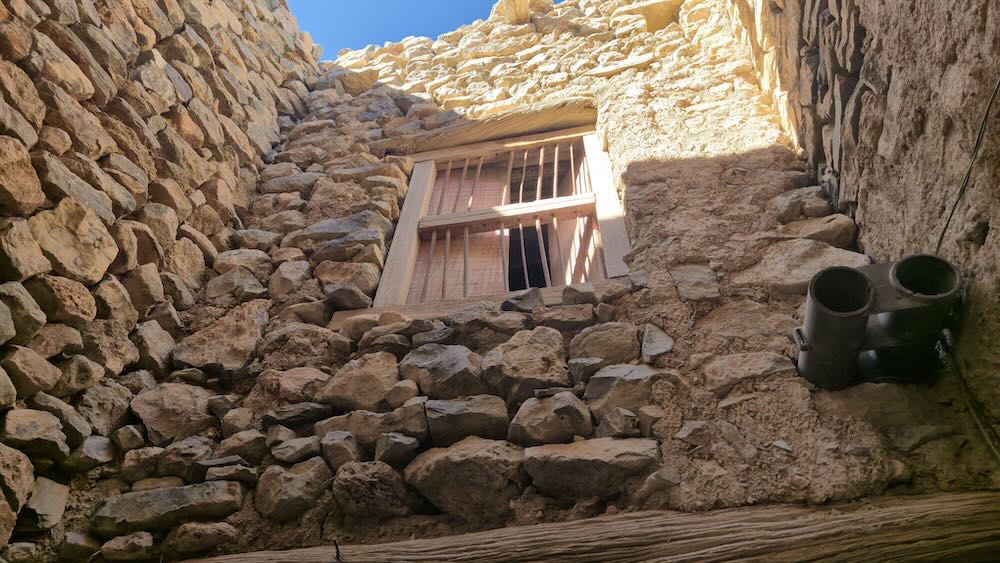
Then we went down among the terraces themselves. Moving up and down is not easy at all.
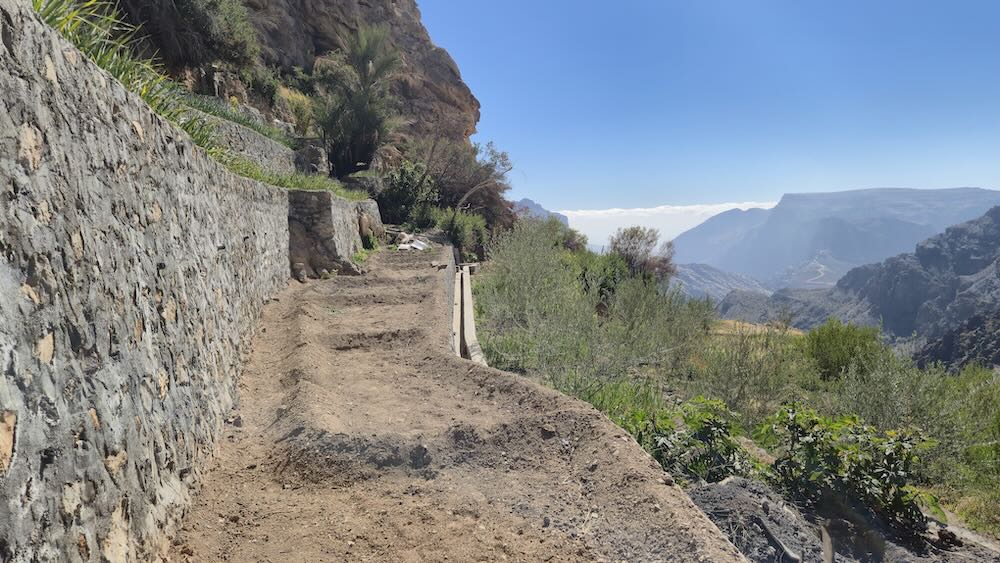
Besides their primary purpose, the falaj channels are actually the only way to move between these terraces.
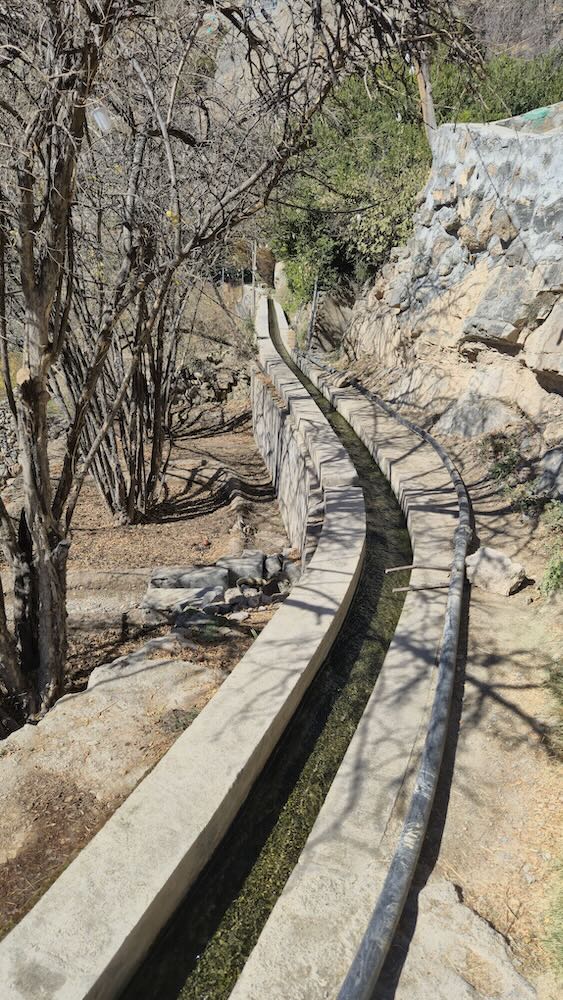
Just imagine how much effort went into building all this. It truly deserves the name Jebel Akhdar—although “Jabal” is the original and correct Arabic term.
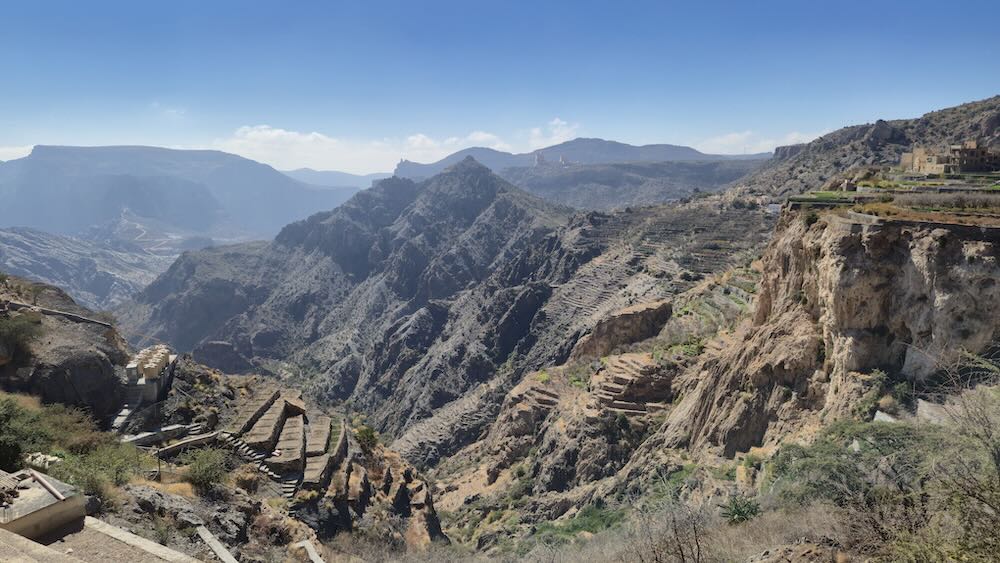
In 2025, UNESCO designated the Al Jabal Al Akhdar Biosphere Reserve.
Back to Muscat
We continued towards Muscat, or rather, its district of Seeb.
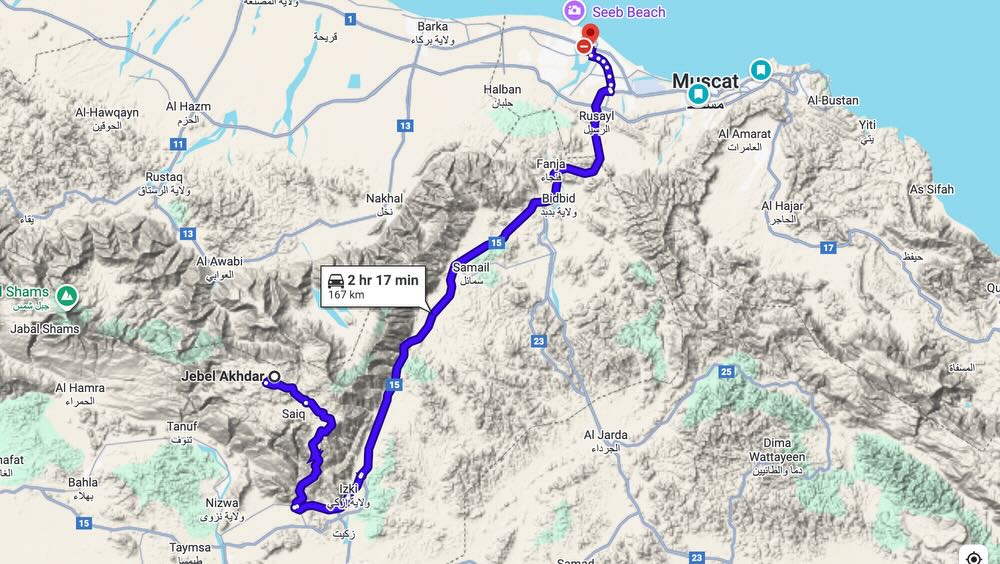
It is just under 170 km away on a modern road.
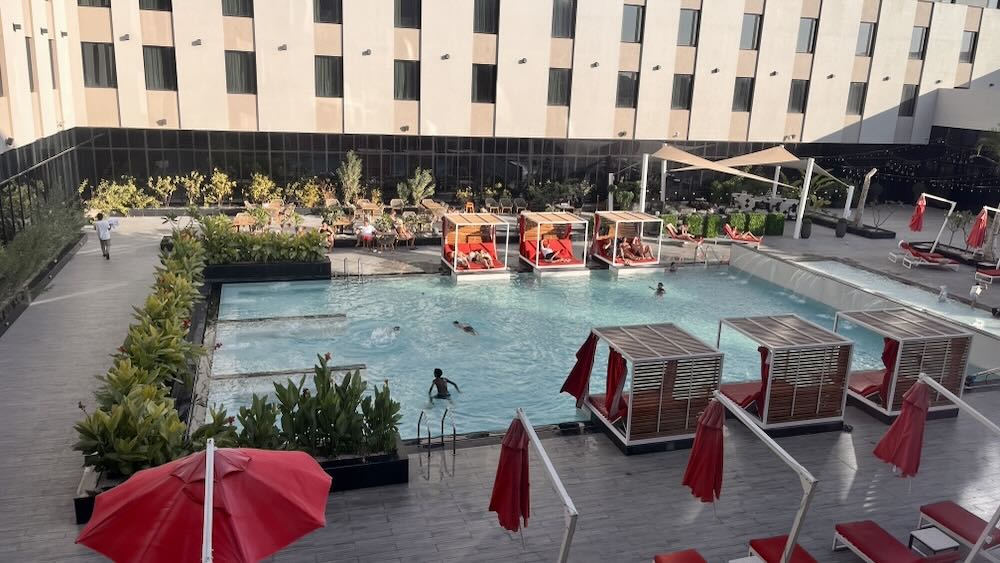
We had arranged to snorkel with turtles, so it suited us to have our fifth accommodation near Seeb harbour, where we would set off. We chose the fantastic Maani Hotel, reasonably priced for its class. It is a modern building with every possible amenity in the middle of a newly built district that is still under construction. The harbour is a 15-minute drive away, and the airport is also relatively close. Technically, the hotel is in Seeb.
For the first time, we visited an Omani shopping mall: Al Araimi Boulevard Mall, right next to the hotel. That meant shops, cafés and restaurants were only a two-minute walk away, which is a real rarity in Muscat.
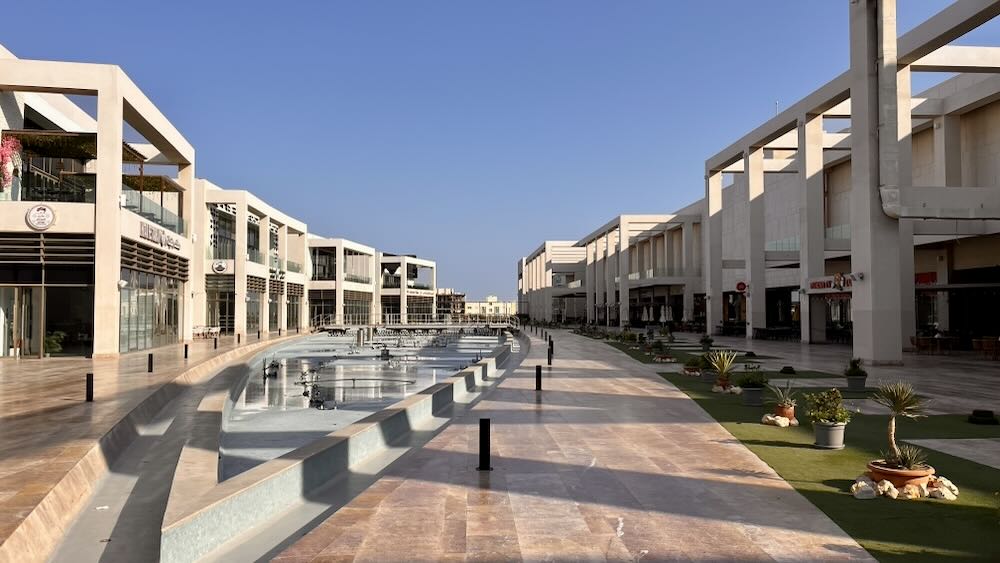
The mall covers 187,000 square metres and had opened just two weeks earlier. With around twenty restaurants inside—and the district practically in the middle of nowhere—we decided to try a well-regarded Iranian restaurant and a dish made with Iran's famous rice.

By now, we had sampled the cuisines of Oman, Africa, India, the Arab world and Persia.
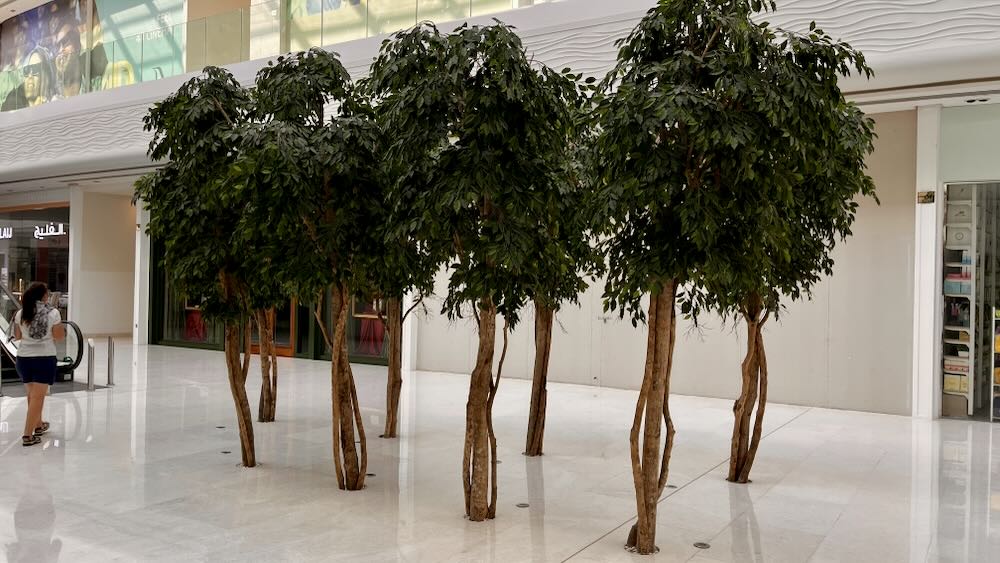
Shopping malls look much the same almost everywhere, designed to keep you there for hours. But one detail here really caught my eye: actual trees growing out of small holes in the floor tiles.
I also noticed the little prayer rooms in almost every large public building, including this shopping mall.
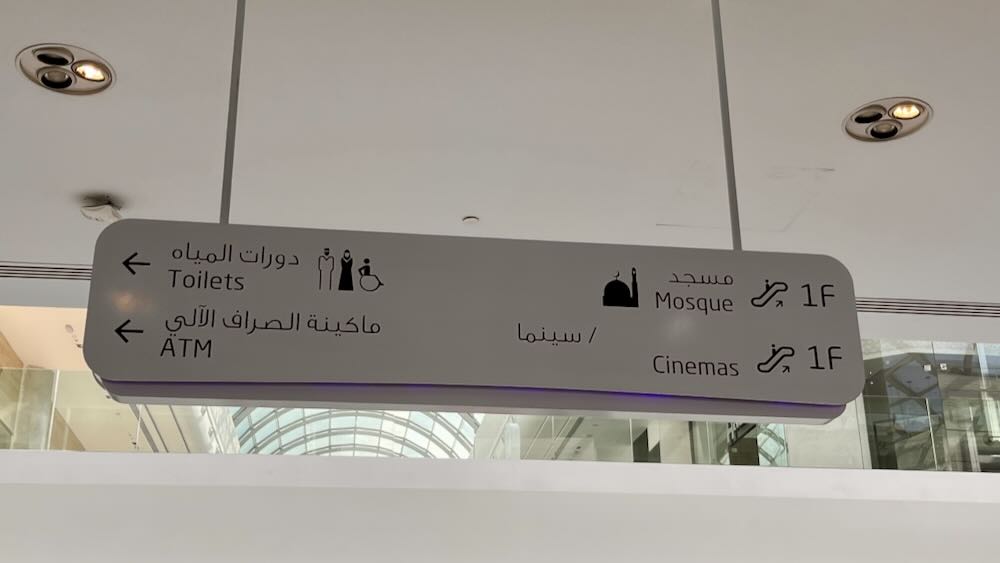
There are some at the airport too. I find this need incredible—or rather, I do not understand it. It is like when the urge strikes and you just have to go.
We spent the evening making full use of the hotel's amenities: the heated outdoor pool, jacuzzi, sauna and gym.
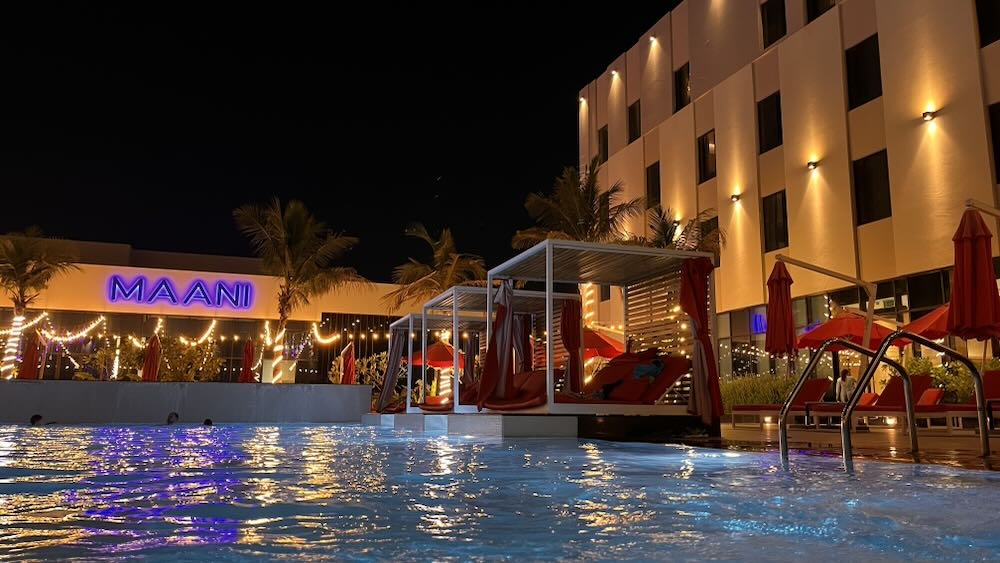
We would try to get a good night's sleep, because tomorrow would bring a sleepless night and time spent wandering around the airport. Our flight was scheduled for 3 a.m. But before then, we still had one interesting destination to visit.
Day Ten
A breakfast worthy of the hotel—and even better than expected. We checked out, because today we were heading to the Daymaniyat Islands to dive with turtles. Well, to snorkel, as people fashionably call it.
We went to Seeb harbour. Since Seeb is known for its many harbours and fish markets, we visited one of them.
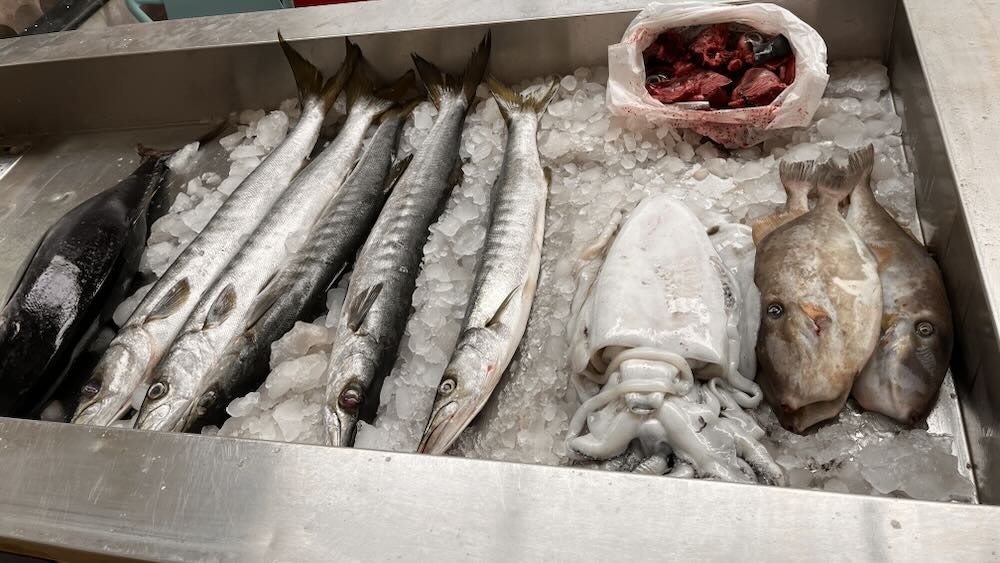
These sea creatures are truly enormous. I wondered whether Fukushima might be nearby.
Daymaniyat Islands
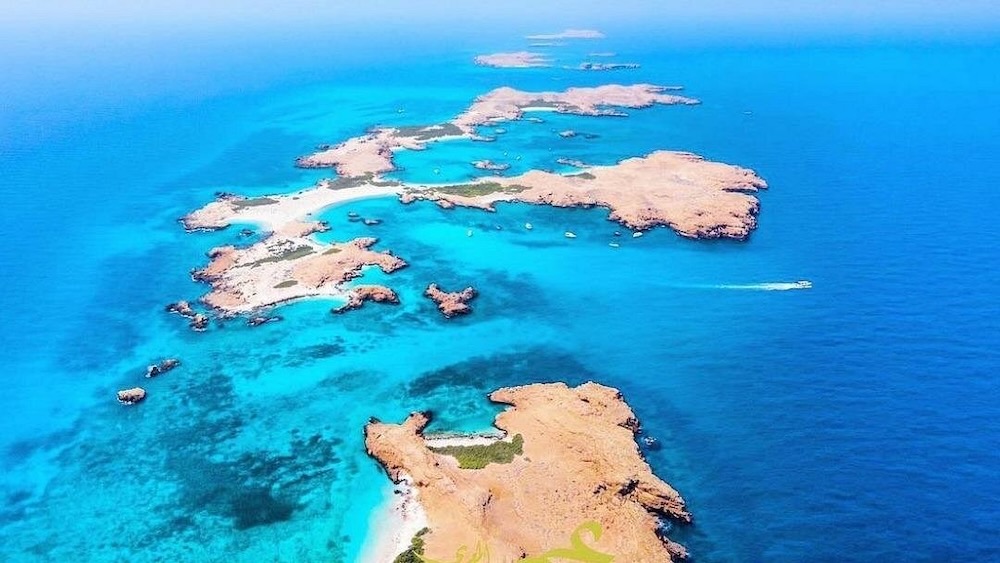
The islands lie 15–20 km offshore and can only be seen from the coast in good weather. They are not exactly close; it takes about 40 minutes to get there by speedboat.
We boarded one of those speedboats.
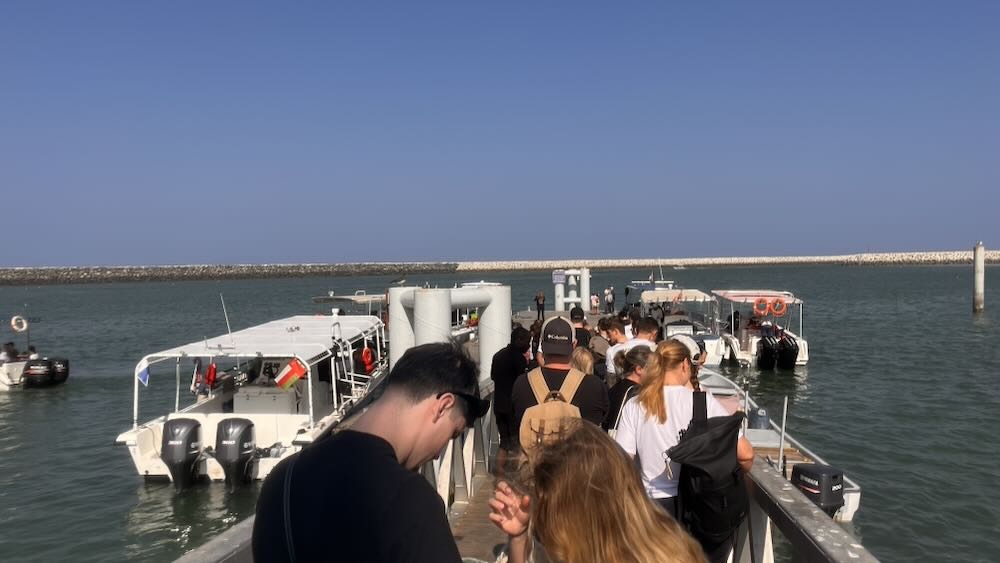
And we were ready for take-off. Literally. African “drivers”, two 300-horsepower engines and a choppy sea: a recipe for a spectacle, though not for everyone's stomach. The trip to the islands stretched to almost an hour. The number of tourists allowed to visit is strictly limited to preserve the natural balance and prevent damage to the coral reefs around the islands.
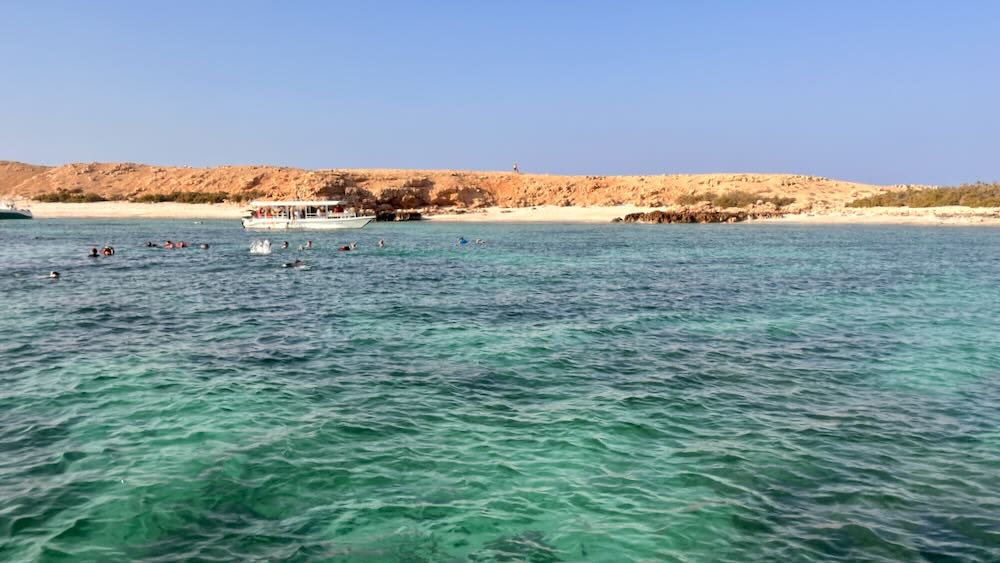
The islands are a specially protected area and one of Oman's most important sea-turtle nesting sites. The surrounding waters are home not only to turtles but also to coral reefs, colourful fish and octopuses.
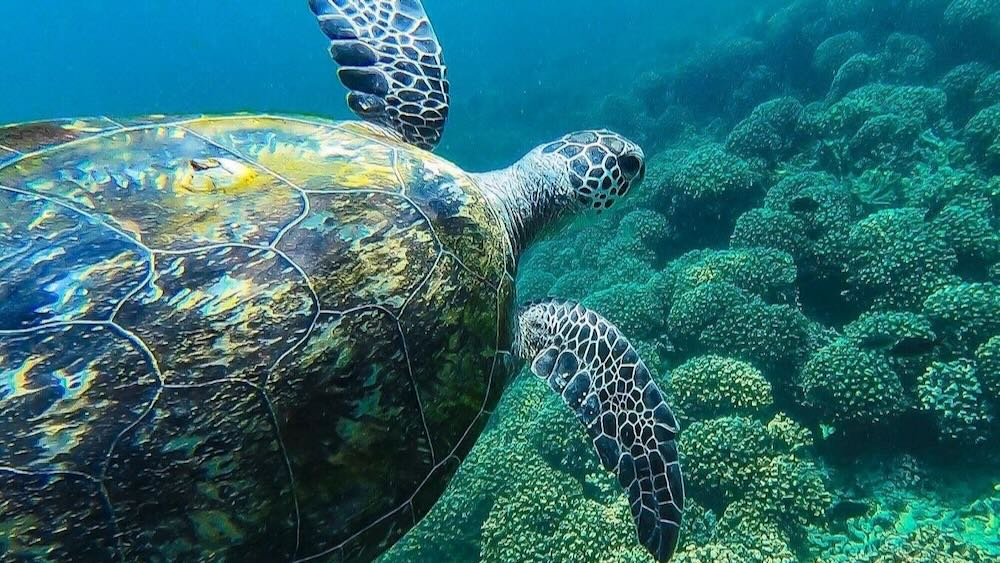
We put on our masks and jumped into the sea. We snorkelled among beautiful, colourful fish. Turtles were the goal, but there were none in sight. Just as we thought we would not see any, there they were—and quite a few of them. They were so used to people that they swam among us. You are not allowed to touch them because they are protected.
The islands are called the Omani Maldives: white sandy beaches, rocky cliffs and emerald water.
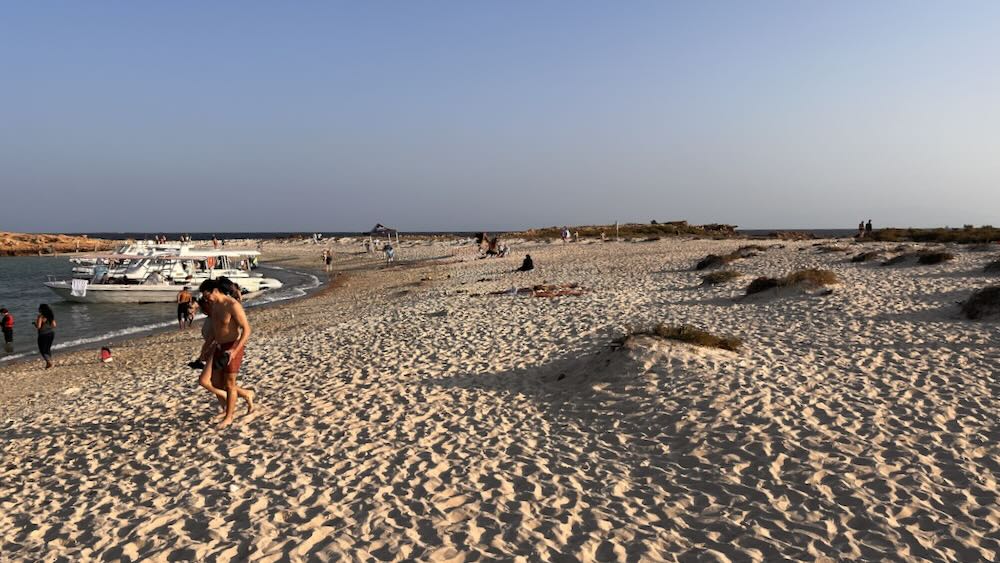
We did not stay long. The wind started to pick up and the sea became choppy, so we bounced over the waves on our way back to shore. I was sitting right at the front, where the jolts sent us up to half a metre into the air.

We returned to the hotel, even though we had already checked out. The hosts, of course, let us do everything we needed: shower and rest.

We took the opportunity to visit Seeb as well. It seemed to me that the main shops were jewellery stores—there must be a hundred of them.
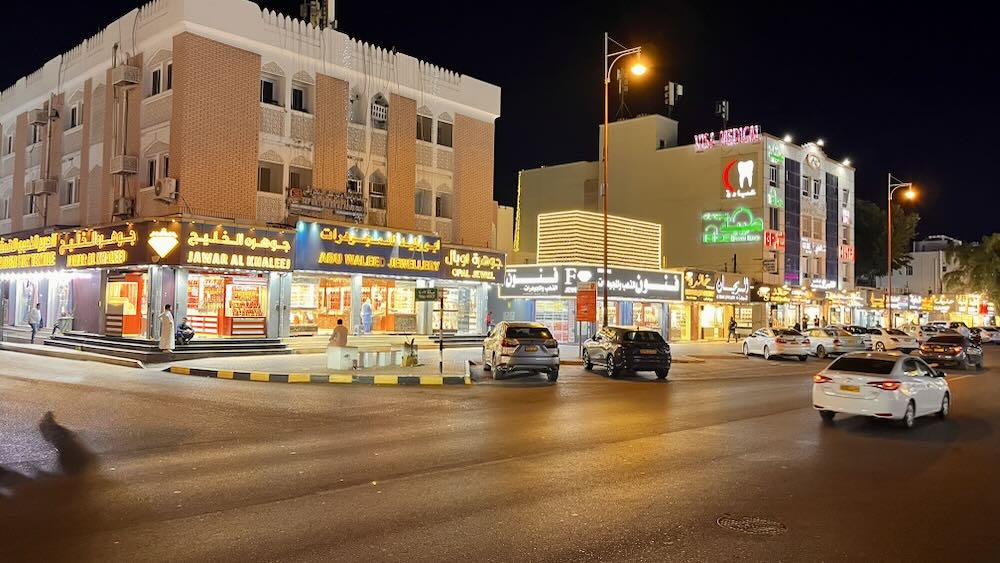
Gold is everywhere in Oman, much like across the Gulf. For them, it is not a luxury but a safe form of savings. It is an essential part of a wedding: the groom has to give the bride some jewellery. The amount and weight of the gold are signs of respect and status, not ostentation.
Day Eleven
Muscat Airport
We arrived at the airport shortly before midnight and returned the car. The odometer showed that we had driven 1,400 km in about ten days. Rental companies typically include 200 km of driving per day in the price; if you go over that allowance, they charge another €0.23 per kilometre.
We waited and looked around. The airport was gleaming, one of the newest “major” airports in the region. The new terminal opened in 2018. Everything was calm, clean and dignified—apart from some Indian and Bangladeshi travellers who were lying on the floor. At night, the airport looks almost meditative: quiet, illuminated and free of chaos.
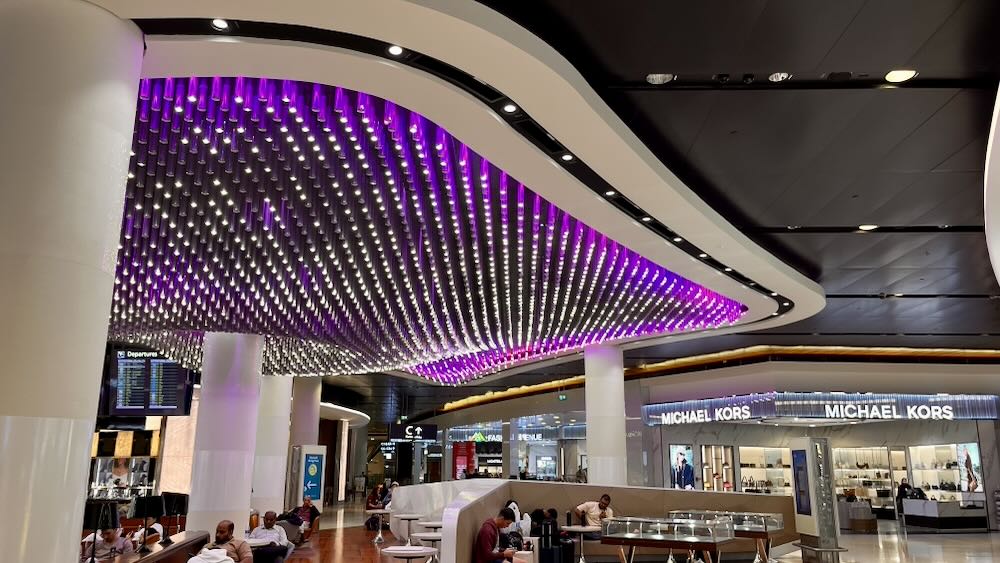
There were still a few hours until take-off. We were tired, thinking about the ten incredible days behind us. Here, you do not travel just to arrive, but to be present. The desert, mountains, sea and cities do not compete for your attention; they simply exist, quietly and with dignity. The people are reserved but warm. The culture is strong but unobtrusive. Everything feels balanced, as though nothing were accidental.
And then there is the striking, deeply genuine sign above the entrance to the Maani Hotel:
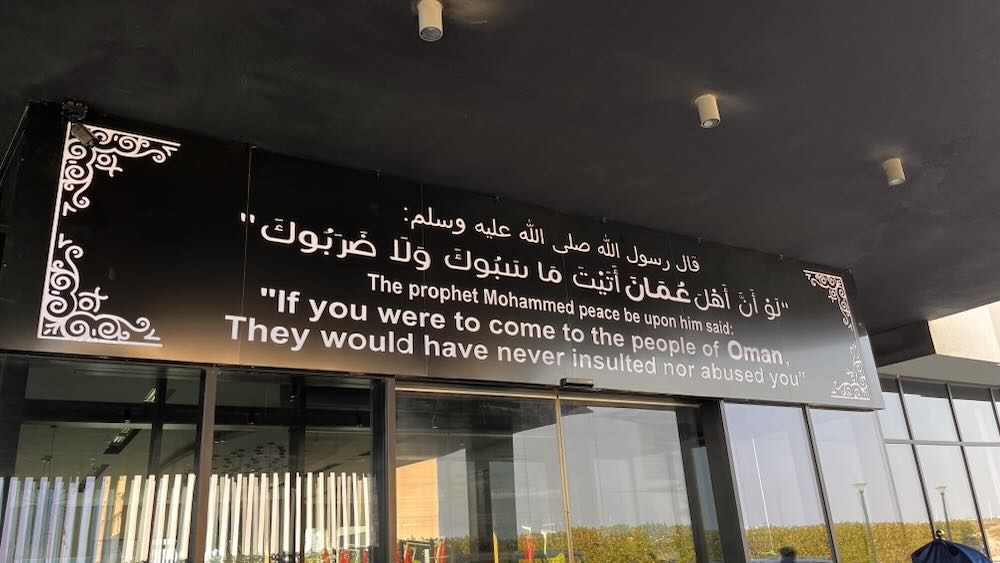
It captures the essence of Oman. No one here will insult or humiliate you—not because they have to, but because this is how they live. Respect for a guest is not a tourism slogan; it is part of their upbringing and culture. Difference is not seen as a threat, and kindness is not an act put on for a tip. People in Oman often accept you without questions, judgement or any need to prove something. Only after you leave do you realise how rare that really is.
This was not a travelogue about sights to be “ticked off”. It is a record of the feeling of a place, of silence that is not empty, of colours that do not shout, and of places that stay with you after you return home. Oman does not demand to be described in grand words. It does not impose itself, ask for your admiration or expect you to understand it at once. Oman does not reveal itself quickly, but once it opens up, it stays with you. Oman is an untold chapter of a fairytale. It lingers somewhere at the back of your mind, quiet but persistent. Only later do you realise that it has got under your skin, through the desert wind, the scent of frankincense, the silence of the mountains and conversations that needed very few words.
We sat in the waiting area at Muscat International Airport. Everything looked first-class. Our night flight to Istanbul was delayed by two hours. Morning was almost here. It did not feel as if anything was ending. It felt more like one chapter was closing while another remained open. Afterwards, the world seemed a little louder and silence a little more precious.

Enjoy!
Farewell, and we wish you a pleasant journey.
Greetings from the Sultanate of Oman
.:: MISHO ::.